


Contents:
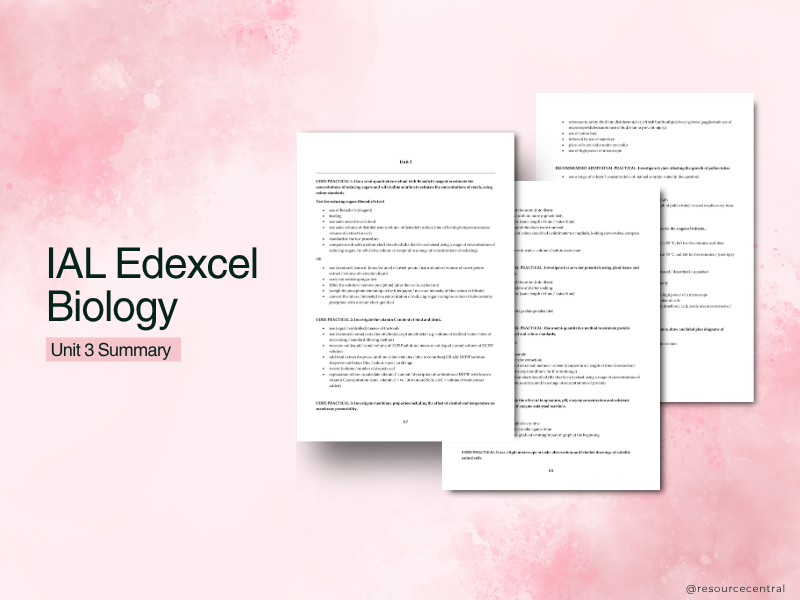
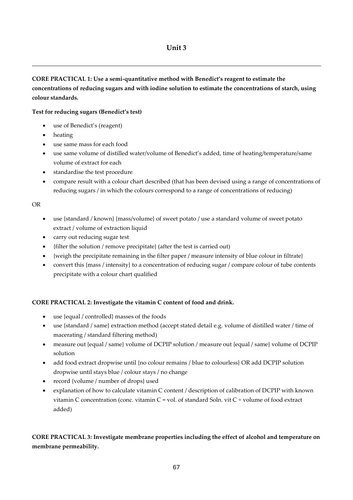
- CORE PRACTICAL 1: Use a semi-quantitative method with Benedict’s reagent to estimate the concentrations of reducing sugars and with iodine solution to estimate the concentrations of starch, using colour standards.
- CORE PRACTICAL 2: Investigate the vitamin C content of food and drink.
- CORE PRACTICAL 3: Investigate membrane properties including the effect of alcohol and temperature on membrane permeability.
- RECOMMENDED ADDITIONAL PRACTICAL: Investigate tissue water potentials using plant tissue and graded concentrations of a solute.
- RECOMMENDED ADDITIONAL PRACTICAL: Use a semi-quantitative method to estimate protein concentration using biuret reagent and colour standards.
- CORE PRACTICAL 4: Investigate the effect of temperature, pH, enzyme concentration and substrate concentration on the initial rate of enzyme-catalysed reactions.
- CORE PRACTICAL 5: use a light microscope to make observations and labelled drawings of suitable animal cells
- RECOMMENDED ADDITIONAL PRACTICAL: Investigate factors affecting the growth of pollen tubes
- CORE PRACTICAL 6: Prepare and stain a root tip squash to observe the stages of mitosis. .
- CORE PRACTICAL 7: Use a light microscope to make observations, draw and label plan diagrams of transverse sections of plant tissues
- RECOMMENDED ADDITIONAL PRACTICAL: Investigate plant mineral deficiencies.
- CORE PRACTICAL 8: Determine the tensile strength of plant fibres.
- CORE PRACTICAL 9: Investigate the antimicrobial properties of plants, including aseptic techniques for the safe handling of bacteria.
Something went wrong, please try again later.
This resource hasn't been reviewed yet
To ensure quality for our reviews, only customers who have downloaded this resource can review it
Report this resourceto let us know if it violates our terms and conditions.
Our customer service team will review your report and will be in touch.
£0.00