


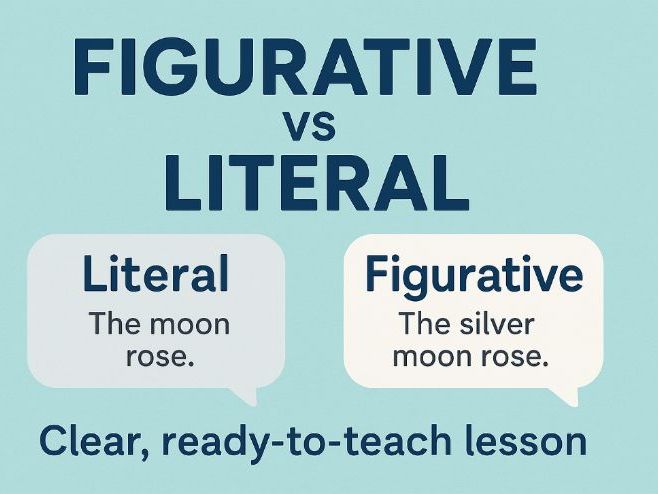
Understanding Figurative and Literal Language: Complete Ready-to-Teach Lesson
A clear, ready-to-teach lesson that teaches students how to decipher the difference between figurative and literal language. Includes explanations, model examples, identification tasks, and effect-writing practice. No preparation required.
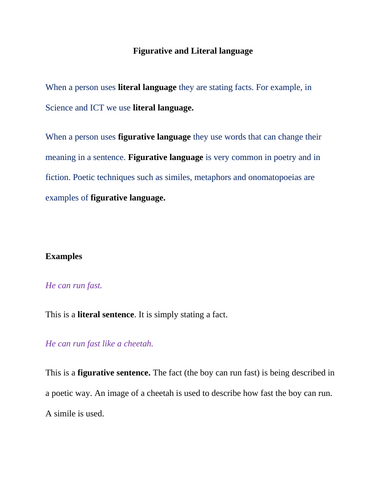
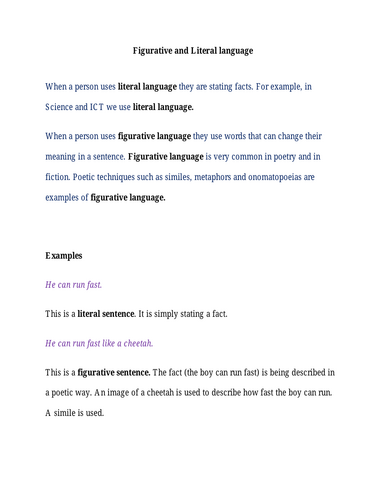
This lesson is designed to help students confidently decipher the difference between figurative and literal language. Through clear explanations, paired examples, and carefully structured tasks, students learn how to recognise when language is being used factually (literal) and when it is being used imaginatively (figurative).
Students then move on to identifying the poetic techniques used such as similes, metaphors, and personification and explaining the effect these techniques create. The lesson ends with scaffolded practice where students analyse figurative sentences in more detail.
Tried and tested in mainstream classrooms for many years, this resource is fully ready to download and teach, with no preparation required.
Perfect for KS3, lower KS4 revision, mixed-ability classes, literacy support groups, and cover lessons.
Available in both Word & PDF form
Something went wrong, please try again later.
This resource hasn't been reviewed yet
To ensure quality for our reviews, only customers who have downloaded this resource can review it
Report this resourceto let us know if it violates our terms and conditions.
Our customer service team will review your report and will be in touch.
£0.00