


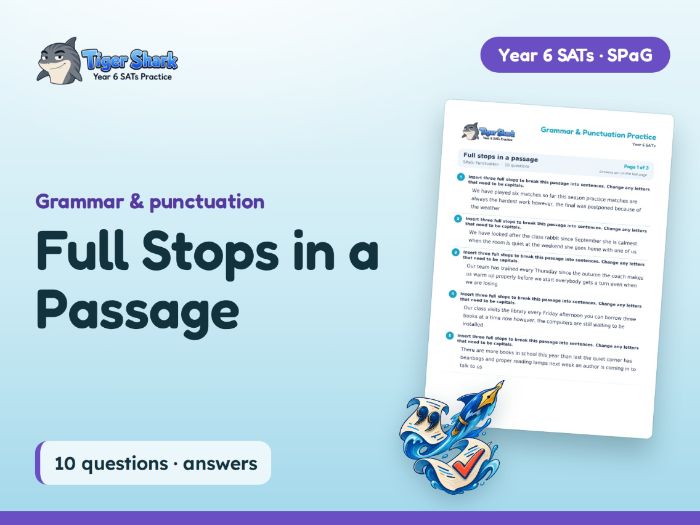
Year 6 SATs SPaG worksheet on full stops in a passage: 10 questions in the style of the SATs, with answers. Free PDF.
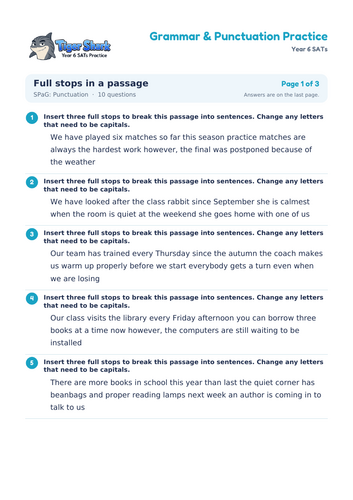
3-page A4 PDF from the Tiger Shark Education question bank (Punctuation): two pages of questions (insert the punctuation) and an answer page. Example questions: Insert three full stops to break this passage into sentences. Change any letters that need to be capitals. We have played six matches so far this season practice matches are always the hardest work however, the final was postponed because of the weather / Insert three full stops to break this passage into sentences. Change any letters that need to be capitals. We have looked after the class rabbit since September she is calmest when the room is quiet at the weekend she goes home with one of us
Full stops in a passage: this skill is about recognising where one sentence ends and the next begins. Each sentence should express a complete thought with its own main clause. Joining two sentences with only a comma creates a comma splice (It was raining, we stayed inside), which is a common error in children’s writing.
Common mistakes and tips: Children often place full stops after every clause or miss them entirely in long passages. Comma splices are the biggest issue in Year 6 writing. Reading the passage aloud and pausing where the meaning is complete helps children hear sentence boundaries. Ask them to check that each sentence has its own subject and verb.
Questions on this topic appear often in the SATs. The skill also counts in teacher assessment of writing at the end of Year 6, so children benefit from both practice in test style and from using it in their own writing.
Ways to use this worksheet: as a lesson starter or plenary, as a quick assessment before teaching a topic, for intervention groups, or as SATs revision homework. The answer page lets children self-mark. After marking, ask pupils to write two of their own sentences using the skill, so they apply it rather than just recognise it.
Using the correct terminology: the SATs use the terms in the National Curriculum glossary, and children need to recognise them quickly. Display the key term for this topic with a clear definition and an example, and use it consistently in lessons and feedback. When children explain their answers, encourage them to use the term in a full sentence. Short, regular retrieval practice, such as a two-minute quiz on terms from previous weeks, keeps knowledge fresh across the year. Because grammar topics build on one another, gaps from earlier years cause difficulties later, so this sheet is also useful for checking that Year 6 pupils have secure foundations from Years 3 to 5.
Something went wrong, please try again later.
This resource hasn't been reviewed yet
To ensure quality for our reviews, only customers who have downloaded this resource can review it
Report this resourceto let us know if it violates our terms and conditions.
Our customer service team will review your report and will be in touch.
£0.00