


**This lesson introduces a non-European society that provides contrasts with British history - the ancient Maya civilization. **
Included in the bundle:
-Lesson Slides
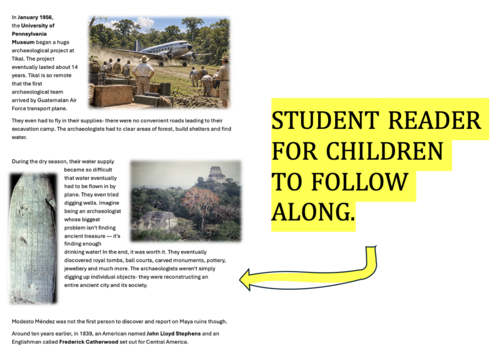
-Student Reader
-Source Pack
This is Lesson 1 of a series of four, knowledge-rich curriculum lessons.
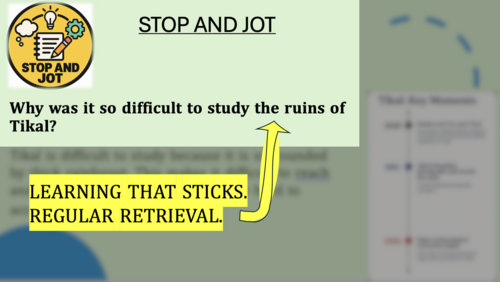
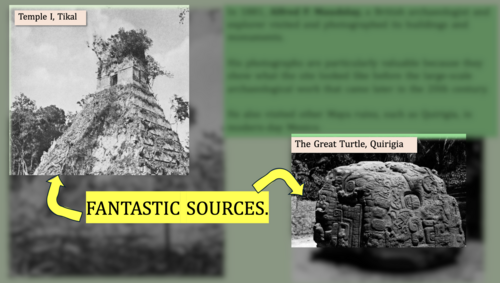
Each lesson combines an accessible student reader with high-quality historical sources, explicit vocabulary instruction and regular retrieval opportunities.
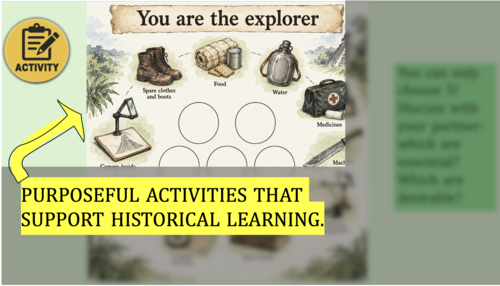
Activities encourage pupils to think like historians: examining evidence, making inferences, asking questions and connecting new learning to prior knowledge.
Lesson 1 introduces the following key knowledge:
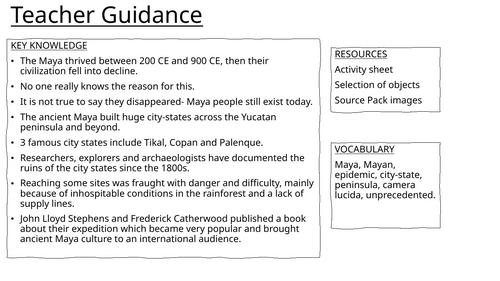
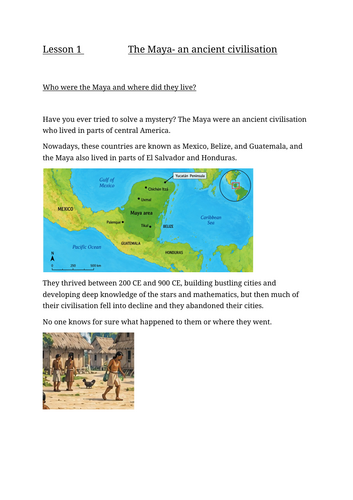
-The Maya thrived between 200 CE and 900 CE, then their civilization fell into decline.
-No one really knows the reason for this.
-It is not true to say they disappeared- Maya people still exist today.
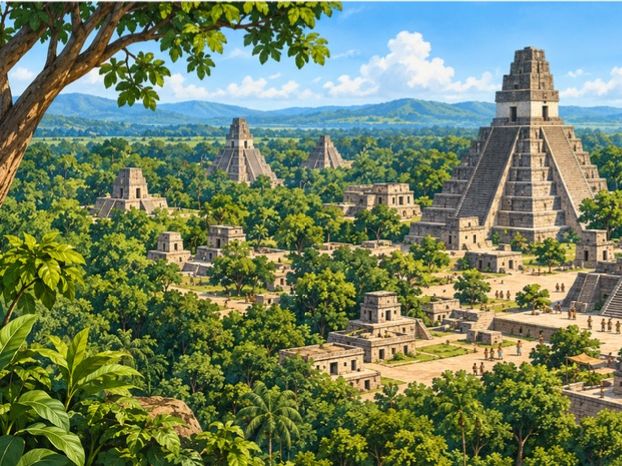
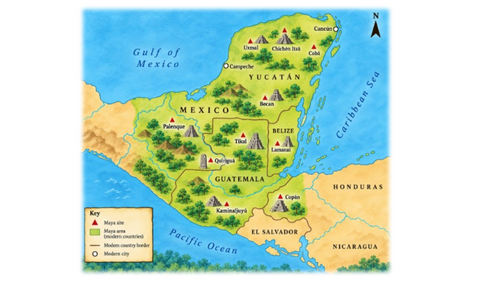
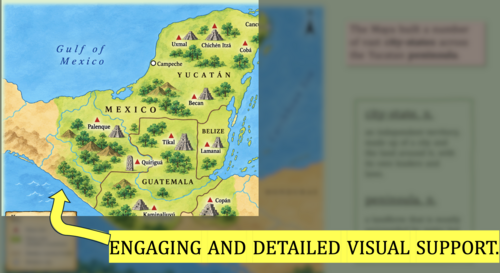
-The ancient Maya built huge city-states across the Yucatan peninsula and beyond.
-3 famous city states include Tikal, Copan and Palenque.
-Researchers, explorers and archaeologists have documented the ruins of the city states since the 1800s.
-Reaching some sites was fraught with danger and difficulty, mainly because of inhospitable conditions in the rainforest and a lack of supply lines.
-John Lloyd Stephens and Frederick Catherwood published a book about their expedition which became very popular and brought ancient Maya culture to an international audience.
Something went wrong, please try again later.
This resource hasn't been reviewed yet
To ensure quality for our reviews, only customers who have downloaded this resource can review it
Report this resourceto let us know if it violates our terms and conditions.
Our customer service team will review your report and will be in touch.
£0.00