


**This lesson introduces a non-European society that provides contrasts with British history - the ancient Maya civilization. **
INCLUDED:
- Lesson slides
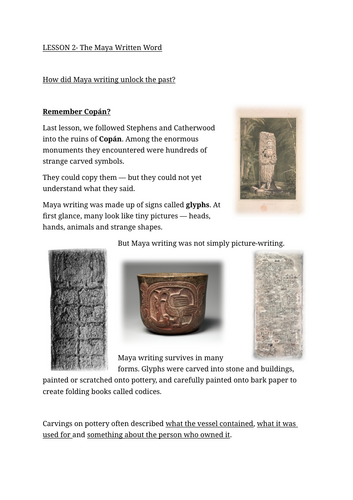
- Student Reader
- Source Pack
This is Lesson 2 of a series of four, knowledge-rich curriculum lessons.
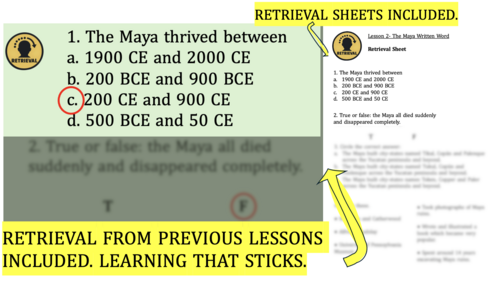
Each lesson combines an accessible student reader with high-quality historical sources, explicit vocabulary instruction and regular retrieval opportunities.
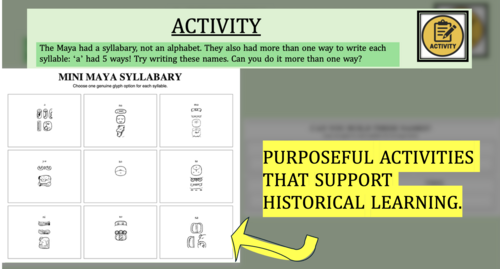
Activities encourage pupils to think like historians: examining evidence, making inferences, asking questions and connecting new learning to prior knowledge.
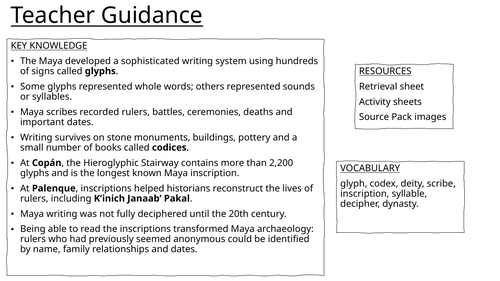
Lesson 2 introduces the following key knowledge:
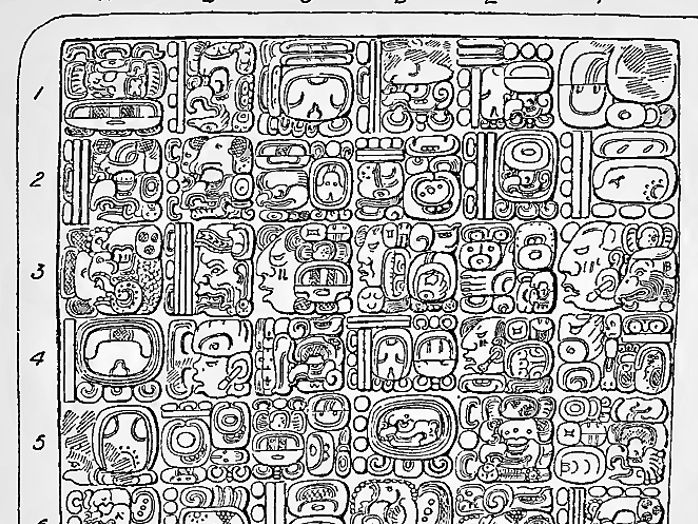
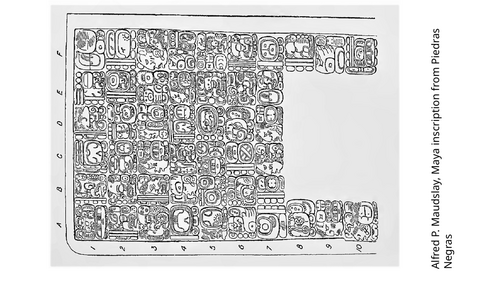
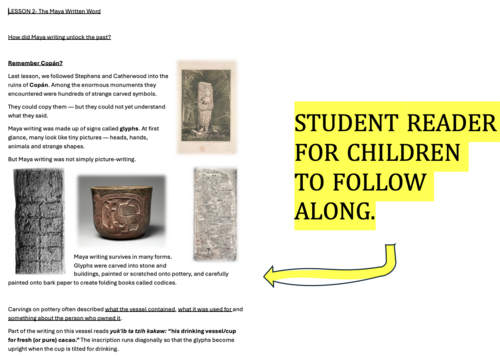
-The Maya developed a sophisticated writing system using hundreds of signs called glyphs.
-Some glyphs represented whole words; others represented sounds or syllables.
-Maya scribes recorded rulers, battles, ceremonies, deaths and important dates.
Writing survives on stone monuments, buildings, pottery and a small number of books called codices.
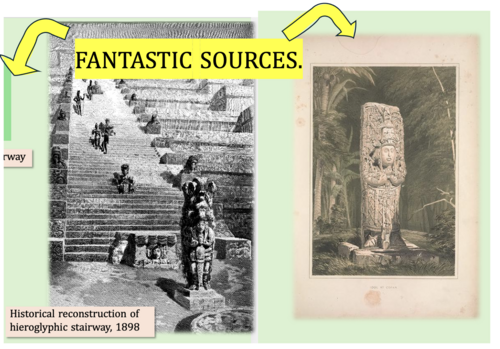
-At Copán, the Hieroglyphic Stairway contains more than 2,200 glyphs and is the longest known Maya inscription.
-At Palenque, inscriptions helped historians reconstruct the lives of rulers, including K’inich Janaab’ Pakal.
-Maya writing was not fully deciphered until the 20th century.
-Being able to read the inscriptions transformed Maya archaeology: rulers who had previously seemed anonymous could be identified by name, family relationships and dates.
Something went wrong, please try again later.
This resource hasn't been reviewed yet
To ensure quality for our reviews, only customers who have downloaded this resource can review it
Report this resourceto let us know if it violates our terms and conditions.
Our customer service team will review your report and will be in touch.
£0.00