GCSE English Literature Macbeth Visual CompanionQuick View
TheHomeEdCorner

GCSE English Literature Macbeth Visual Companion

(0)
A GCSE English Literature Macbeth Comic Strip in graphic-novel style. This is good for all abilities, but particularly for lower-ability GCSE English students. This Macbeth Comic Strip covers the main details of Acts I - V, to help students to understand the play without the full textual extract. Complete with original illustrations and quotations from the play itself, the Macbeth Comic Strip is ideal for use in class or at home to ensure your students know the key plot points from the play. (This booklet is strictly a graphic novel/comic strip of Macbeth that goes through all the acts in visual detail. There are no questions or activities in this comic-strip booklet. This is just a visual graphic-novel of the play Macbeth to allow students to easily revise the plot and acts in an easy format.)
GCSE English Literature Macbeth QuotesQuick View
TheHomeEdCorner

GCSE English Literature Macbeth Quotes

(0)
An informational guide only on ‘Macbeth Quotes’. This revision guidebook will help students on how to revise this topic for their exam, the core quotes from the play and notes on how to use them.
Entry Level 3 Functional Skills Maths: Using common measures, shape and space L9Quick View
TheHomeEdCorner

Entry Level 3 Functional Skills Maths: Using common measures, shape and space L9

(0)
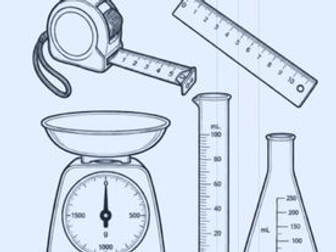
Lesson 9. Measuring Length and Mass with Instruments Recap of previous lesson: Comparing and converting metric capacities. Quick quiz: Convert and order various metric capacities. Learning Objective: Use a suitable instrument to measure mass and length. Review of measuring length: The purpose and use of a ruler. Modelling: Using a centimetre ruler to measure lines and objects accurately. Practice: Measuring a variety of drawn lines and small classroom objects to the nearest millimetre. Discussion: Potential errors when measuring length and how to avoid them. Review of measuring mass: The purpose and use of scales. Modelling: Using kitchen scales to measure the mass of objects in grams. Practice: Measuring the mass of various small objects using scales. Discussion: Importance of zeroing scales and reading correctly. Activity: Measuring specified items and recording results with correct units. Check for understanding: Observing students’ practical measurement skills.
Entry Level 3 Functional Skills Maths: Using common measures, shape and space L6Quick View
TheHomeEdCorner

Entry Level 3 Functional Skills Maths: Using common measures, shape and space L6

(0)
Lesson 6. Comparing Metric Lengths Recap of previous lesson: Introduction to metric and imperial units and reading temperatures. Quick quiz: Identifying appropriate units for different measurements. Learning Objective: Compare metric measures of length including millimetres, centimetres, metres, and kilometres. Review of metric length units: mm, cm, m, km. Discussion: Real-world examples of each unit’s use (e.g., mm for small objects, km for distances). Modelling: Converting between mm and cm (e.g., 10mm = 1cm). Practice: Converting various lengths between mm and cm. Modelling: Converting between cm and m (e.g., 100cm = 1m). Practice: Converting various lengths between cm and m. Modelling: Converting between m and km (e.g., 1000m = 1km). Practice: Converting various lengths between m and km. Activity: Ordering a set of mixed length measurements from smallest to largest. Problem-solving: Word problems involving comparing and converting metric lengths. Check for understanding: Whiteboard questions on conversions and comparisons.
Entry Level 3 Functional Skills Maths: Using common measures, shape and space L7Quick View
TheHomeEdCorner

Entry Level 3 Functional Skills Maths: Using common measures, shape and space L7

(0)
Lesson 7. Comparing Metric Weights Recap of previous lesson: Comparing and converting metric lengths. Quick quiz: Convert and order various metric lengths. Learning Objective: Compare measures of weight including grams and kilograms. Introduction to metric units of mass: grams (g) and kilograms (kg). Discussion: Real-world examples of items measured in grams and kilograms. Modelling: Converting between grams and kilograms (e.g., 1000g = 1kg). Practice: Converting various weights between grams and kilograms. Activity: Estimating the weight of everyday objects in grams and kilograms. Activity: Ordering a set of mixed weight measurements from lightest to heaviest. Modelling: Solving word problems involving comparing and calculating with grams and kilograms. Practice: Solving contextual problems related to weight. Discussion: The importance of accurate weight measurement in various fields. Check for understanding: Peer assessment of conversion problems.
Entry Level 3 Functional Skills Maths: Using common measures, shape and space L8Quick View
TheHomeEdCorner

Entry Level 3 Functional Skills Maths: Using common measures, shape and space L8

(0)
Lesson 8. Comparing Metric Capacities Recap of previous lesson: Comparing and converting metric weights. Quick quiz: Convert and order various metric weights. Learning Objective: Compare measures of capacity including millilitres and litres. Introduction to metric units of volume/capacity: millilitres (ml) and litres (l). Discussion: Real-world examples of items measured in millilitres and litres (e.g., drinks, fuel). Modelling: Converting between millilitres and litres (e.g., 1000ml = 1l). Practice: Converting various capacities between millilitres and litres. Activity: Estimating the capacity of various containers in ml and l. Activity: Ordering a set of mixed capacity measurements from smallest to largest. Modelling: Solving word problems involving comparing and calculating with millilitres and litres. Practice: Solving contextual problems related to capacity. Discussion: Practical applications of capacity measurement in daily life. Check for understanding: Individual tasks on conversions and comparisons.
Entry Level 3 Functional Skills Maths: Using common measures, shape and space L11Quick View
TheHomeEdCorner

Entry Level 3 Functional Skills Maths: Using common measures, shape and space L11

(0)
Lesson 11. Positional Vocabulary and Turns Recap of previous lesson: Sorting 2-D and 3-D shapes and understanding symmetry and angles. Quick quiz: Identifying types of triangles and lines of symmetry. Learning Objective: Use appropriate positional vocabulary to describe position and direction including eight compass points and including full/half/quarter turns. Introduction to positional vocabulary: left, right, forwards, backwards, above, below, next to. Activity: Following instructions using basic positional vocabulary. Introduction to compass points: North, East, South, West. Modelling: Identifying intermediate compass points: NE, SE, SW, NW. Practice: Using all eight compass points to describe directions. Discussion: Real-world applications of compass points (e.g., maps, navigation). Introduction to turns: quarter, half, three-quarter, full turns. Modelling: Demonstrating different turns (90, 180, 270, 360 degrees). Activity: Giving and following instructions involving turns and compass points. Problem-solving: Navigational challenges on a grid or map. Check for understanding: Partner work describing routes using learned vocabulary.
Entry Level 3 Functional Skills Maths: Using common measures, shape and space L10Quick View
TheHomeEdCorner

Entry Level 3 Functional Skills Maths: Using common measures, shape and space L10

(0)
Lesson 10. Sorting 2-D and 3-D Shapes Recap of previous lesson: Practical measurement of length and mass. Quick quiz: Demonstrating understanding of measurement techniques. Learning Objective: Sort 2-D and 3-D shapes using properties including lines of symmetry, length, right angles, angles including in rectangles and triangles. Introduction to 2-D shapes: Polygons and their properties. Discussion: Identifying vertices, edges, and faces of 3-D shapes. Modelling: Sorting various 2-D shapes based on the number of sides/angles. Practice: Sorting a collection of 2-D shapes into groups. Introduction to lines of symmetry: What they are and how to find them. Modelling: Identifying lines of symmetry in common 2-D shapes (e.g., square, rectangle, circle). Practice: Drawing lines of symmetry on given shapes. Introduction to different types of triangles: acute, obtuse, right-angled, scalene, isosceles, equilateral. Activity: Classifying different triangles based on their angles and side lengths. Discussion: Recognising right angles in shapes and the environment. Check for understanding: ‘Which shape am I?’ description game.
Entry Level 3 Functional Skills Maths - Using common measures, shape and space work bookletQuick View
TheHomeEdCorner

Entry Level 3 Functional Skills Maths - Using common measures, shape and space work booklet

(0)
Entry Level 3 Functional Skills Maths - Using common measures, shape and space Calculating with Money Rounding Money Amounts Understanding Time: AM and PM Reading Analogue and 24-Hour Clocks Understanding and Comparing Measures Comparing Metric Lengths Comparing Metric Weights Comparing Metric Capacities Measuring Length and Mass with Instruments Sorting 2-D and 3-D Shapes Positional Vocabulary and Turns Maths Geometry and measures Draw and measure line segments and angles in geometric figures, including interpreting scale drawings Describe, sketch and draw using conventional terms and notations: points, lines, parallel lines, perpendicular lines, right angles, regular polygons, and other polygons that are reflectively and rotationally symmetric Derive and illustrate properties of triangles, quadrilaterals, circles, and other plane figures (for example: equal lengths and angles) using appropriate language and technologies Use the properties of faces, surfaces, edges and vertices of cubes, cuboids, prisms, cylinders, pyramids, cones and spheres to solve problems in 3-D
Entry Level 3 Functional Skills Maths - Using common measures, shape and spaceQuick View
TheHomeEdCorner

Entry Level 3 Functional Skills Maths - Using common measures, shape and space

12 Resources
Entry Level 3 Functional Skills Maths - Using common measures, shape and space Calculating with Money Rounding Money Amounts Understanding Time: AM and PM Reading Analogue and 24-Hour Clocks Understanding and Comparing Measures Comparing Metric Lengths Comparing Metric Weights Comparing Metric Capacities Measuring Length and Mass with Instruments Sorting 2-D and 3-D Shapes Positional Vocabulary and Turns Maths Geometry and measures Draw and measure line segments and angles in geometric figures, including interpreting scale drawings Describe, sketch and draw using conventional terms and notations: points, lines, parallel lines, perpendicular lines, right angles, regular polygons, and other polygons that are reflectively and rotationally symmetric Derive and illustrate properties of triangles, quadrilaterals, circles, and other plane figures (for example: equal lengths and angles) using appropriate language and technologies Use the properties of faces, surfaces, edges and vertices of cubes, cuboids, prisms, cylinders, pyramids, cones and spheres to solve problems in 3-D
Entry Level 3 Functional Skills Maths: Using common measures, shape and space L4Quick View
TheHomeEdCorner

Entry Level 3 Functional Skills Maths: Using common measures, shape and space L4

(0)
Lesson 4. Reading Analogue and 24-Hour Clocks Recap of previous lesson: Using AM and PM to describe time. Quick quiz: Determining AM/PM for given times and activities. Learning Objective: Read time from analogue and 24-hour digital clocks in hours and minutes. Review of analogue clocks: Hour hand, minute hand, and intervals. Modelling: Reading analogue clocks to the nearest 5 minutes. Practice: Reading various analogue clock faces and writing the time. Introduction to 24-hour digital clocks: Why they are used. Modelling: Converting AM times to 24-hour format (e.g., 9 AM to 09:00). Practice: Converting various AM times to 24-hour format. Modelling: Converting PM times to 24-hour format (e.g., 3 PM to 15:00). Practice: Converting various PM times to 24-hour format. Matching activity: Linking analogue clocks, 12-hour (AM/PM) times, and 24-hour times. Check for understanding: Students drawing clock hands for given times and vice-versa.
Entry Level 3 Functional Skills Maths: Using common measures, shape and space L2Quick View
TheHomeEdCorner

Entry Level 3 Functional Skills Maths: Using common measures, shape and space L2

(0)
Lesson 2. Rounding Money Amounts Recap of previous lesson: Calculating with money and writing amounts correctly. Quick quiz: Identify correct money notation and simple calculations. Learning Objective: Round amounts of money to the nearest £1 or 10p. Introduction to rounding: What it means and why it’s useful. Modelling: Rounding whole numbers to the nearest 10 and 100 as a foundation. Modelling: Rounding money amounts to the nearest 10 pence. Practice: Rounding various money amounts to the nearest 10 pence. Modelling: Rounding money amounts to the nearest pound. Practice: Rounding various money amounts to the nearest pound. Discussion: When is it more appropriate to round to the nearest 10p vs. £1? Word problems: Applying rounding skills in real-life scenarios (e.g., estimating costs). Check for understanding: Paired activity rounding different amounts.
Entry Level 3 Functional Skills Maths: Using common measures, shape and space L3Quick View
TheHomeEdCorner

Entry Level 3 Functional Skills Maths: Using common measures, shape and space L3

(0)
Lesson 3. Understanding Time: AM and PM Recap of previous lesson: Rounding money to the nearest 10p and £1. Quick quiz: Rounding various money amounts. Learning Objective: Read, measure, and record time using am and pm. Introduction to units of time: seconds, minutes, hours, days. Explanation of AM and PM: what they stand for and how they divide the day. Modelling: Identifying whether an activity occurs in AM or PM. Activity: Sorting daily activities into AM and PM categories. Practice: Converting times between a simple description and AM/PM notation. Modelling: Reading analogue clock faces for basic hours and half-hours. Practice: Writing times shown on analogue clocks using AM/PM. Discussion: Importance of AM/PM in daily scheduling (e.g., appointments, transport). Word problems: Contextualising AM/PM usage. Check for understanding: Matching times with AM/PM descriptions.
Entry Level 3 Functional Skills Maths: Using common measures, shape and space L5Quick View
TheHomeEdCorner

Entry Level 3 Functional Skills Maths: Using common measures, shape and space L5

(0)
Lesson 5. Understanding and Comparing Measures Recap of previous lesson: Reading analogue and 24-hour clocks. Quick quiz: Converting times between 12-hour and 24-hour formats. Learning Objective: Use and compare measures of length, capacity, weight, and temperature using metric or imperial units to the nearest labelled or unlabelled division. Introduction to measurement: Why do we measure things? Measuring temperature: What is temperature and how is it measured? Modelling: Reading a thermometer to the nearest labelled division. Practice: Interpreting different thermometer readings. Discussion: Identifying reasonable temperatures for various scenarios (e.g., a hot day, a fridge). Introduction to metric units: length (cm, m), capacity (ml, l), weight (g, kg). Introduction to imperial units: length (inch, foot), capacity (pint), weight (pound). Activity: Choosing the appropriate metric unit for different items. Activity: Choosing the appropriate imperial unit for different items. Check for understanding: ‘Which unit would you use?’ quick questions.
Entry Level 3 Functional Skills Maths: Using numbers/number system: numbers, fractions, decimalsQuick View
TheHomeEdCorner

Entry Level 3 Functional Skills Maths: Using numbers/number system: numbers, fractions, decimals

(0)
Lesson 1. Counting and Comparing Numbers to 1000 Learning Objective: To count, read, write, order and compare numbers up to 1000. Starter Activity: Quick fire count-up to 100 in tens, then hundreds. Review Prior Knowledge: Discuss what students already know about numbers up to 100. Introduction to 3-Digit Numbers: Understanding place value (hundreds, tens, ones). Model Counting Forwards: Demonstrate counting forwards from different starting points up to 1000, using number lines and hundred squares. Guided Practice: Students practise counting forwards in 1s, 10s, and 100s, responding to prompts. Converting Digits to Words: Show how to write 3-digit numbers in words (e.g., 245 as ‘two hundred and forty-five’). Converting Words to Digits: Practise writing numbers presented in words as digits. Comparing Numbers: Introduce symbols <, >, =. Model comparing two numbers using place value. Independent Practice: Students compare pairs of numbers using the correct symbols. Ordering Numbers: Demonstrate ordering a set of 3-digit numbers from smallest to largest and largest to smallest. Plenary: Recap key learning points and address any misconceptions. Quick quiz on number recognition.
Entry Level 3 Functional Skills Maths: Using common measures, shape and space L1Quick View
TheHomeEdCorner

Entry Level 3 Functional Skills Maths: Using common measures, shape and space L1

(0)
Lesson 1. Calculating with Money Introduction to Functional Skills Maths at Entry Level 3. Learning Objective: Calculate with money using decimal notation and express money correctly in writing in pounds and pence. Understanding different denominations of coins and notes up to £5. Activity: Counting various combinations of coins and notes. Modelling: Adding simple money amounts (e.g., £1.50 + £2.25). Practice: Adding money amounts with and without carrying over. Modelling: Subtracting simple money amounts (e.g., £5.00 - £1.75). Practice: Subtracting money amounts, including scenarios with change. Word problems: Solving addition and subtraction money problems in context. Understanding price lists and calculating total costs. Writing money correctly using pounds and pence notation (e.g., £3.75). Quick check for understanding: ‘Show me’ questions on money calculations.
Entry Level 3 Functional Skills Maths: Handling Information and Data -Lessons and WorkbookQuick View
TheHomeEdCorner

Entry Level 3 Functional Skills Maths: Handling Information and Data -Lessons and Workbook

4 Resources
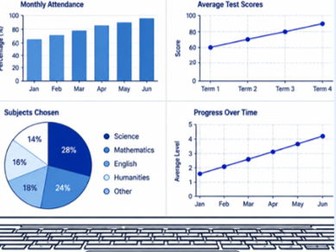
Entry Level 3 Functional Skills Maths - Handling information and data Handling Data: Tables and Frequency Interpreting Data Organising and Representing Data: Charts and Graphs Statistics Describe, interpret and compare observed distributions of a single variable through: appropriate graphical representation involving discrete, continuous and grouped data; and appropriate measures of central tendency (mean, mode, median) and spread (range, consideration of outliers) Construct and interpret appropriate tables, charts, and diagrams, including frequency tables, bar charts, pie charts, and pictograms for categorical data, and vertical line (or bar) charts for ungrouped and grouped numerical data
KS3 Minecraft Education: Coding Lesson 17 Computer ScienceQuick View
TheHomeEdCorner

KS3 Minecraft Education: Coding Lesson 17 Computer Science

(0)
KS2/KS3/Home-Ed/Home-school/Self-study/Computing/Coding/Computer Science Lesson 17. Collaborative City Development: Infrastructure Brief recap of project plans and a starter quiz on server safety rules Focus area: constructing primary city infrastructure using Python scripts Teacher modelling: combining functions and loops to construct road networks Guided setup: deploying automated Agent scripts to pave central city avenues Group implementation: coding automated utility installation (lighting, piping) Cross-team coordination to ensure spatial alignment across city zone borders Check for understanding: evaluating structural alignment against design plans Independent coding within groups: developing customized modular building scripts Debugging session: resolving world overlap errors between different team scripts Documentation task: capturing screenshots and annotating code for project logs Progress review: evaluating completed infrastructure against timeline targets Summary of progress and preview of residential/commercial development
KS3 Minecraft Education: Coding Lesson 18 Computer ScienceQuick View
TheHomeEdCorner

KS3 Minecraft Education: Coding Lesson 18 Computer Science

(0)
KS2/KS3/Home-Ed/Home-school/Self-study/Computing/Coding/Computer Science Lesson 18. Smart Buildings: City Integration Brief recap of infrastructure progress and a quick quiz on function integration Focus area: creating interactive, smart architectural structures for the city Teacher modelling: integrating sensors and events into building access systems Guided practice: coding automated doors, dynamic lighting, and elevator lifts Student implementation: writing text code for complex multi-storey buildings Integrating list-based design patterns into decorative building facades Discussion on evaluating digital artefacts for usability and aesthetic appeal Check for understanding: code review of event-driven building features Independent group work: expanding city zones with smart residential towers Continuous testing: running dry runs to verify automated building scripts Peer feedback: inter-team inspection of smart features and structural integrity Lesson wrap-up detailing final integration steps for next lesson
KS3 Minecraft Education: Coding Lesson 19 Computer ScienceQuick View
TheHomeEdCorner

KS3 Minecraft Education: Coding Lesson 19 Computer Science

(0)
KS2/KS3/Home-Ed/Home-school/Self-study/Computing/Coding/Computer Science Lesson 19. Testing, Evaluation and Optimisation Brief recap of building phase and a starter quiz on system debugging Introduction to formal software testing: unit testing, integration testing, UX review Teacher modelling: writing test cases to evaluate city functionality and stability Peer playtesting: visiting other groups’ city zones to evaluate usability Student activity: completing structured peer evaluation forms on digital artefacts Documenting software bugs, visual glitches, and code optimization needs Refactoring code: optimizing Python loops and functions to reduce lag Check for understanding: identifying redundant code lines for optimization Independent group task: applying fixes and optimizations based on peer reports Verifying project compliance with original design specifications and user needs Finalizing project documentation, annotated code snippets, and evidence portfolios Wrap-up summary of optimization techniques and preparation for final showcase
KS3 Minecraft Education: Coding Lessons - Computer ScienceQuick View
TheHomeEdCorner

KS3 Minecraft Education: Coding Lessons - Computer Science

20 Resources
KS2/KS3/Home-Ed/Home-school/Self-study/Computing/Coding/Computer Science Design, use and evaluate computational abstractions that model the state and behaviour of real-world problems and physical systems Understand several key algorithms that reflect computational thinking [for example, ones for sorting and searching]; use logical reasoning to compare the utility of alternative algorithms for the same problem Use two or more programming languages, at least one of which is textual, to solve a variety of computational problems; make appropriate use of data structures [for example, lists, tables or arrays]; design and develop modular programs that use procedures or functions Undertake creative projects that involve selecting, using, and combining multiple applications, preferably across a range of devices, to achieve challenging goals, including collecting and analysing data and meeting the needs of known users Create, re-use, revise and re-purpose digital artefacts for a given audience, with attention to trustworthiness, design and usability Understand a range of ways to use technology safely, respectfully, responsibly and securely, including protecting their online identity and privacy; recognise inappropriate content, contact and conduct and know how to report concerns.