


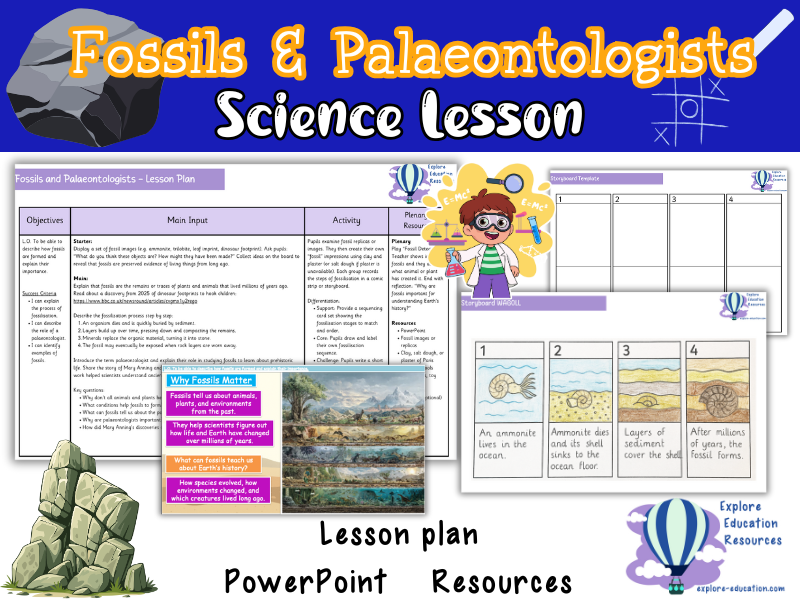
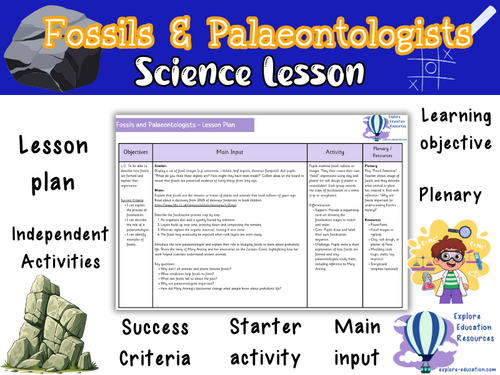
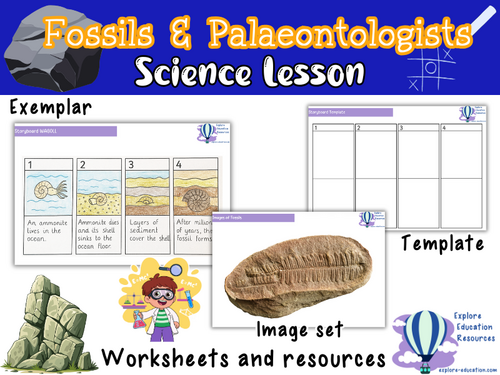
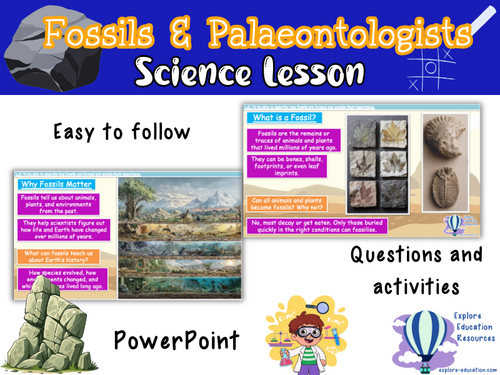
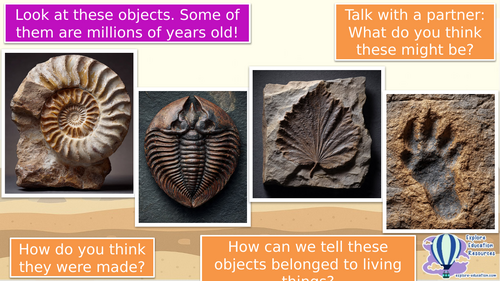
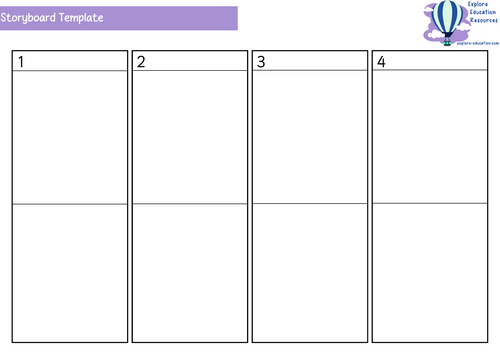
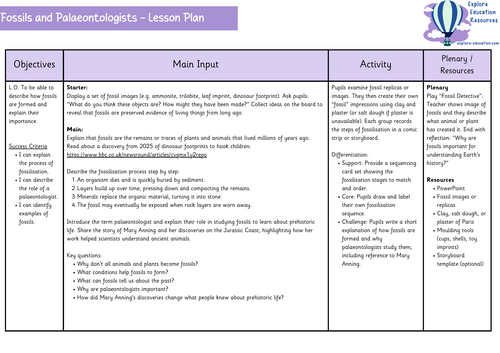
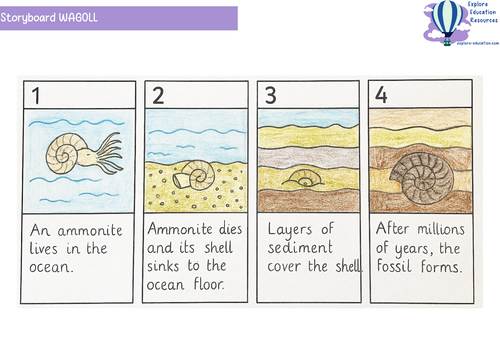
Explore how fossils form and why palaeontologists study them in this fully resourced KS2 science lesson. Designed for Years 3–6, pupils investigate fossil evidence, model the fossilisation process, and record their understanding through creative and differentiated activities.
What’s Included:
✔ Lesson plan
✔ PowerPoint presentation
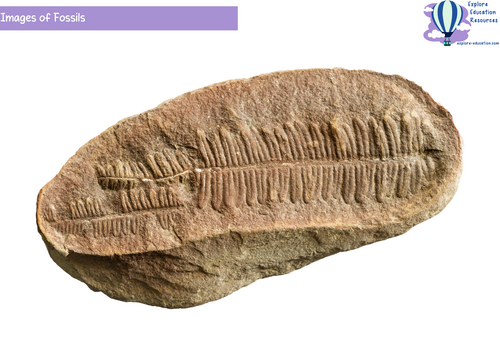
✔ Fossil image set
✔ Storyboard template
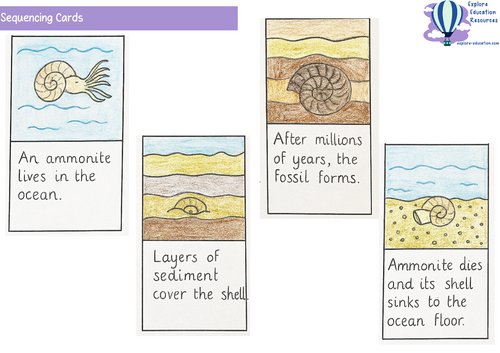
✔ Sequencing cards for lower ability group
Lesson Overview:
★ Starter: Pupils examine fossil images and discuss how they might have formed.
★ Main: Teacher explains fossilisation stages; pupils create clay or plaster fossil impressions and record the process in a storyboard.
★ Plenary: “Fossil Detective” game followed by reflection on fossil importance and the role of palaeontologists.
Why It’s Useful:
✔ Differentiated for mixed-ability KS2 classes
✔ Supports National Curriculum objectives for rocks and fossils
✔ Combines visual modelling with hands-on learning
✔ Includes editable and printable resources
Suggested Use Cases
Perfect for KS2 science units on rocks, fossils, and evolution. Suitable for whole-class teaching, science week, or cross-curricular history links. Can be adapted for homework or independent research.
Search Tags
KS2 science | fossils lesson | Year 4 science activity | palaeontologists worksheet | fossilisation storyboard | outstanding science lesson | Mary Anning KS2 | rocks and soils topic
Something went wrong, please try again later.
This resource hasn't been reviewed yet
To ensure quality for our reviews, only customers who have purchased this resource can review it
Report this resourceto let us know if it violates our terms and conditions.
Our customer service team will review your report and will be in touch.
£3.49