


Free Sample: A Practical Guide to Feedback
Reduce the marking. Keep the feedback. Maintain high standards.
Are you spending hours marking students’ work, but wondering how much of that feedback is actually helping them improve?
This free 3-page sample from A Practical Guide to Feedback introduces practical ways to make feedback more purposeful, manageable and focused on student learning.
Inside, you’ll find:
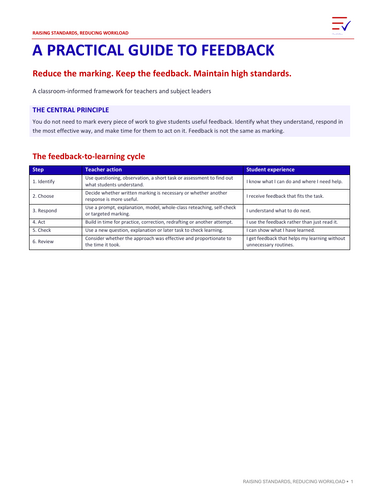
- The feedback-to-learning cycle: a simple framework for identifying what students understand, responding effectively and checking whether learning has improved.
- Live feedback in the classroom: practical examples of how to respond to misconceptions while students are working, rather than relying on lengthy written comments afterwards.
- A manageable self-check routine: helping students use answers, model solutions and mark schemes to identify and understand their mistakes.
- Practical examples across key stages: ideas for supporting students in KS3, KS4 and KS5.
This sample is designed for teachers who want to reduce unnecessary marking without lowering expectations or compromising the quality of feedback.
It offers a starting point for reviewing your own classroom routines and considering how students can take a more active role in responding to feedback.
Want to explore these ideas further?
The full A Practical Guide to Feedback includes additional strategies for whole-class feedback, targeted marking, subject-specific examples and guidance for Heads of Department and school leaders.
Find the full guide on TES: https://www.tes.com/teaching-resource/-13637428
Something went wrong, please try again later.
This resource hasn't been reviewed yet
To ensure quality for our reviews, only customers who have downloaded this resource can review it
Report this resourceto let us know if it violates our terms and conditions.
Our customer service team will review your report and will be in touch.
£0.00