


Kama Sutra
by Vatsyayana
About_
The Kama Sutra is an ancient Indian text attributed to the scholar Vatsyayana, which presents love, marriage, and
pleasure as parts of a larger philosophy of life alongside duty and wealth. Its seven books cover general principles,
union, courtship and marriage, the wife, the wives of others, the courtesan, and secret remedies. This study guide
helps students explore the text’s history, ideas, and cultural context in a thoughtful and respectful way. This study
guide contains 91 questions across 7 chapter sections (70 Factual + 21 Critical), 1 Crossword Puzzle (12 clues), and
1 Character Focus Activity.
What’s Included_
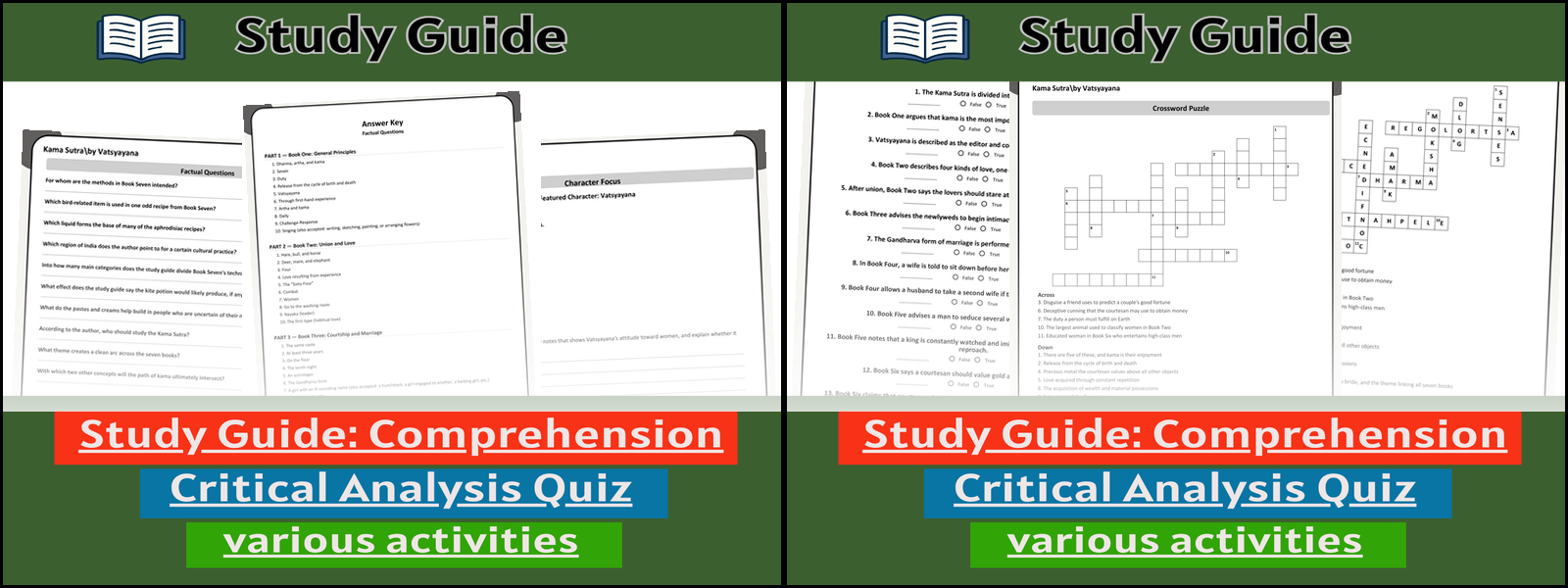
This study guide features 7 sets of 10 Factual Questions with an answer key (70 total), 7 sets of 3 Critical Analysis
Questions (21 total), 1 Crossword Puzzle (12 clues), and 1 Character Focus Activity (8 traits + evidence prompt +
critical thinking question).
Target Grades_
Grades 11-12 and College (mature readers)
Teacher Note_
This study guide gives students a clear path through a complex historical text, building comprehension through
factual recall and deeper thinking through critical questions. It encourages respectful discussion of how ancient
values compare with our own. We hope it saves you valuable preparation time so you can focus on guiding rich
classroom conversations.
An Ancient Text from India
The Kama Sutra is one of the best-known works of ancient Indian literature. It is traditionally attributed to a scholar named
Vatsyayana, who gathered earlier teachings into a single guide. The title can be understood as ‘Aphorisms on Love,’ and the
text was written to teach readers how to live well in society.
More Than a Book About Romance
Many people today assume the Kama Sutra is only about physical relationships, but ancient readers saw it as part of a wider
philosophy of life. It belongs to a tradition that discusses duty, success, and pleasure as parts of a balanced life. Reading it well
means paying attention to its historical setting and the social customs of its time.
Reading with a Critical Eye
Because the text was written many centuries ago, some of its ideas about gender, marriage, and social class may seem unfair
or unusual to modern readers. Good students of this work ask why the author wrote as he did and compare those attitudes
with today’s values. This guide encourages careful reading, respectful discussion, and evidence-based opinions.
Something went wrong, please try again later.
This resource hasn't been reviewed yet
To ensure quality for our reviews, only customers who have purchased this resource can review it
Report this resourceto let us know if it violates our terms and conditions.
Our customer service team will review your report and will be in touch.
£2.90