


This is a rich, well‑sequenced and highly engaging unit of work that introduces pupils to the Vikings while developing strong historical thinking skills. Through a carefully selected range of interactive and enquiry‑based activities, pupils are immersed in the Viking world and encouraged to think, talk and act like historians.
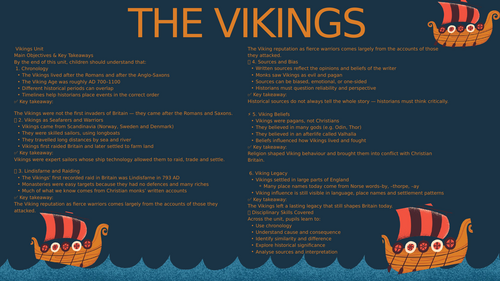
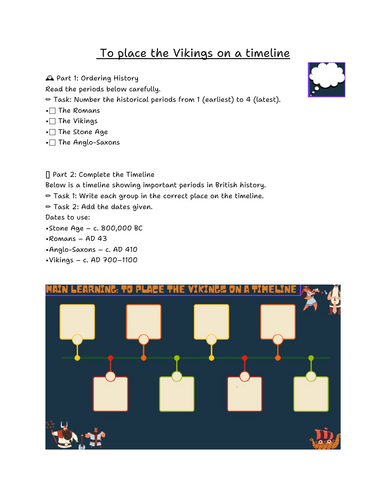
The unit begins with a strong focus on chronology, helping pupils place the Vikings accurately within the wider context of British history. Interactive timelines, human timelines and sequencing activities enable children to understand that the Viking period came after the Romans and Anglo‑Saxons, and that historical periods can overlap rather than begin and end abruptly. These activities support pupils in building secure chronological understanding and historical context.
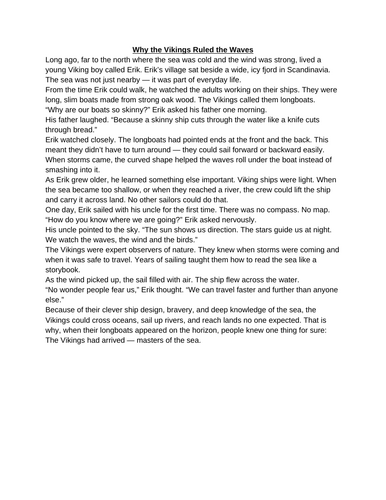
Geographical learning is woven throughout the unit using map work and journey‑mapping activities. Pupils trace Viking voyages from Scandinavia to Britain, exploring how the sea shaped Viking life. Visual sources and storytelling are used to bring Viking longboats to life, helping pupils understand how ship design and sailing knowledge made the Vikings skilled seafarers capable of raiding, trading and settling.
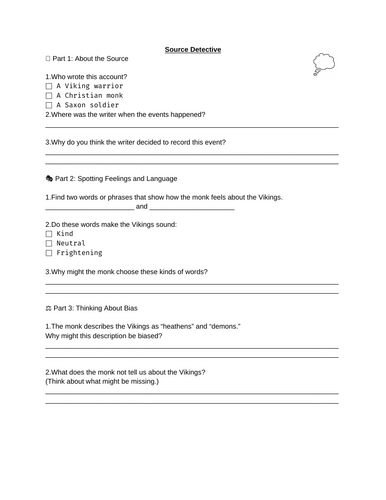
A central part of the unit focuses on historical enquiry and sources, using the raid on Lindisfarne as a case study. Pupils read a first‑person monk’s account and take part in structured discussion and questioning activities to identify emotion, viewpoint and bias. Through this work, pupils learn that historical sources reflect the beliefs and experiences of the writer and do not always tell the full story.
Viking beliefs are explored through storytelling, drama and role‑play, with pupils acting out the roles of Norse gods. Card‑sorting activities comparing Christian and Pagan beliefs encourage discussion and deepen understanding of how belief systems influenced Viking behaviour, bravery in battle and conflict with Christian communities.
The unit concludes by examining Viking legacy, particularly through place‑name investigations. Pupils identify Norse place names on maps and recognise how Viking settlement continues to shape Britain today.
By the end of the unit, pupils can confidently place the Vikings in time, explain why and how they came to Britain, describe Viking beliefs and their impact on behaviour, question the reliability of sources, and recognise the lasting legacy of Viking settlement. This unit successfully combines knowledge, skills and engagement, leaving pupils with a secure and meaningful understanding of the Viking period.
Something went wrong, please try again later.
This resource hasn't been reviewed yet
To ensure quality for our reviews, only customers who have purchased this resource can review it
Report this resourceto let us know if it violates our terms and conditions.
Our customer service team will review your report and will be in touch.
£3.00