


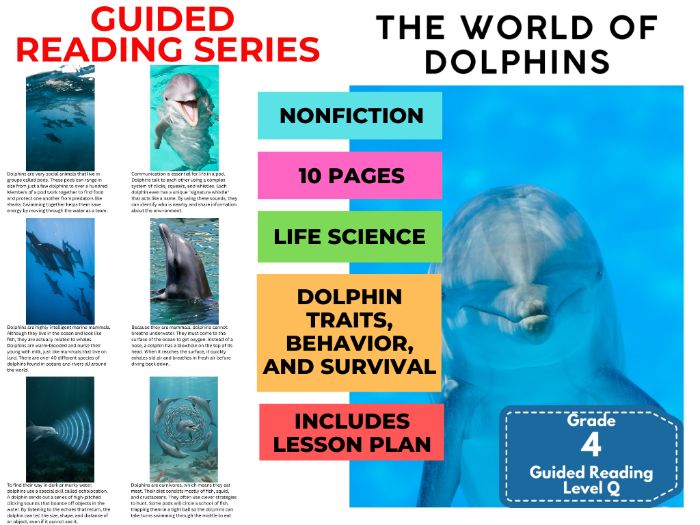


Book Snapshot
• Title: The World of Dolphins
• Genre: Nonfiction (informational)
• Subject: Life Science
• Primary Topic: Dolphin traits, behavior, and survival
• Estimated Guided Reading Level (A–Z): Q
What This Book Teaches Best
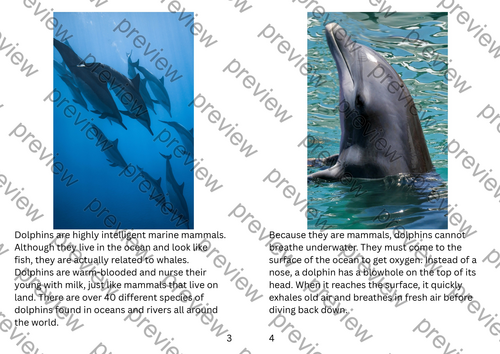
• Explains dolphins as marine mammals (warm-blooded, nurse young with milk) and notes they are related to whales.
• Teaches how dolphins breathe: they cannot breathe underwater, must surface for oxygen, and use a blowhole to exhale and inhale quickly.
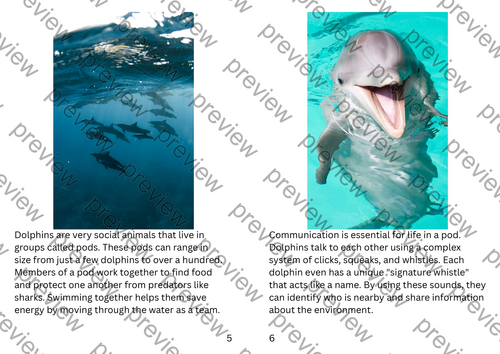
• Highlights dolphin social life in pods, including working together for food, protection from predators, and saving energy by swimming as a team.
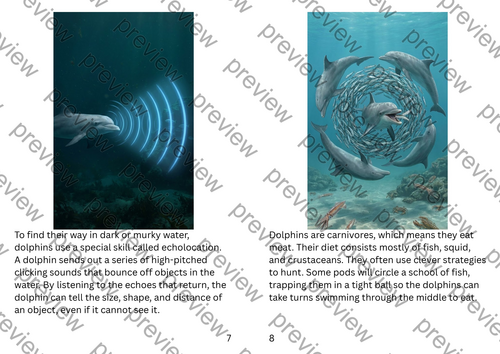
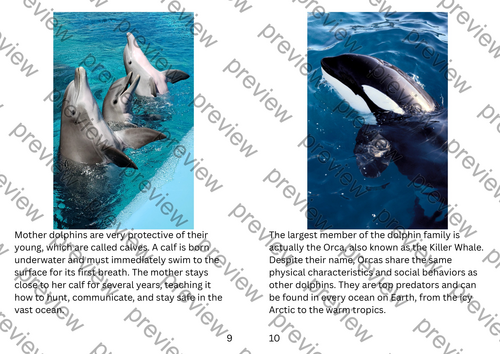
• Describes dolphin communication and sensing, including clicks/squeaks/whistles, a unique “signature whistle,” and echolocation to find objects in dark or murky water.
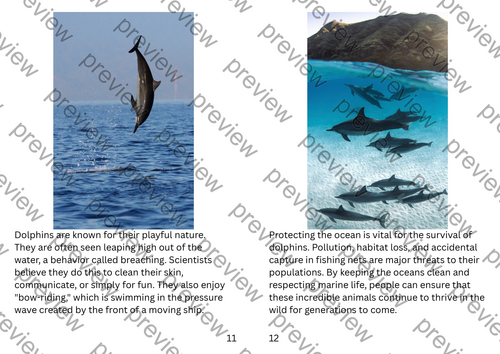
• Connects dolphin survival to human impact, naming pollution, habitat loss, and accidental capture in fishing nets as threats.
Learning Goals
• Students will explain why dolphins must come to the ocean’s surface to breathe and how a blowhole helps them do it.
• Students will describe how dolphins live in pods and list ways pod members help each other find food and stay safe.
• Students will explain how echolocation works in the text and what information dolphins learn from returning echoes.
• Students will identify what dolphins eat in the book and describe one hunting strategy pods use with schools of fish.
• Students will describe how mother dolphins care for calves and what the mother teaches the calf over time.
• Students will name threats to dolphins mentioned in the text and explain why protecting the ocean matters for their survival.
Key Vocabulary From the Text
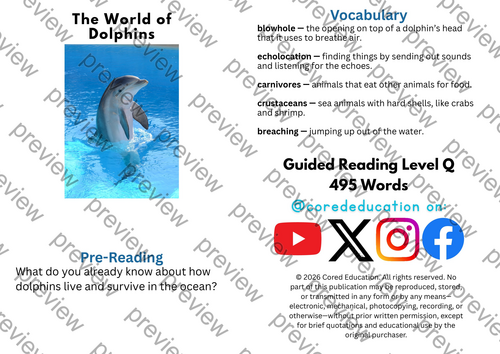
• blowhole — opening on top of a dolphin’s head for breathing.
• echolocation — finding things using sounds and listening for echoes.
• carnivores — animals that eat other animals for food.
• crustaceans — sea animals with hard shells, like crabs and shrimp.
• breaching — jumping up out of the water.
Discussion Prompts
• Pre-reading question: What do you think dolphins need in order to survive in the ocean?
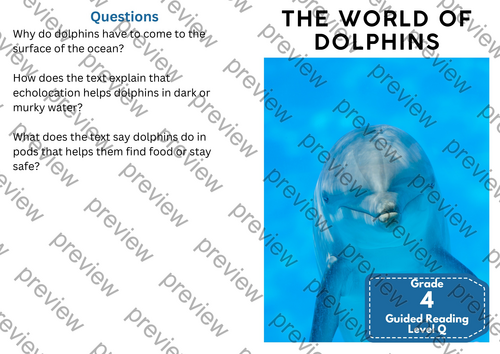
• Comprehension questions: Why does the text say dolphins have to come to the surface of the ocean?
• Comprehension questions: How does the text explain that echolocation helps dolphins in dark or murky water?
• Comprehension questions: What does the text say dolphins do in pods that helps them find food or stay safe?
- If “Booklet” Printing Is NOT Available
You can still print this correctly with manual duplex printing.
Step-by-step: - Open the PDF.
- Choose Print.
- Set:
o Orientation: Landscape
o Pages per sheet: 1
o Print on both sides: Yes
o Flip on: Short edge - Print all pages.
Because each PDF page already contains two facing book pages, the result will still fold cleanly into a book.
Something went wrong, please try again later.
This resource hasn't been reviewed yet
To ensure quality for our reviews, only customers who have purchased this resource can review it
Report this resourceto let us know if it violates our terms and conditions.
Our customer service team will review your report and will be in touch.
£1.25