

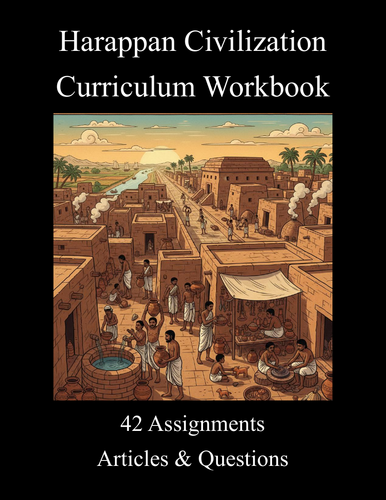

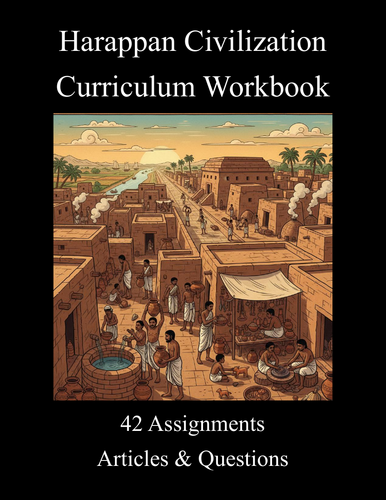

The Harappan Civilization Curriculum Workbook is a comprehensive learning resource designed to help students explore one of the world’s earliest and most advanced ancient civilizations. This workbook includes clear, student-friendly articles and comprehension questions that guide learners through every major aspect of Harappan history. Topics range from geography, government, culture, daily life, religion, social classes, and education to technology, trade, warfare, and literature. Students also examine famous achievements such as planned cities at Harappa and Mohenjo-daro, advanced drainage systems, standardized weights, seals, dockyards, and important artifacts like the Dancing Girl and Priest-King sculptures. The workbook also covers environmental changes, urban decline, migration, cultural influence, and lasting legacy. It is ideal for building strong historical understanding and critical thinking skills.
Assignments Included:
Overview
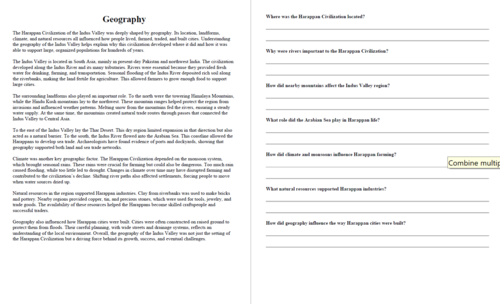
Geography
Government
Culture
Daily Life
Religion
Social Classes
Food & Agriculture
Education
Arts & Entertainment
Clothing
Technology & Science
Trade & Commerce
Military & Warfare
Literature
Men’s Roles
Women’s Roles
Early Neolithic Farming Communities
Planned cities at Harappa & Mohenjo-daro
Baked brick construction
Grid-based City Planning
Drainage & Sewer systems
The Great Bath at Mohenjo-daro
Citadel and Lower Town City Design
Standardized Weights & Measures
Harappan Seals used for trade and identity
Indus Valley Trade with Mesopotamia
Lothal Dockyard & Port Facilities
Bead-making and Metallurgy
The Dancing Girl Bronze Figure
Priest-King Stone Sculpture
Cotton for Textile Production
Undeciphered Indus script
Religious Practices connected to Water, Animals, and Fertility
Absence of large palaces or royal tombs
Strong urban sanitation and Public Health Systems
Gradual Environmental Changes affecting river systems
Weakening of the monsoon climate
Decline of major urban centers around 1900 BCE
Migration and transformation into smaller rural communities
Cultural influence on later South Asian traditions
Legacy
Something went wrong, please try again later.
This resource hasn't been reviewed yet
To ensure quality for our reviews, only customers who have purchased this resource can review it
Report this resourceto let us know if it violates our terms and conditions.
Our customer service team will review your report and will be in touch.
$29.99