


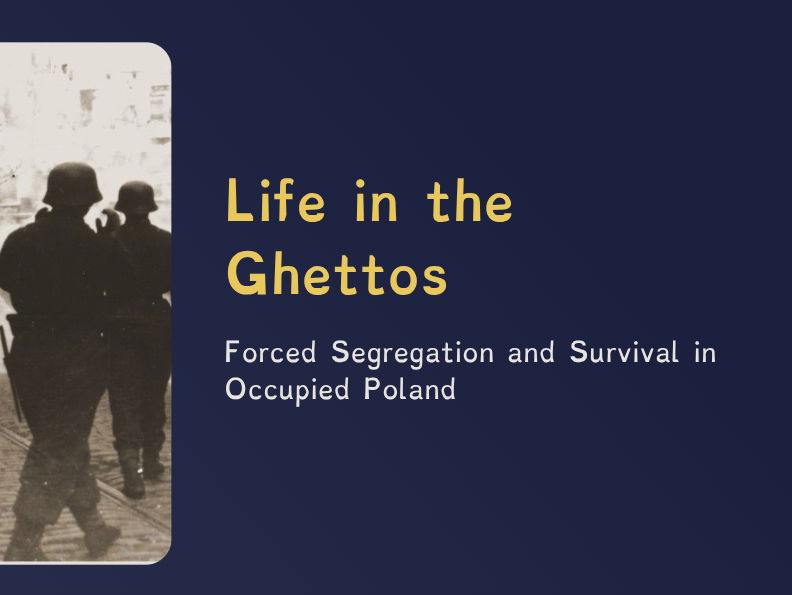
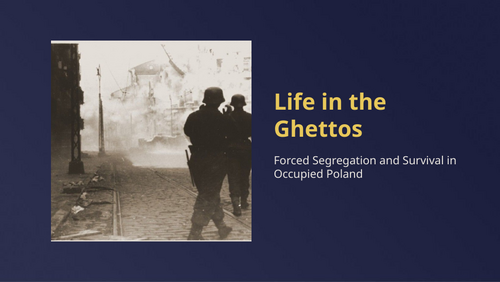
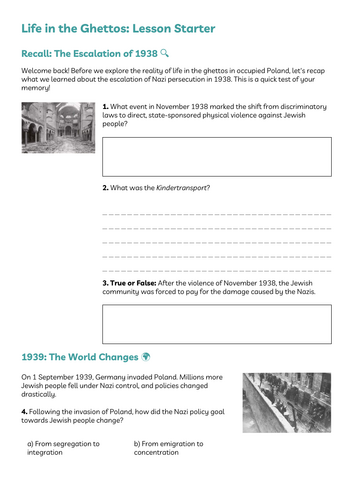
This lesson explores how Nazi persecution intensified through the creation of ghettos, marking a shift from public violence to enforced territorial segregation. Students begin by examining why ghettos were established, how they functioned, and how they represented a new phase in the regime’s attempt to isolate and control Jewish communities.
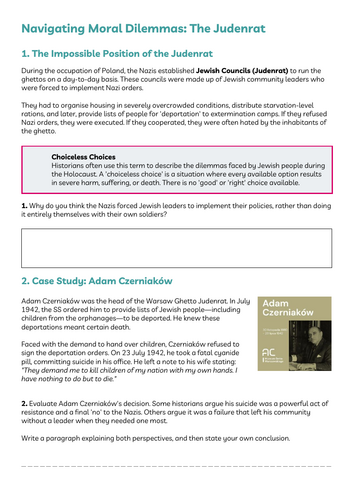
Learners then analyse the physical and psychological conditions of ghetto life, considering overcrowding, starvation, disease and the emotional toll of confinement. Building on this, students evaluate the impossible moral dilemmas faced by Jewish Councils (Judenräte), exploring how leaders were forced to make decisions under extreme coercion and with no ethical options available.
The lesson concludes by identifying forms of spiritual and cultural resistance, including secret schooling, religious practice, art, writing and community organisation, helping students understand how people preserved dignity and identity despite dehumanising conditions.
Success Criteria
Students will be able to:
- Explain the transition from violence to territorial segregation and describe why ghettos were created.
- Analyse the physical and psychological conditions of ghetto life using historical evidence.
- Evaluate the moral dilemmas faced by Jewish Councils and explain why no choices were free or fair.
- Identify forms of spiritual and cultural resistance used by ghetto inhabitants.
Includes
A lesson starter, PowerPoint, and worksheet.
Something went wrong, please try again later.
This resource hasn't been reviewed yet
To ensure quality for our reviews, only customers who have purchased this resource can review it
Report this resourceto let us know if it violates our terms and conditions.
Our customer service team will review your report and will be in touch.
£2.00