


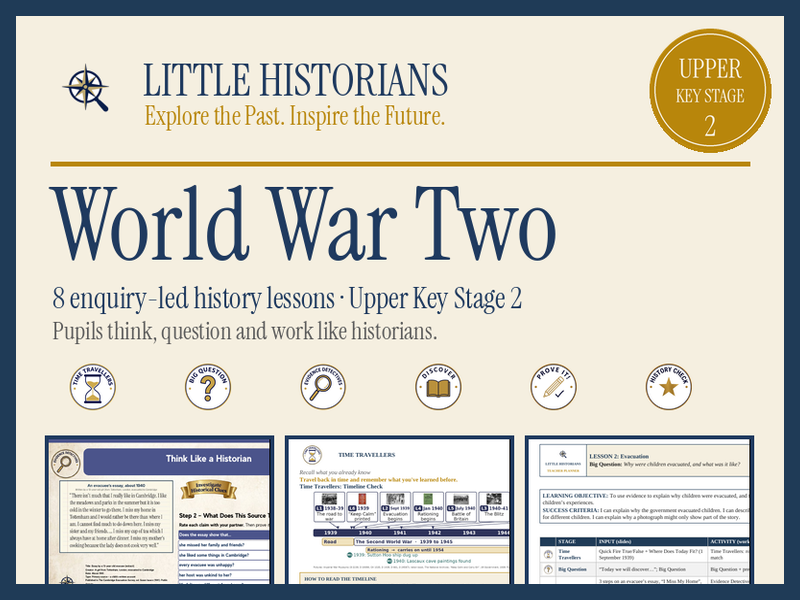
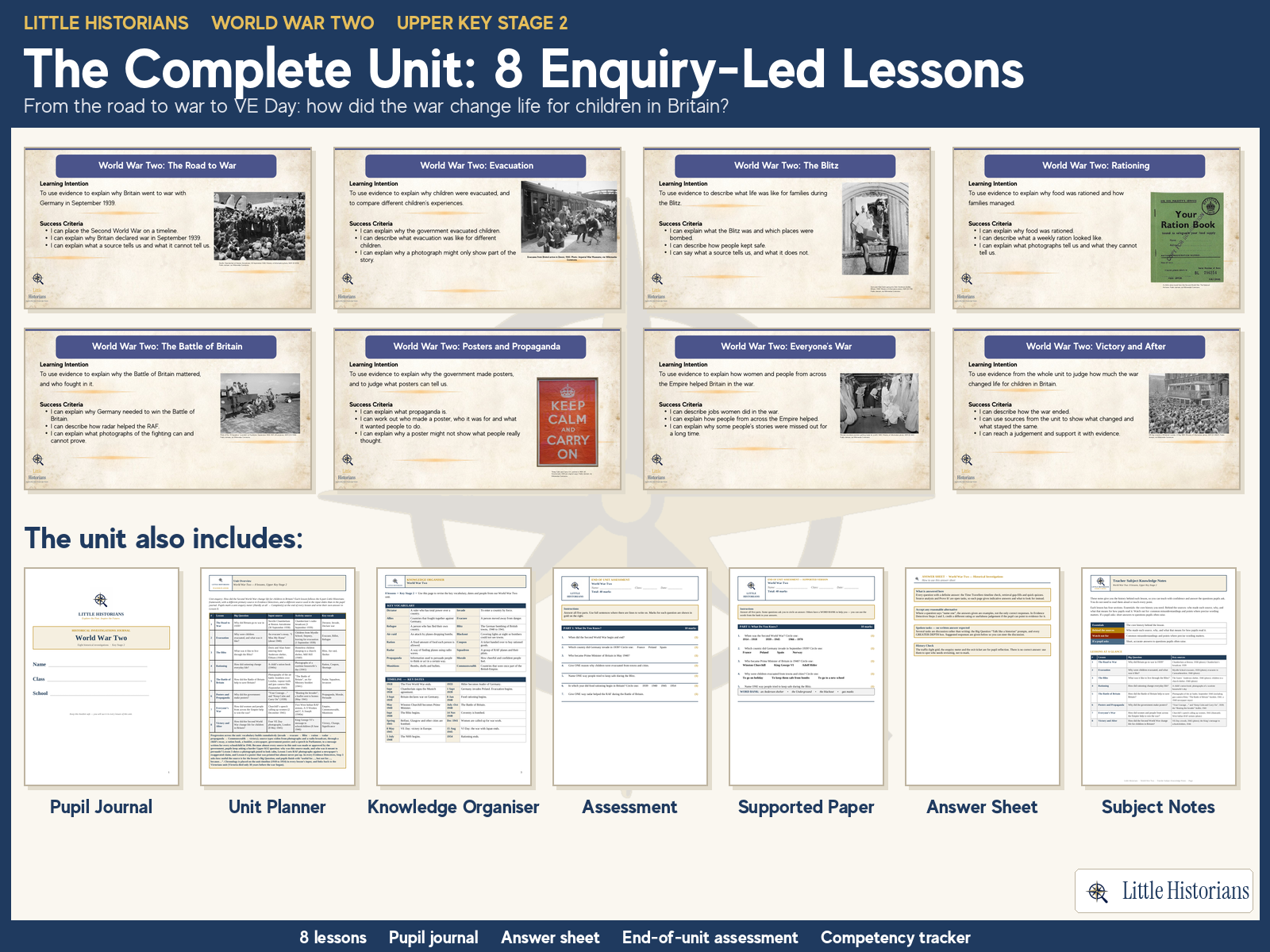
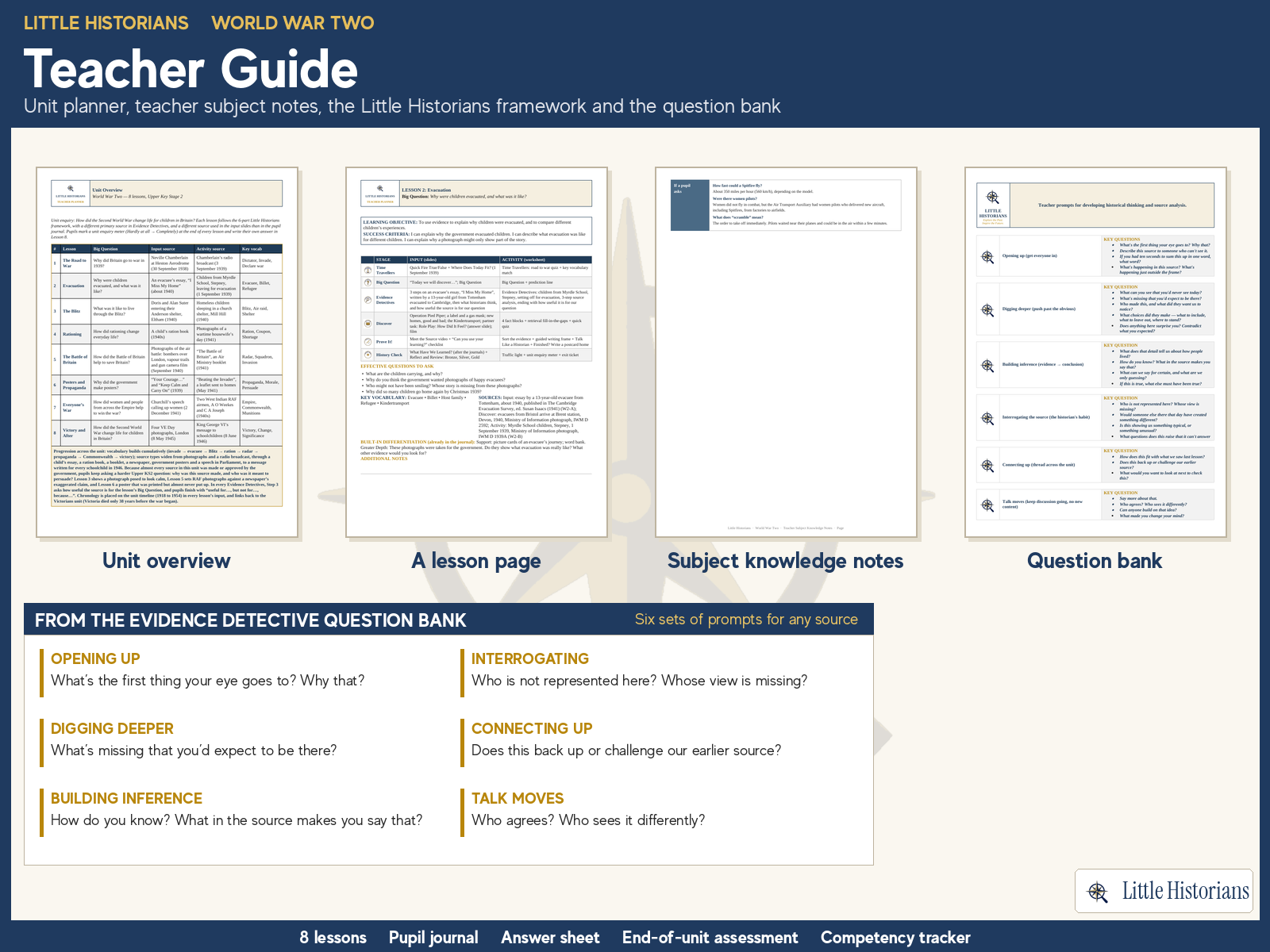
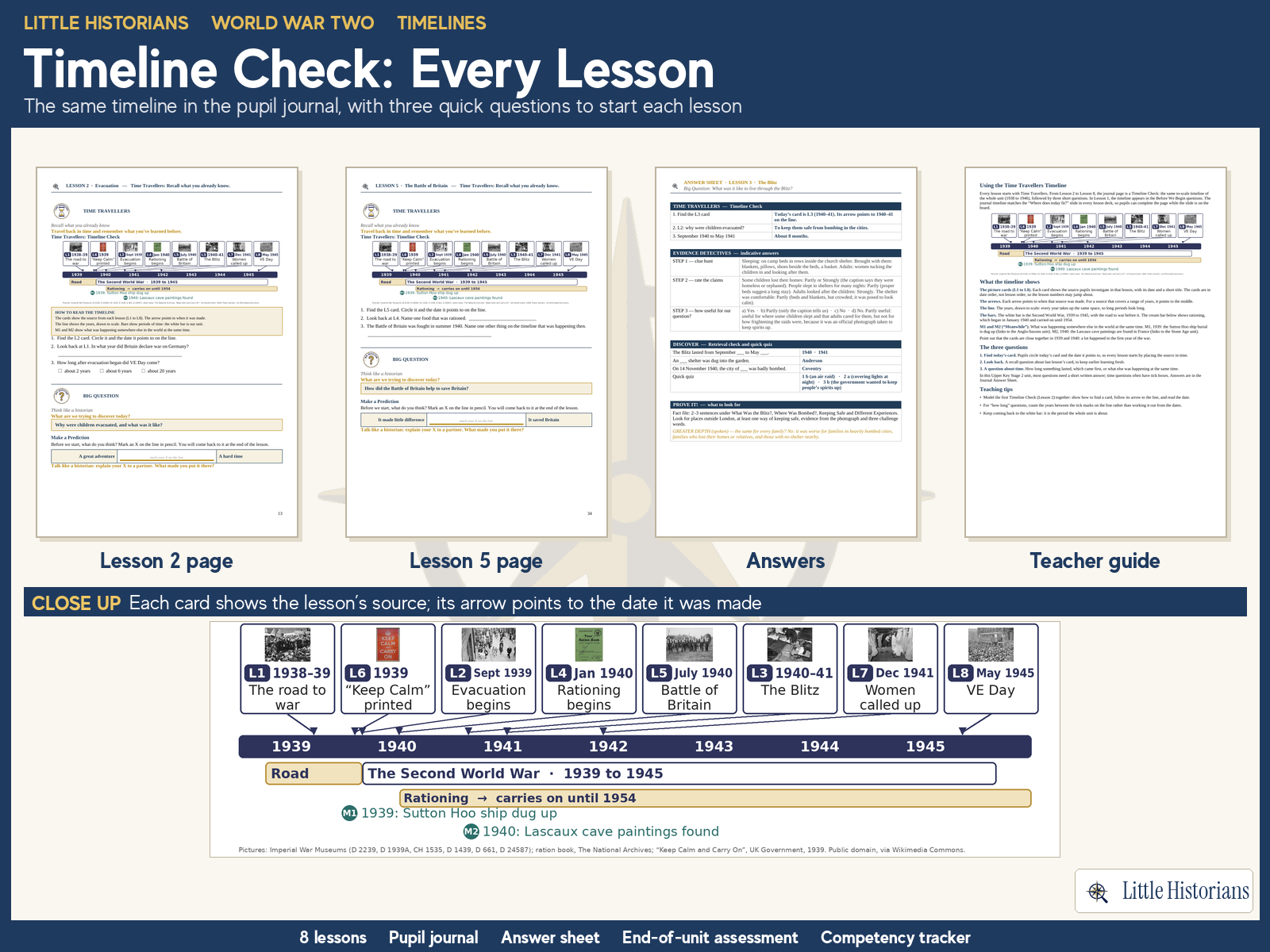
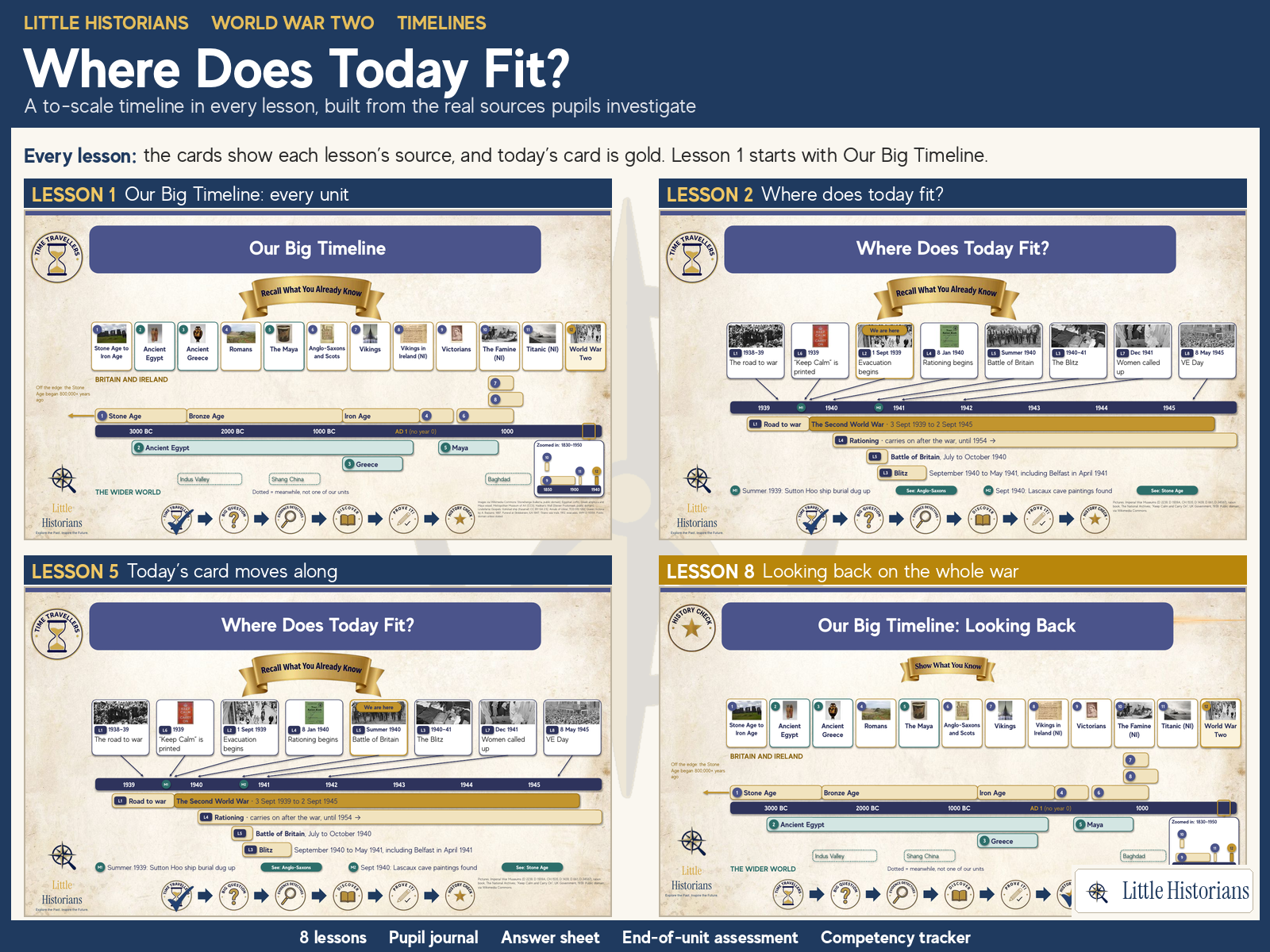
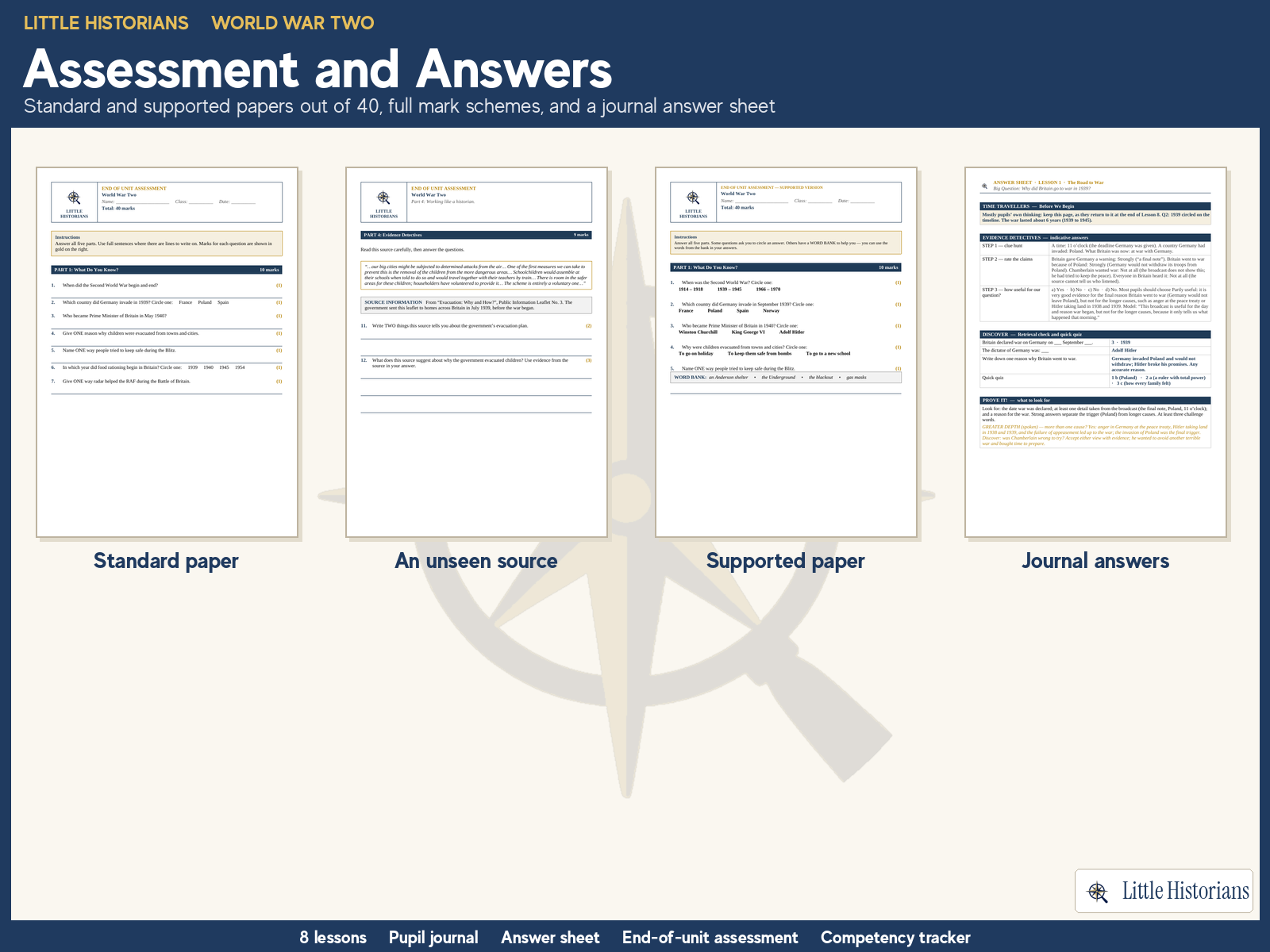
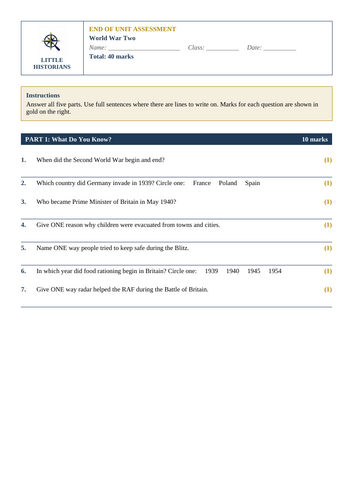
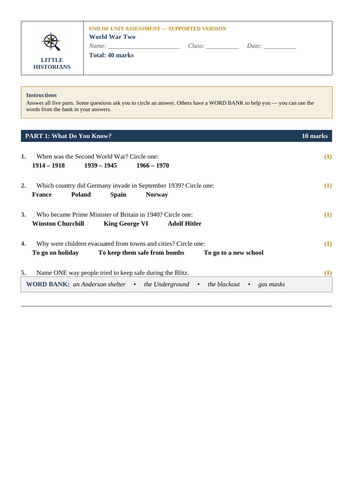
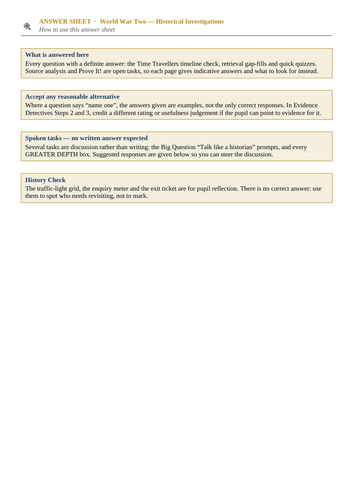
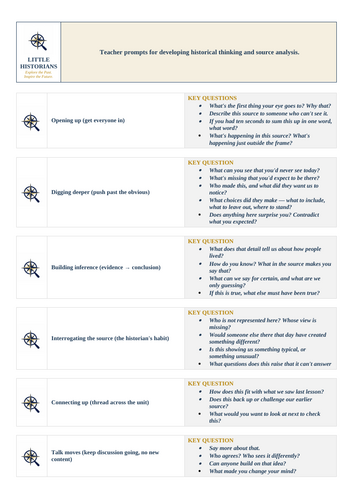

A complete, enquiry-led World War Two unit for Upper Key Stage 2. Eight lessons
built around real sources from the time, one pupil journal for the whole unit,
and everything you need to plan, teach and assess.
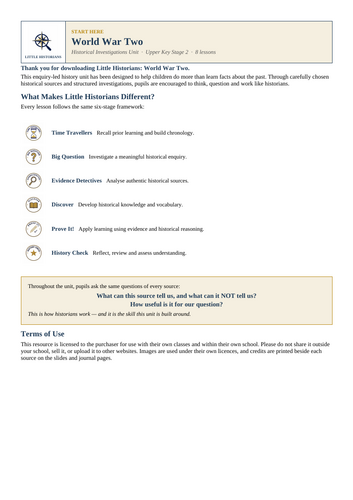
Unit enquiry: How did the Second World War change life for children in Britain?
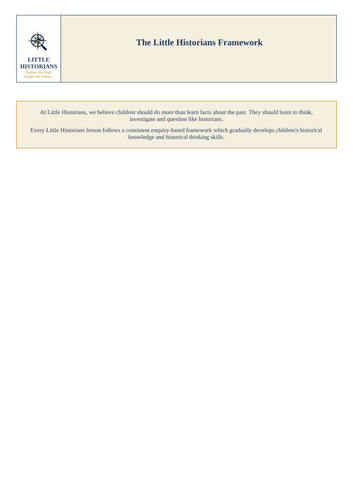
Every lesson follows the same Little Historians six-stage framework: Time
Travellers, Big Question, Evidence Detectives, Discover, Prove It! and History
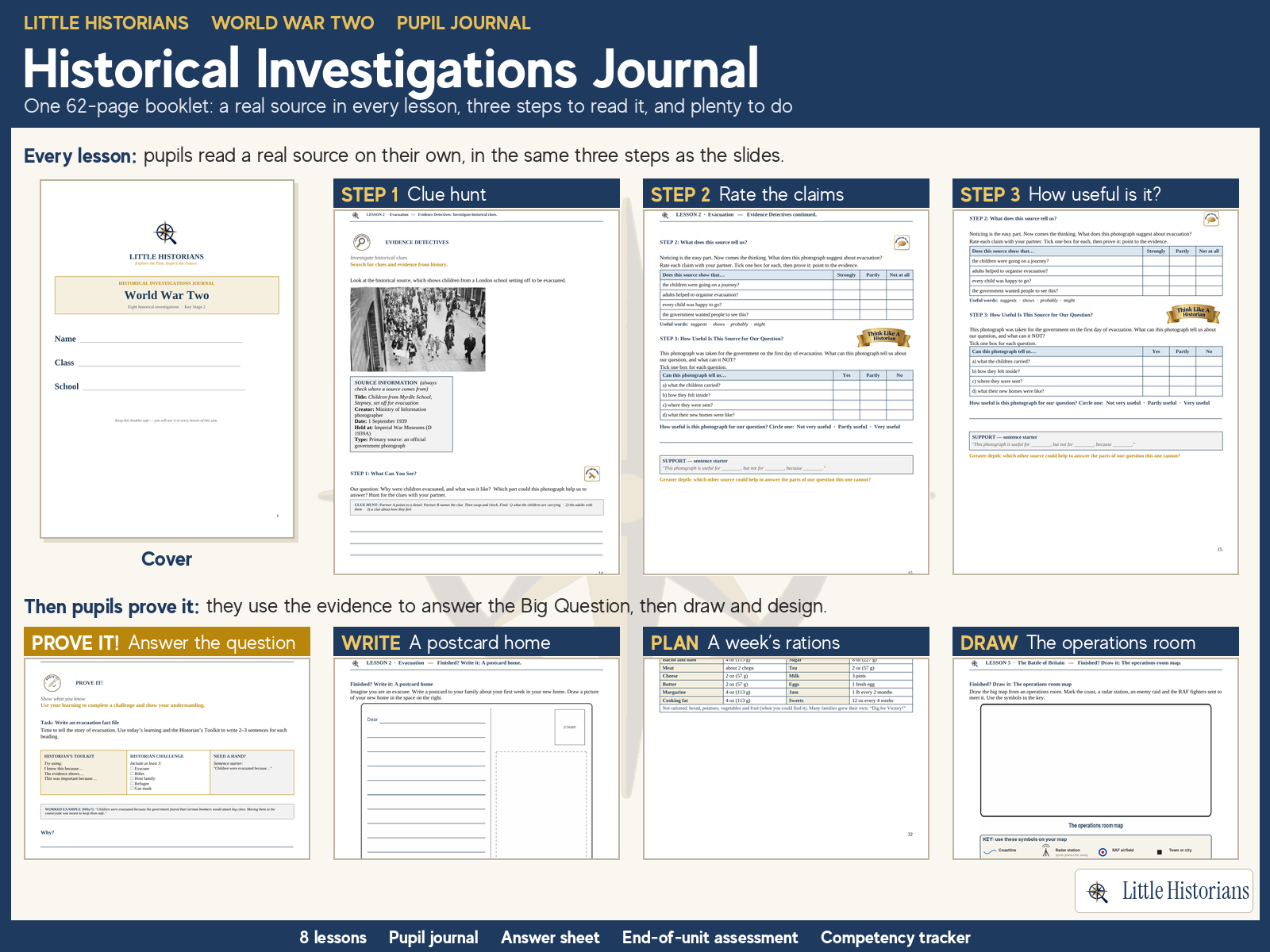
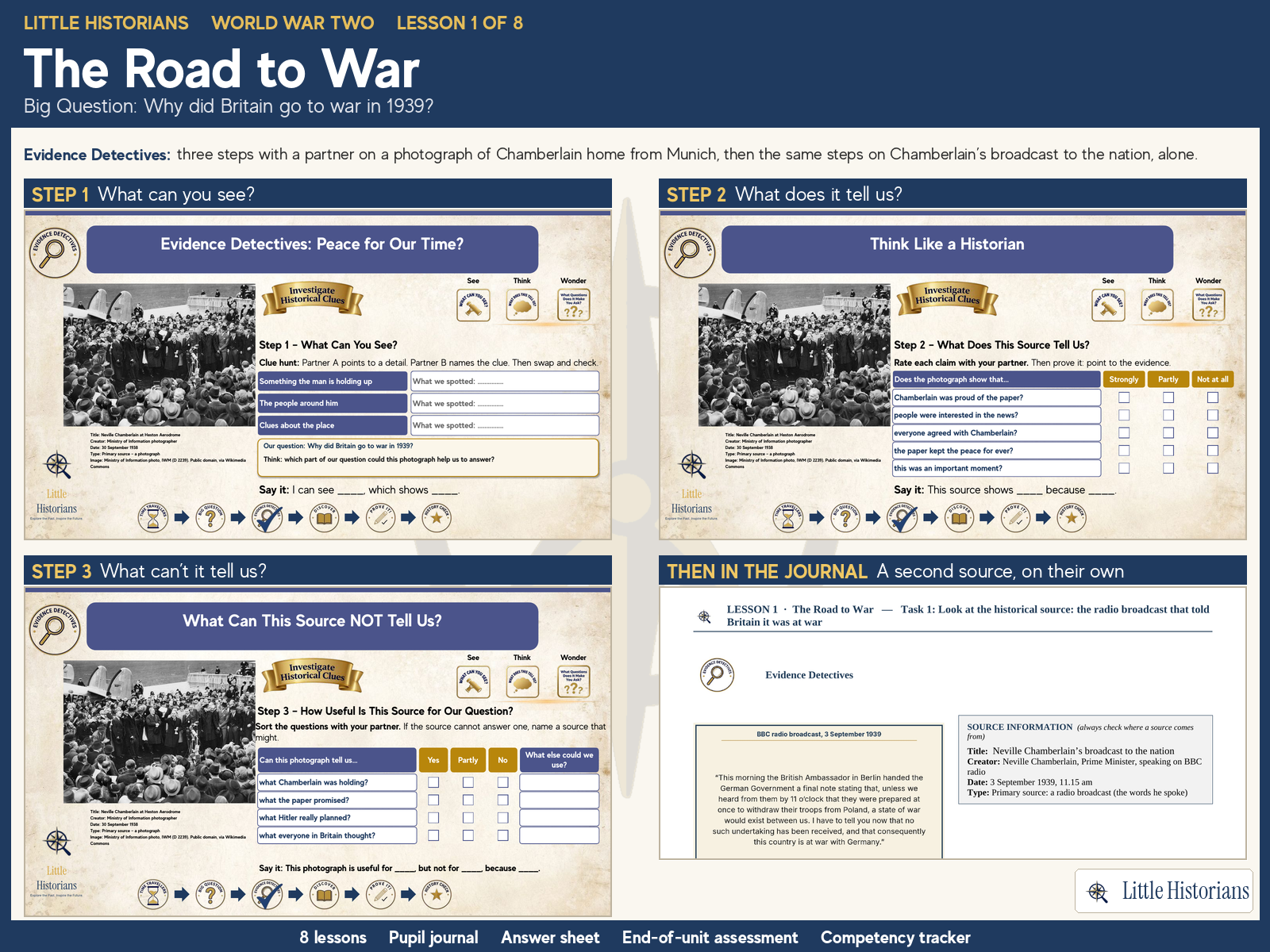
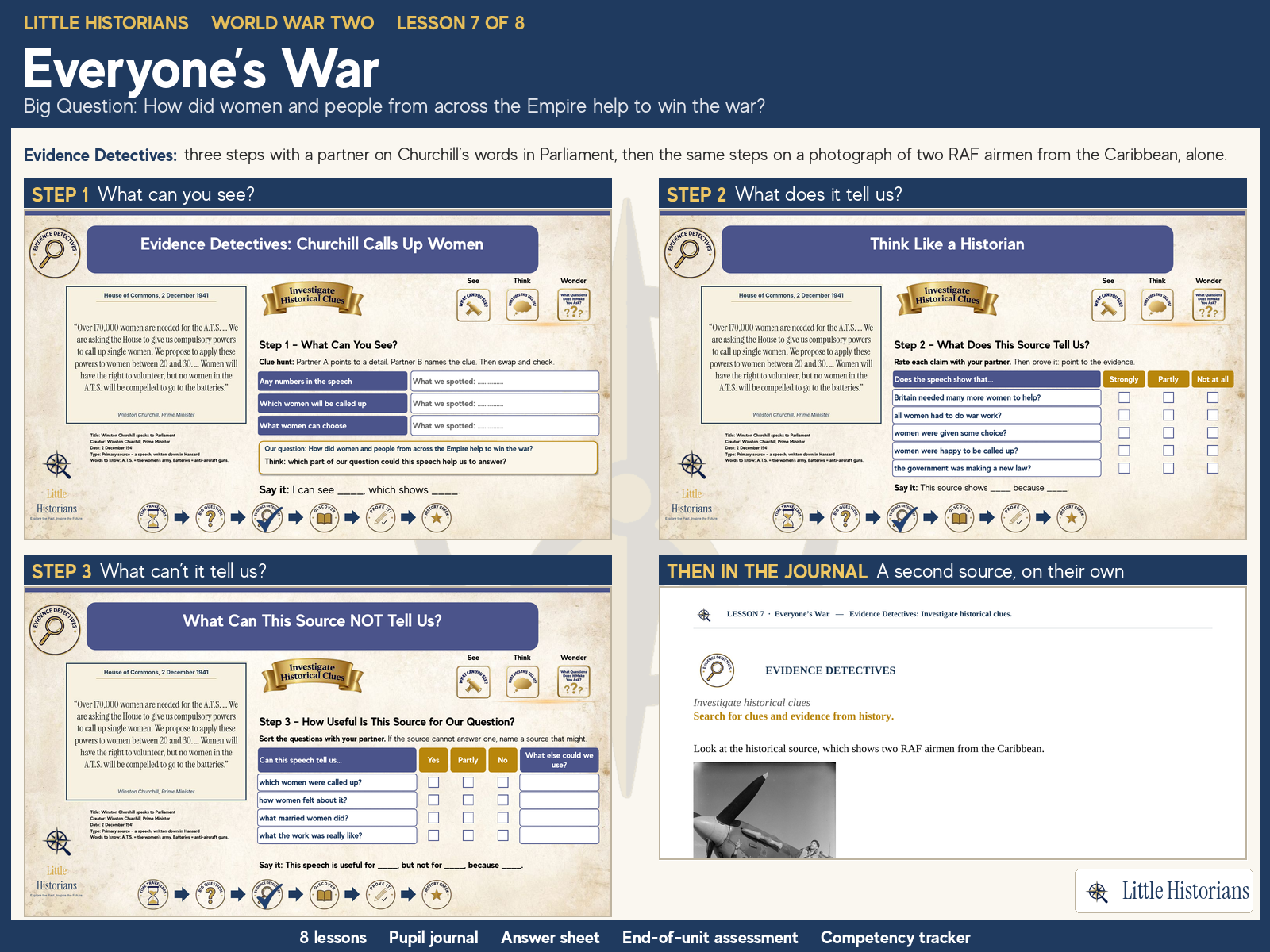
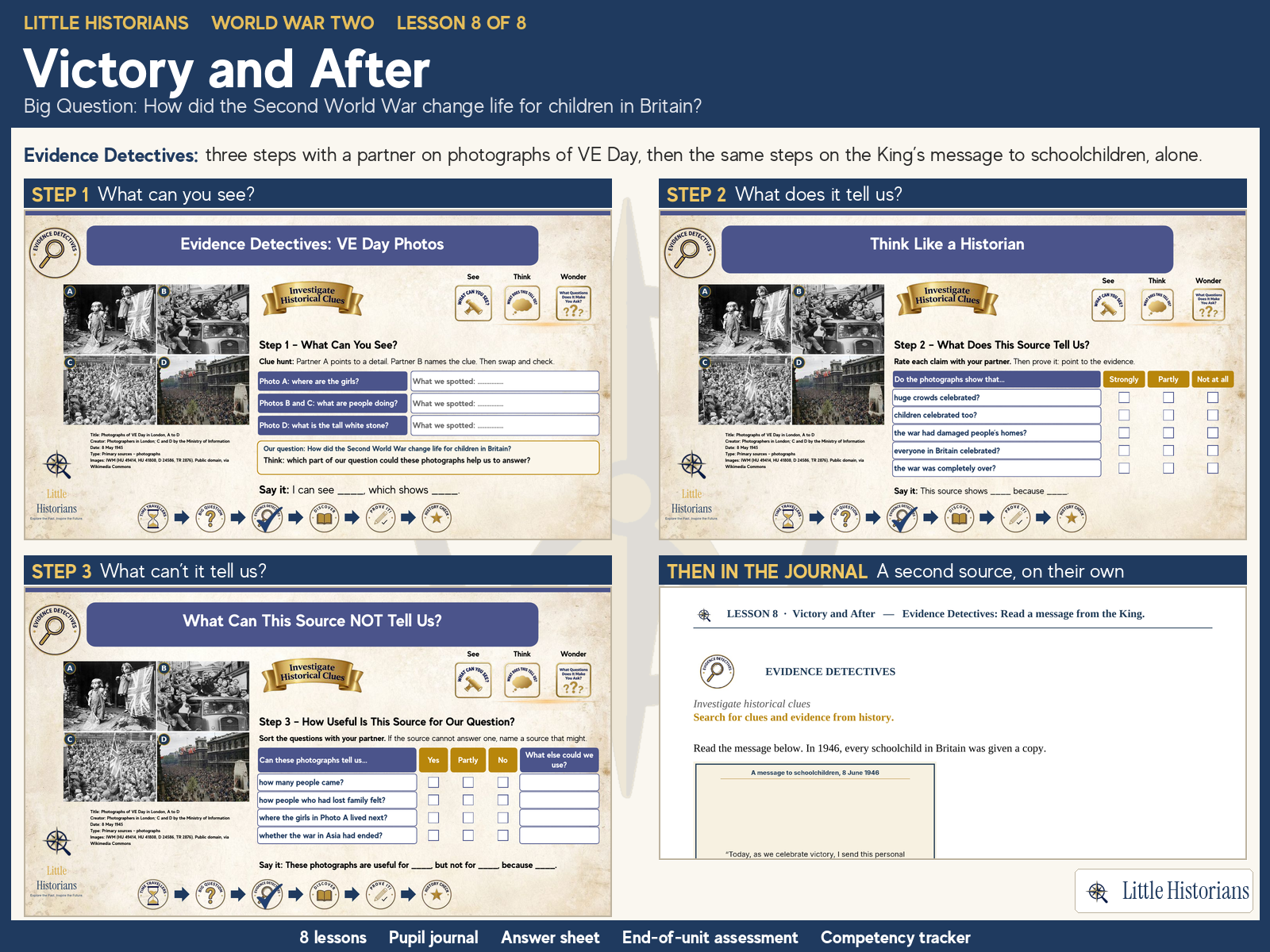
Check. In Evidence Detectives the class investigates one source together on the
slides in three steps: what can you see, what does it tell us, and how useful
is it for our question. Pupils then take the same three steps on their own in
the journal, on a second source. By Lesson 8 they have worked with photographs,
a child’s own writing, a ration book, gun camera pictures, posters, a leaflet,
a speech to Parliament and a message from the King, and they have learned to
ask what each source can tell us and what it cannot.
A one-minute Meet the Source video in every lesson. Each video is built into the
PowerPoint and plays just before pupils open their journals. It introduces the
source they are about to investigate on their own: where it comes from, two
“look closer” moments that zoom in on the details, and a question to take
straight into the task. It models the questioning pupils then do independently,
and helps non-specialist teachers launch the journal work with confidence. No
internet connection or video links needed.
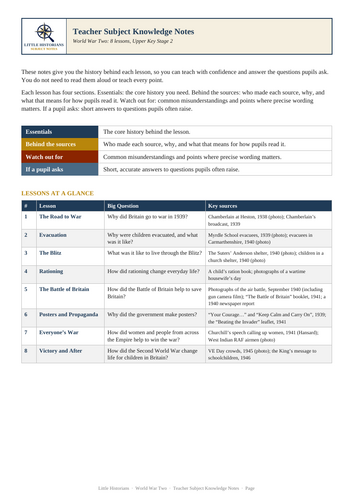
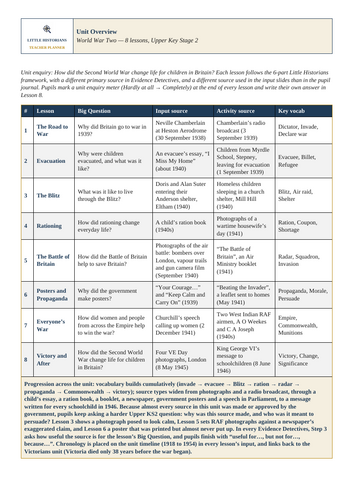
THE EIGHT LESSONS
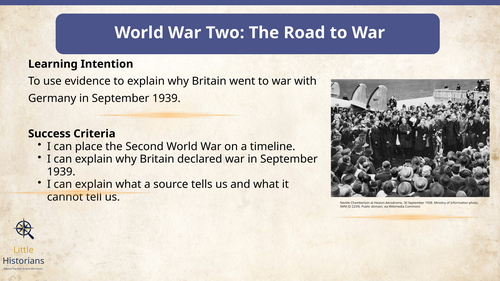
Lesson 1: The Road to War
Why did Britain go to war in 1939?
Slides: Neville Chamberlain waves the Munich agreement, 1938. Journal:
Chamberlain’s radio broadcast of 3 September 1939.
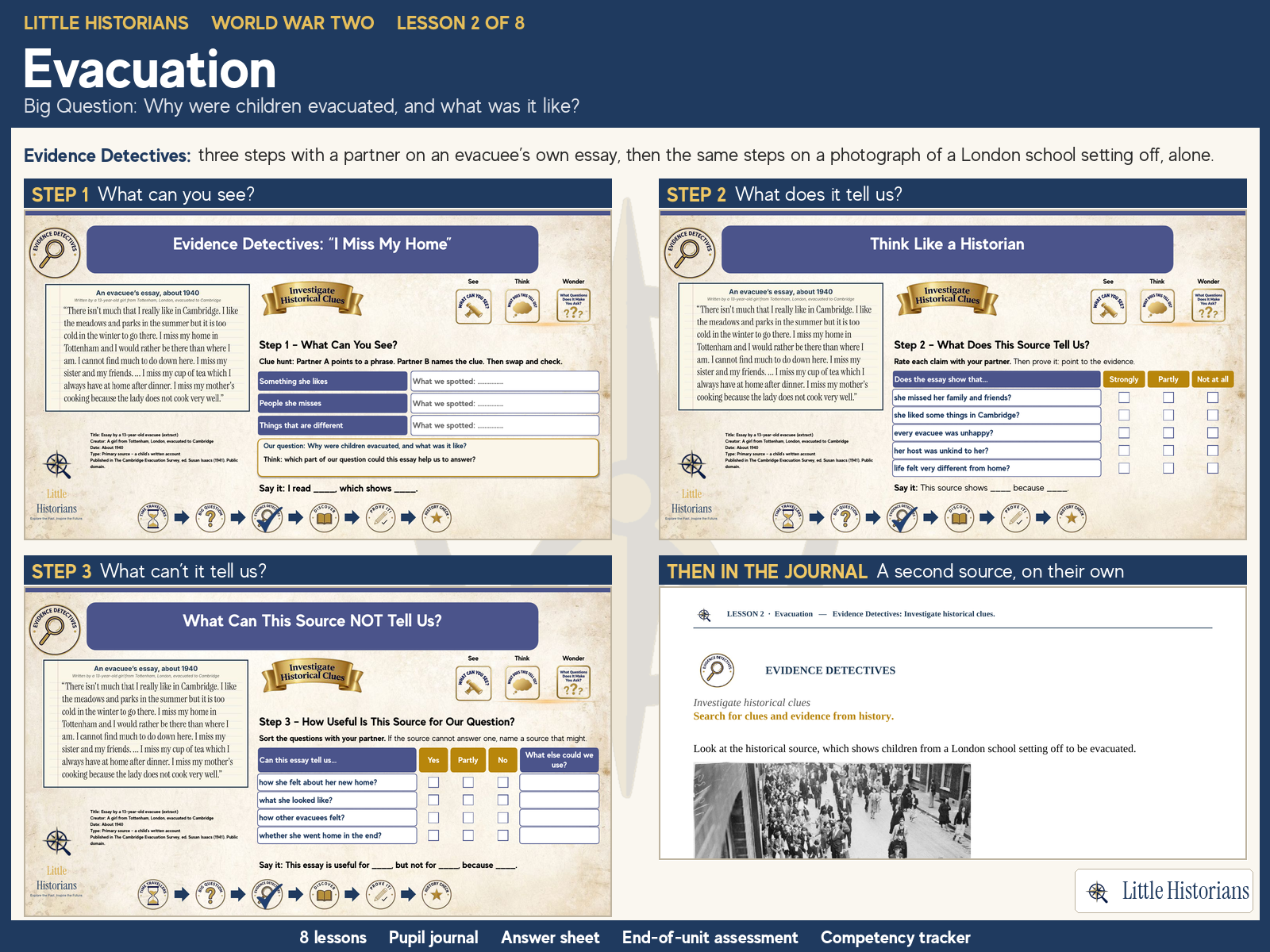
Lesson 2: Evacuation
Why were children evacuated, and what was it like?
Slides: an essay by a 13-year-old evacuee from Tottenham. Journal: children
from a school in Stepney setting off for evacuation.
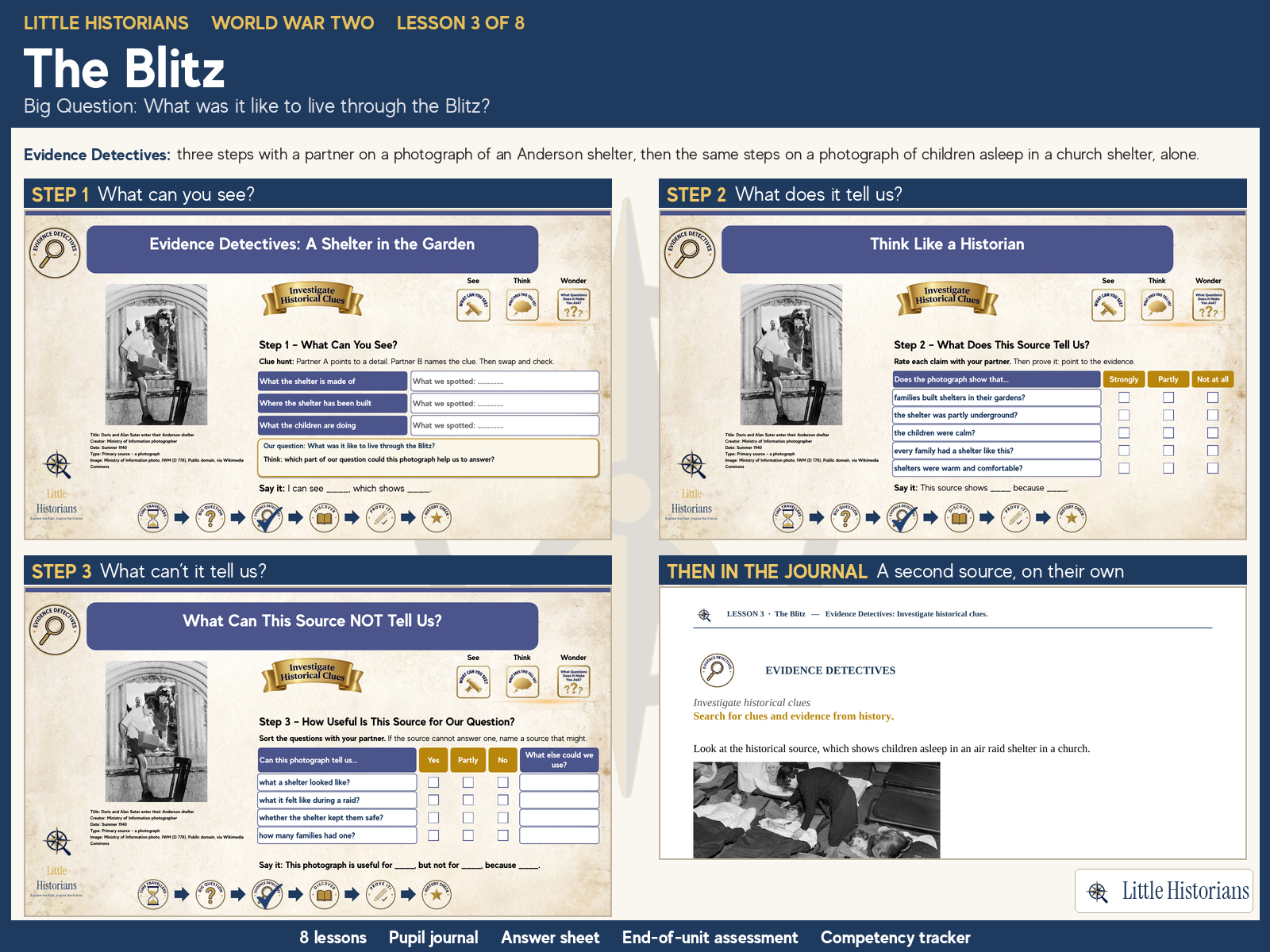
Lesson 3: The Blitz
What was it like to live through the Blitz?
Slides: two children at their Anderson shelter, 1940. Journal: children asleep
in a church shelter in Mill Hill.
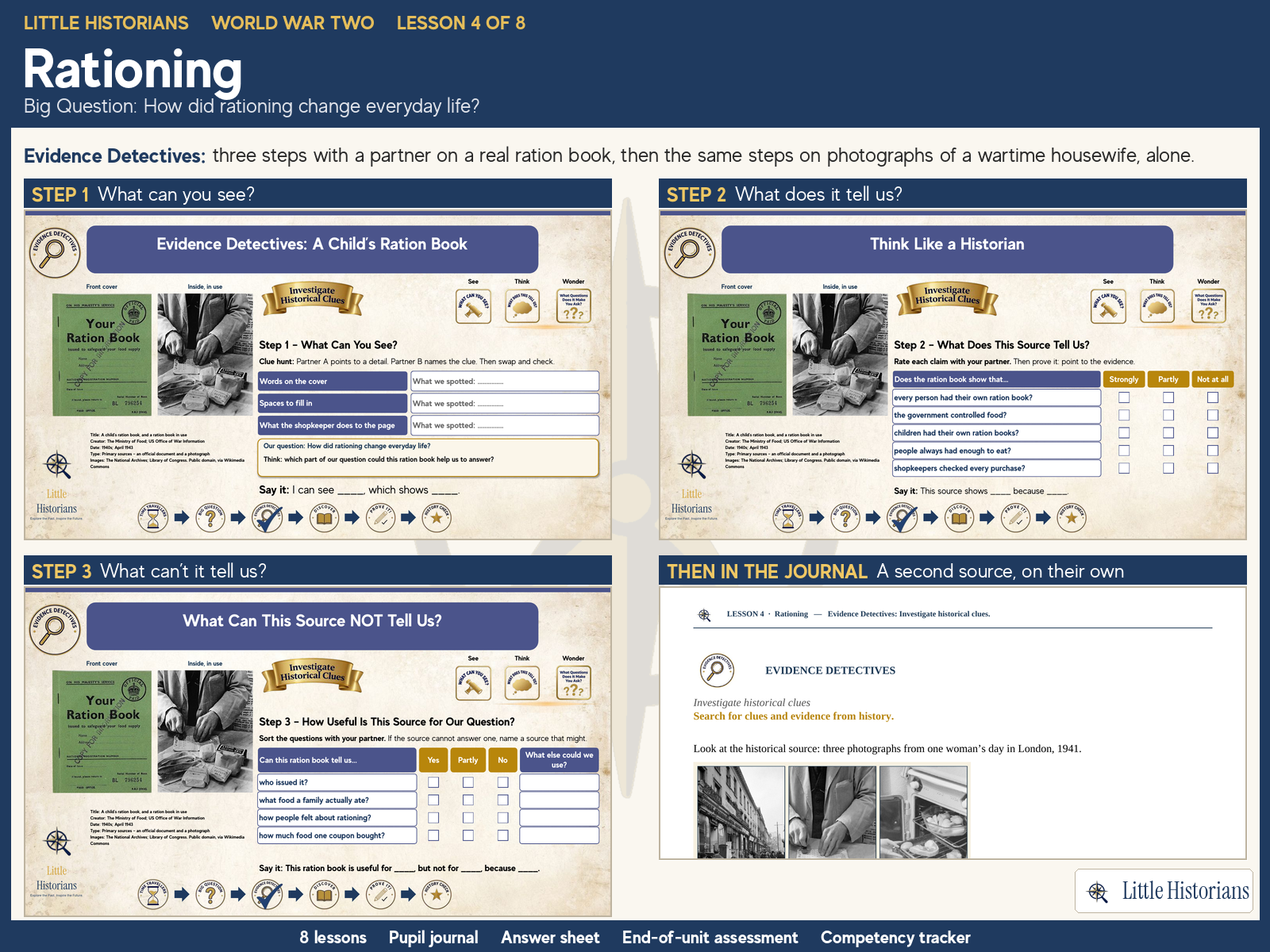
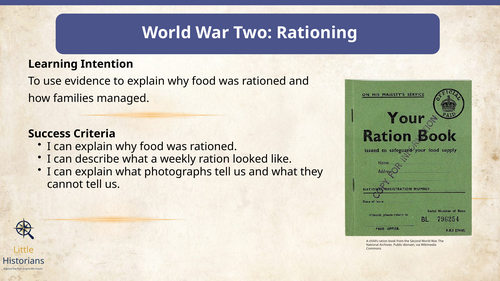
Lesson 4: Rationing
How did rationing change everyday life?
Slides: a child’s ration book. Journal: photographs from one woman’s day in
wartime London, 1941.
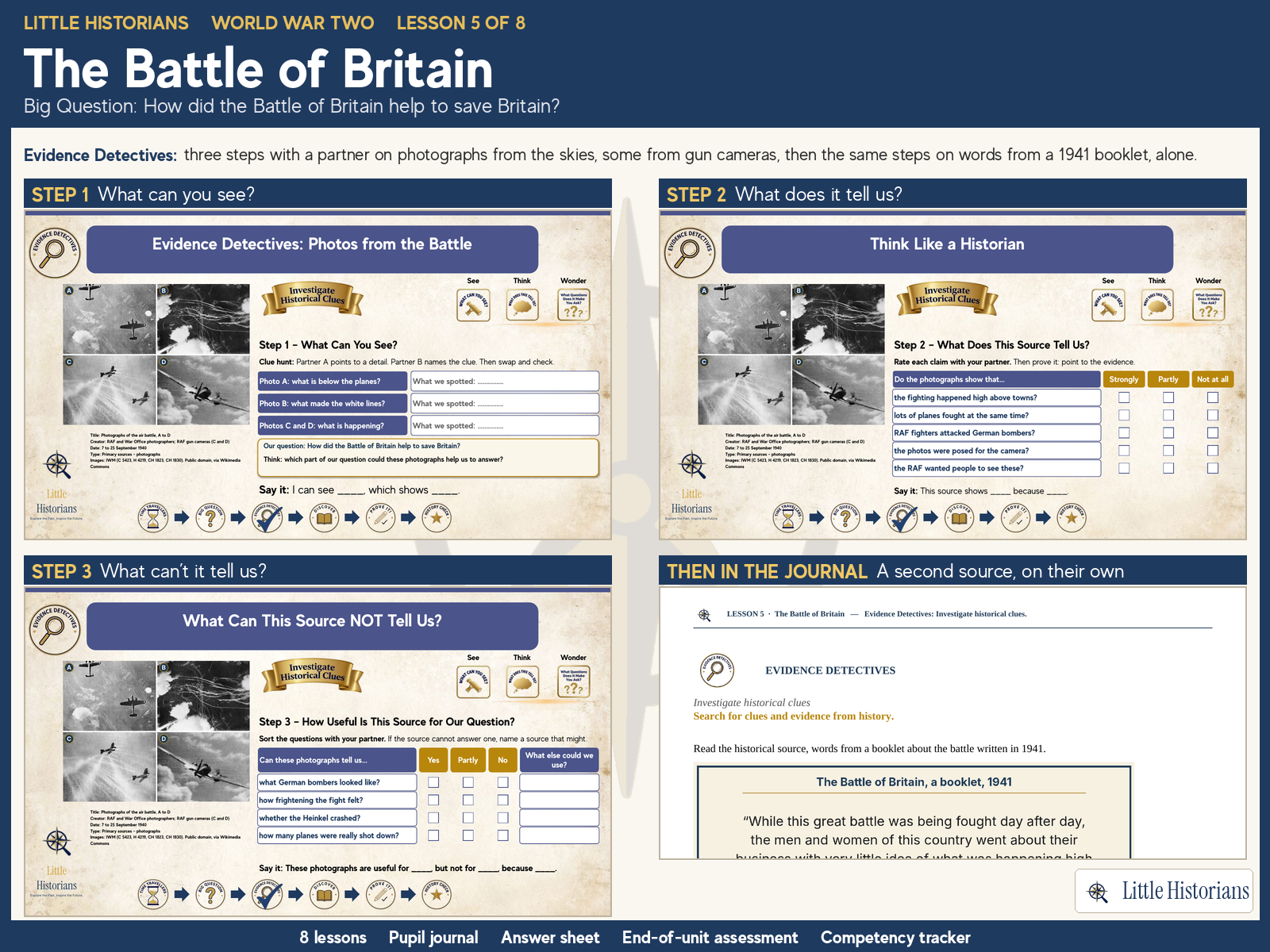
Lesson 5: The Battle of Britain
How did the Battle of Britain help to save Britain?
Slides: photographs of the air battle, including RAF gun camera pictures.
Journal: words from the Air Ministry’s own booklet about the battle, 1941.
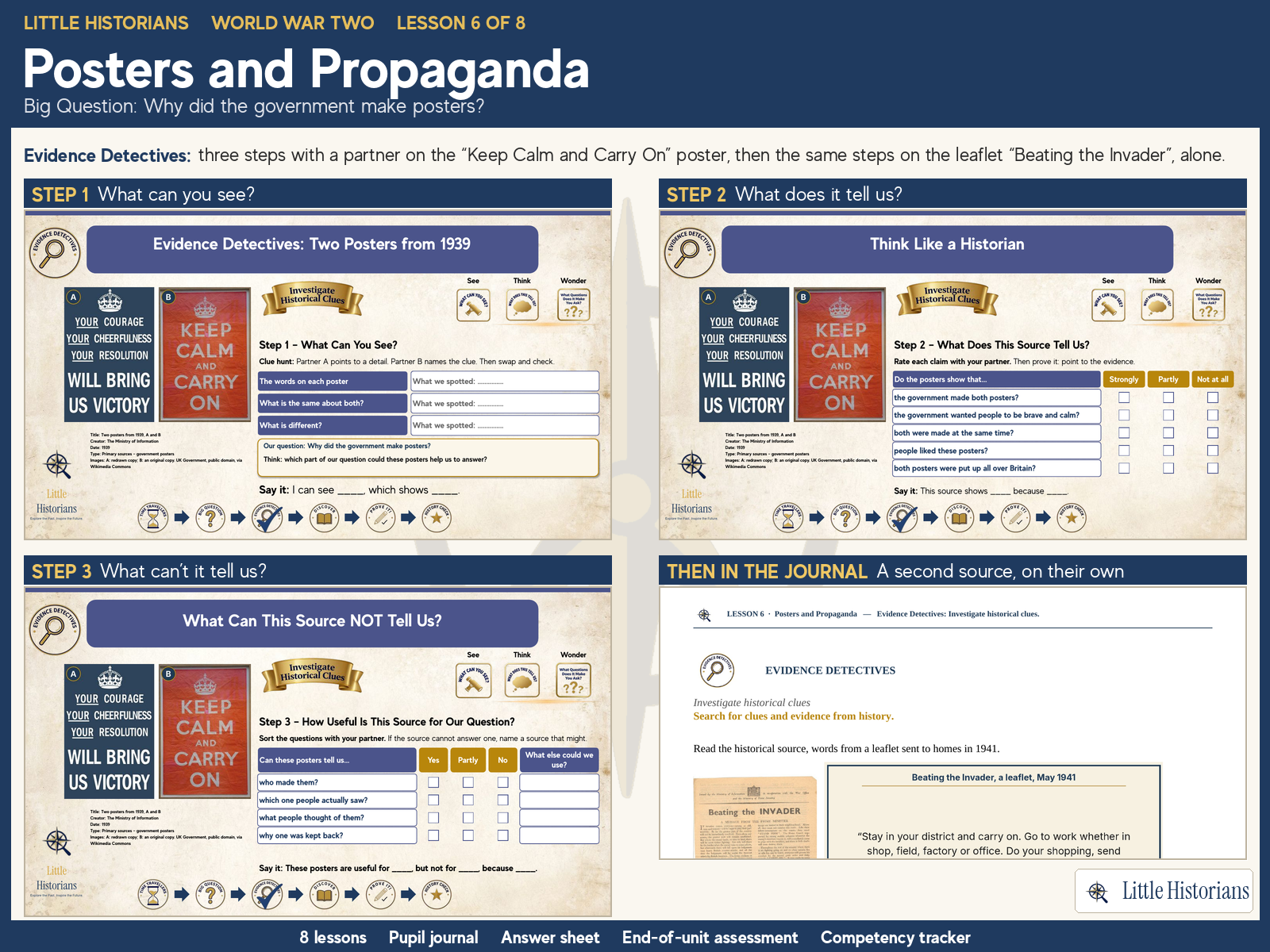
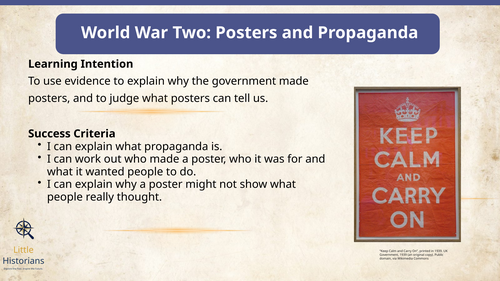
Lesson 6: Posters and Propaganda
Why did the government make posters?
Slides: two posters from 1939, including Keep Calm and Carry On. Journal: the
Beating the Invader leaflet sent to every home in 1941.
Something went wrong, please try again later.
This resource hasn't been reviewed yet
To ensure quality for our reviews, only customers who have purchased this resource can review it
Report this resourceto let us know if it violates our terms and conditions.
Our customer service team will review your report and will be in touch.
£12.00