


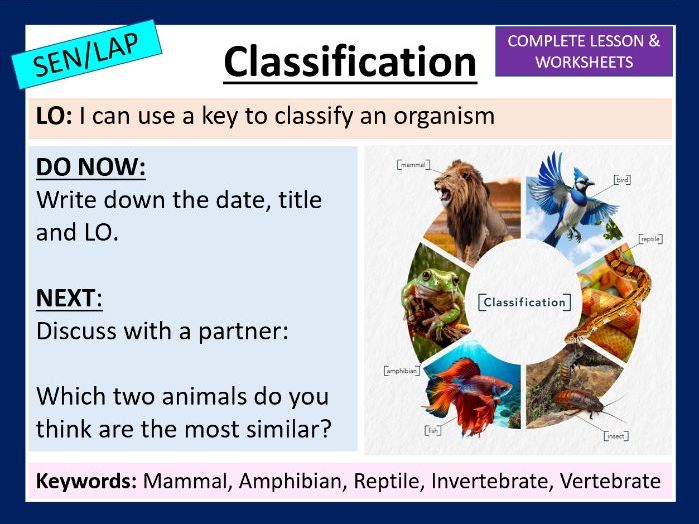
Created for students in an SEN secondary school (Year 8) working below age related level (50 minutes). printing: slide 1 of powerpoint and word doc, all unblurred when bought
The lesson introduces basic classification of organisms and helps students understand how scientists group living things using observable characteristics and simple classification keys.
Activities follow a clear teacher instruction → student task structure.
Included in the lesson:
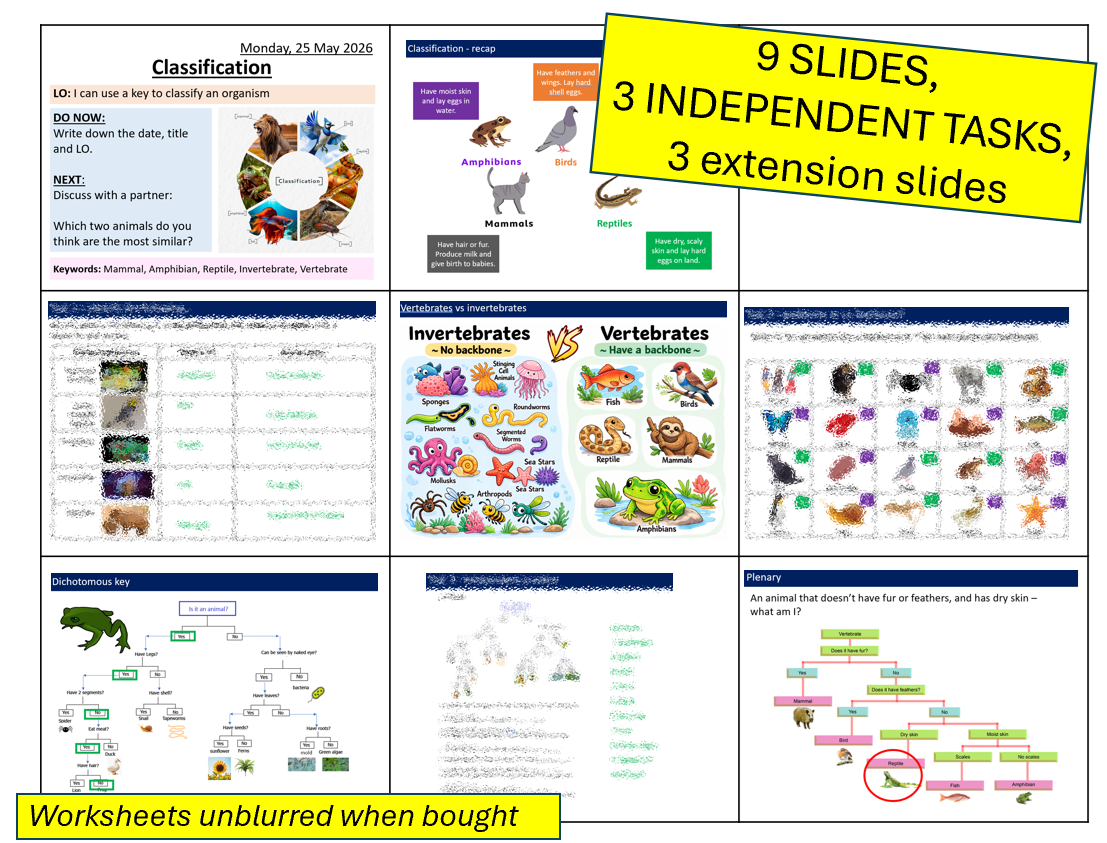
• Recap of animal groups – amphibians, birds, fish, reptiles and mammals
• Characteristics of each animal group with simple explanations and visuals
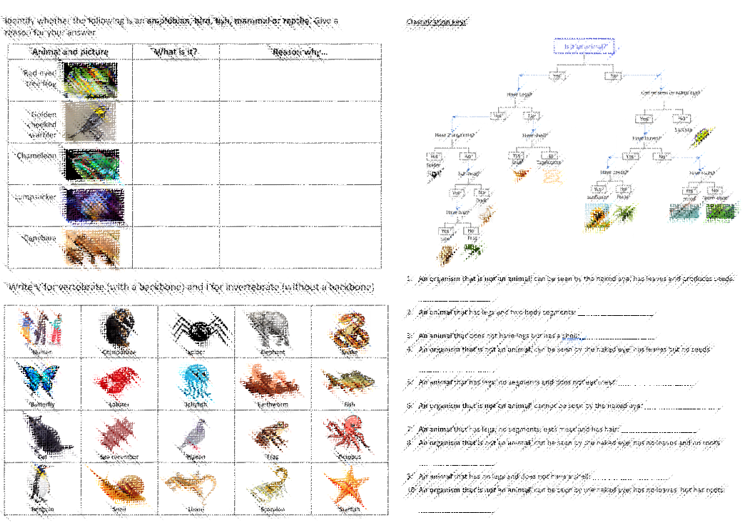
• ACTIVITY 1 – Animal classification task where students identify organisms and justify their answer using observable features
• Vertebrates vs Invertebrates – clear explanation of what a backbone is
• ACTIVITY 2– Backbone or no backbone? students classify organisms as vertebrate or invertebrate
• Introduction to dichotomous keys and teacher modeling using a frog.
• ACTIVITY 3 – Independent practice [consolidation] Classification key practice where students identify organisms using clues from a description.
• Optional Extension – warm vs cold blooded animals that can be down straight after task 1.
• Plenary question to check understanding
The lesson focuses on developing classification skills and recognising key biological features while keeping instructions and language accessible for SEN learners.
Resources included:
• PowerPoint lesson
• Independent practice worksheet
• Answer slides included in the presentation
The lesson supports the learning objective: “I can use a key to classify an organism.”
Something went wrong, please try again later.
This resource hasn't been reviewed yet
To ensure quality for our reviews, only customers who have purchased this resource can review it
Report this resourceto let us know if it violates our terms and conditions.
Our customer service team will review your report and will be in touch.
£2.95