


This 50-minute KS4 Biology lesson introduces ecosystems, organisation within ecosystems, interdependence, and biotic/abiotic factors in a clear, structured, and SEN-friendly way. Created for students in an SEN Secondary School.
Students build understanding through explicit teaching, scaffolded questioning, regular checking for understanding, retrieval practice, visual examples, and independent application tasks.
This lesson has been designed specifically for AQA Trilogy Combined Science, with accessible explanations and structured activities to support lower-attaining learners and SEND students.
Lesson Structure:
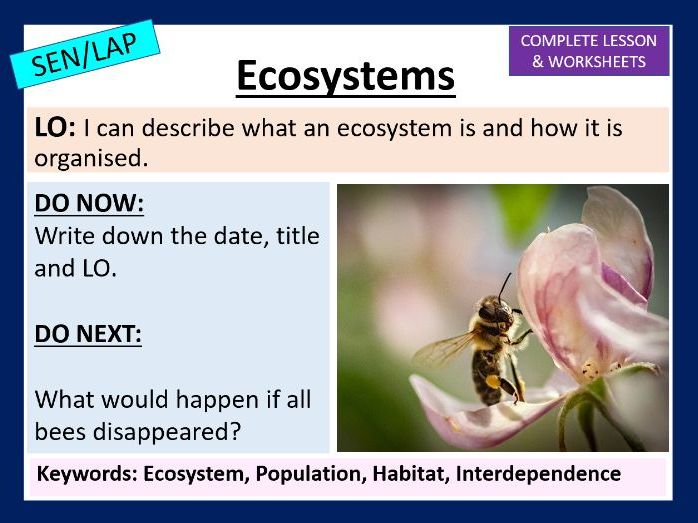
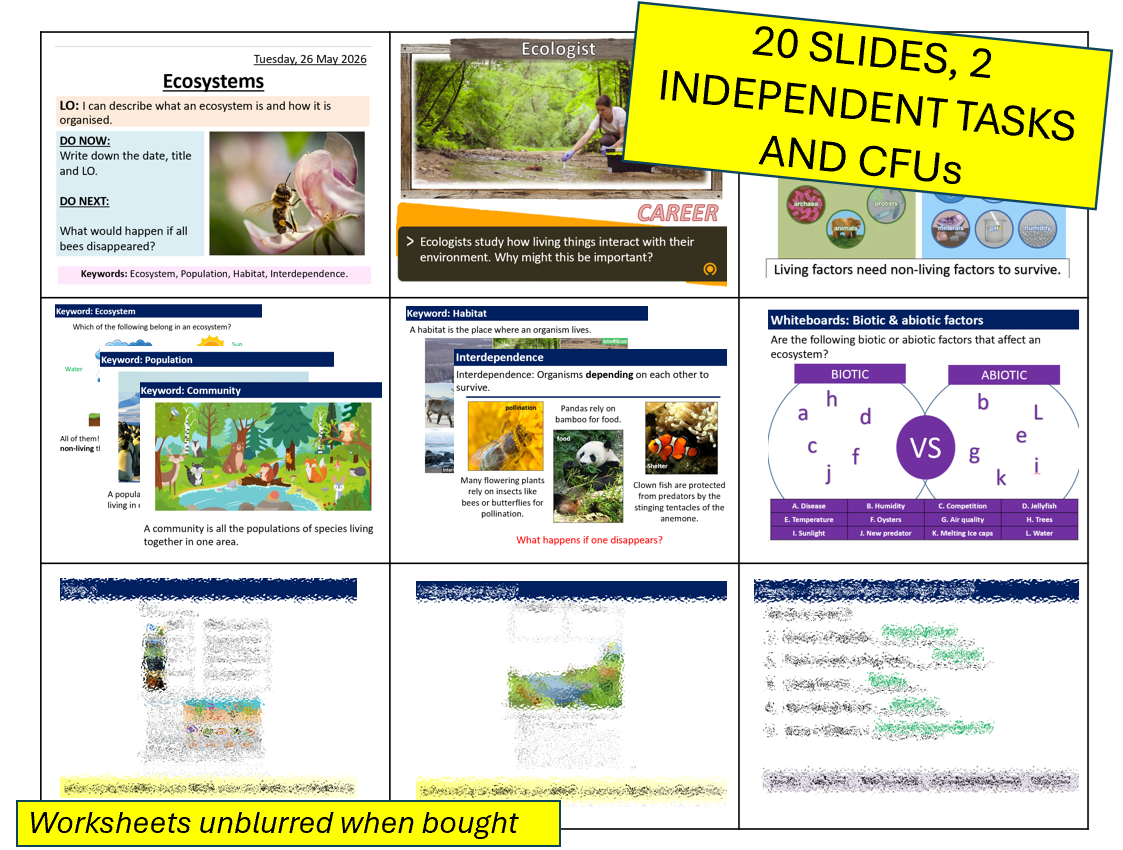
Starter – What would happen if all bees disappeared?
Students discuss how removing one organism from an ecosystem could affect both plants and animals, introducing the concept of interdependence.
Career Link – Ecologist:
Students explore the role of an ecologist and why understanding ecosystems is important for conservation, monitoring habitats, and protecting biodiversity.
Explicit Teaching – Ecosystem Organisation:
Students are introduced to:
Ecosystem
Population
Community
Habitat
Visual examples and quick checks for understanding are included throughout, including a fish tank ecosystem check and classification tasks.
Interdependence:
Students explore how organisms depend on each other for survival through relatable examples including pollination, food sources, and shelter.
Task 1 – Keyword Application:
Students apply their understanding of ecosystem vocabulary through structured activities and self-assessment.
Exam Practice – Interdependence:
Students complete a scaffolded 2-mark GCSE-style question exploring what happens when insects are removed from an ecosystem.
Explicit Teaching – Biotic & Abiotic Factors:
Students learn how living and non-living factors affect ecosystems, with accessible real-world examples.
Whiteboard Checking for Understanding:
Students classify examples as biotic or abiotic, promoting active participation and instant assessment.
Independent Task:
Students identify biotic and abiotic factors from an ecosystem image and explain how abiotic factors affect plant growth.
Plenary – Retrieval Exit Ticket:
Students review key vocabulary by identifying examples of population, habitat, biotic/abiotic factors, and interdependence.
Includes:
Fully resourced PowerPoint
2 worksheets (included on slides 1 and 2)
Answer slides included
SEN-friendly scaffolded learning
GCSE exam-style question practice
Something went wrong, please try again later.
This resource hasn't been reviewed yet
To ensure quality for our reviews, only customers who have purchased this resource can review it
Report this resourceto let us know if it violates our terms and conditions.
Our customer service team will review your report and will be in touch.
£2.95