


The lesson aims to explain why trench warfare became such a defining feature of the First World War and why it contributed to a deadly stalemate on the Western Front.
Students investigate how the development of defensive positions and military technology made it extremely difficult for either side to achieve a decisive breakthrough.
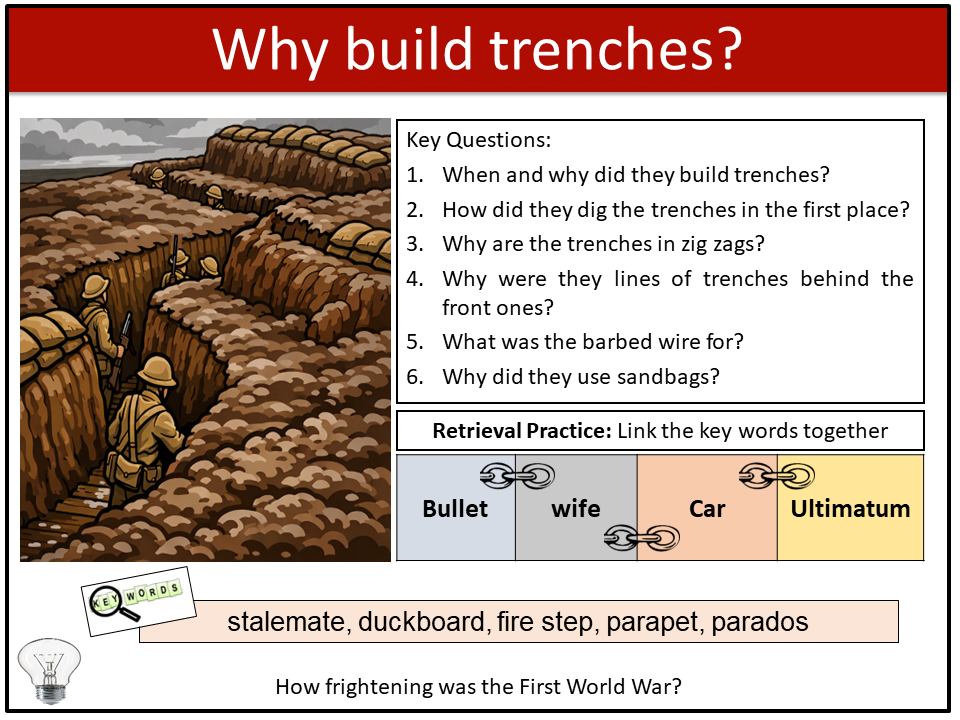
Students explore the key features of trench warfare through a series of focused historical questions. They investigate why trenches were built, why they were designed using zig-zag patterns, why armies constructed multiple lines of trenches and how features such as sandbags and barbed wire were used to protect soldiers.
Using video footage, diagrams and visual sources, students develop a detailed understanding of how trench systems were designed and constructed. They consider the practical challenges faced by soldiers as they built, defended and occupied trenches while under threat from enemy fire.
Students then investigate the equipment carried by soldiers and examine the advantages and disadvantages of trench systems. They consider why the defensive nature of trench warfare made a quick victory almost impossible and how developments in military technology changed the nature of warfare on the Western Front.
Students are encouraged to link the different features of trench warfare together, considering how trenches, barbed wire, machine guns and other defensive technologies gave defenders significant advantages. They use this evidence to explain why armies became locked into a prolonged war of attrition rather than achieving a rapid victory.
The lesson concludes with a fun and competitive Key Knowledge Bingo plenary. This retrieval-based activity allows students to consolidate the key information from the lesson while checking their understanding of the causes and consequences of trench warfare.
The lesson is enquiry based, with a key question introduced at the start and revisited throughout the lesson. Students are encouraged to use evidence from each activity to develop their understanding and reach a reasoned judgement about why trench warfare resulted in a deadly stalemate.
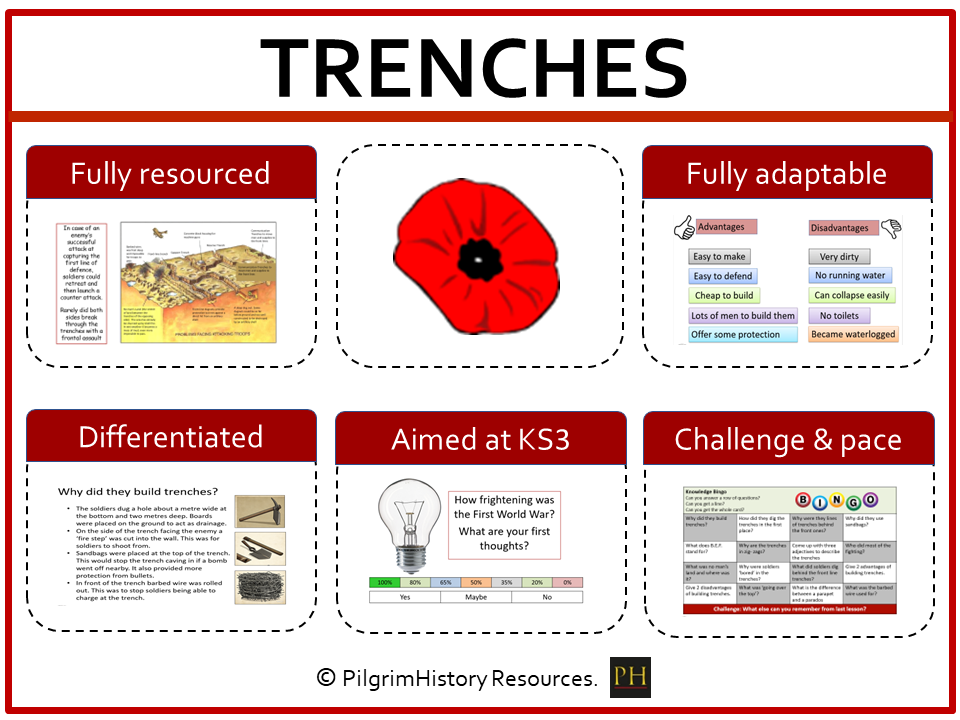
The lesson includes a range of visual, interactive and retrieval activities designed to make the nature of trench warfare accessible and engaging for KS3 students. Differentiated resources and suggested teaching strategies are provided, making the lesson suitable for mixed-ability classes.
Included in this lesson:
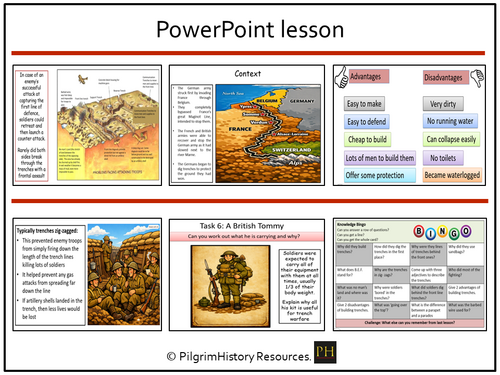
Fully editable PowerPoint
The key features of trench warfare
How trenches were designed
Advantages and disadvantages of trench warfare
The reasons for the stalemate on the Western Front
The impact of defensive technology on warfare
Retrieval practice activities
Interactive and visual learning tasks
Key Knowledge Bingo plenary
Differentiated materials
Suggested teaching strategies
Please leave a review if you find this resource useful. Your feedback will be gratefully appreciated.
Something went wrong, please try again later.
Lovely lesson, easy to follow, lots of thinking and student involvement. Used with my year 9 SEN class. Thank you
amazing lesson used with my year 9's to get across the key info of what a trench was <br /> <br /> Thanks<br />
Report this resourceto let us know if it violates our terms and conditions.
Our customer service team will review your report and will be in touch.
£0.00