A Level Geography Global Interdependence (Cambridge)Quick View
cnvgraham

A Level Geography Global Interdependence (Cambridge)

(0)
A Level Geography Global Interdependence (Cambridge - 9696) scheme of work including all lessons. The lessons took me a significant amount of time to plan, and they include all of the resources students need so no further independent research is required. They incorporate exam practice and skills. Despite being for 9696, they can easily be adapted for other exam boards too due to the excellent subject knowledge contained. Content: 13.1 Trade flows and trading patterns Visible and invisible imports and exports. Global patterns of, and inequalities in, trade flows. Factors affecting global trade (including resource endowment, locational advantage, historical factors such as colonial ties, trade agreements and changes in the global market). The role of the World Trade Organization (WTO) and free trade. Candidates should be able to critically evaluate the impacts of trade on exporting and importing countries. The nature and role of Fairtrade. **13.2 International debt and international aid ** The causes, nature and problems of debt for countries. The international debt crisis and debt relief. Different types of international aid and aid donors: relief aid, development aid, tied aid, bilateral aid and multilateral aid. Candidates should be able to critically evaluate the impacts of international aid on receiving countries. 13.3 The development of international tourism Reasons for, and trends in, the growth of international tourism. The impacts of tourism on the environments, societies and economies (local and national) of tourist destinations. Carrying capacity and the tourism multiplier effect. Recent developments in different types of tourism (including ecotourism). Candidates should be able to critically evaluate the life cycle model of tourism. 13.4 The management of a tourist destination Case study: candidates must study one tourist area or resort, its growth and development, showing the issues of sustainability it faces and evaluating the impacts of tourism on the destination’s environment(s), society and economy.
A Level Geography Coastal Environments (Cambridge)Quick View
cnvgraham

A Level Geography Coastal Environments (Cambridge)

(0)
Full scheme of work for A Level (Cambridge - 9696) Geography. This unit of work took a tremendous amount of man hours to research and create, reflecting the price. Can easily be adapted for other exam boards. Each lesson includes a comprehensive information resource for students, so independent research is not required for A-A*. Content: 8.1 Coastal processes Wave generation and characteristics: fetch, energy, refraction, breaking waves, high and low energy waves, swash, and backwash. Marine erosion: hydraulic action, cavitation, corrasion/abrasion, solution, and attrition. Sub-aerial processes: weathering and mass movement. Marine transportation and deposition: sediment sources and characteristics, sediment cells, and longshore drift. **8.2 Characteristics and formation of coastal landforms ** Erosional landforms: cliffs and wave-cut platforms, caves, arches and stacks. Depositional landforms: beaches in cross section (profile) and plan, swash and drift aligned beaches, simple and compound spits, tombolos, offshore bars, barrier beaches, coastal dunes, tidal sedimentation in estuaries, coastal saltmarshes, and mangroves. The role of sea level change in the formation of coastal landforms. 8.3 Coral reefs Characteristics, distribution and formation of fringing reefs, barrier reefs, and atolls. Conditions required for coral growth. Threats to coral reefs (global warming, sea-level rise, pollution, physical damage) and possible management strategies. 8.4 Sustainable management of coasts Case study: candidates must study some of the problems of sustainably managing a stretch or stretches of coastline, and evaluate attempted solutions (including hard engineering and soft engineering).
A Level Geography - Rocks and Weathering (Cambridge)Quick View
cnvgraham

A Level Geography - Rocks and Weathering (Cambridge)

(0)
Scheme of work for A Level Geography - Rocks and Weathering (Cambridge 9696). Able to easily be adapted to other exam boards. This scheme of work is robust, and took many weeks of planning. Each lesson comes with a comprehensive knowledge resource, so independent research by students is not required. Enjoy! This will save you hours. Content: 3.1 Plate tectonics Nature of tectonic plates and their global patterns. Types of plate boundaries: divergent (constructive), conservative and convergent (destructive). Processes and associated landforms: sea floor spreading, subduction, fold mountain building, ocean ridges, ocean trenches, and volcanic island arcs. **3.2 Weathering ** Physical (mechanical) weathering processes: freeze–thaw, heating/cooling, salt crystal growth, pressure release (dilatation), and vegetation root action. Chemical weathering processes: hydrolysis, hydration, and carbonation. General factors affecting the type and rate of weathering: climate, rock type, rock structure, vegetation, and relief. Specific factors affecting the type and rate of weathering: temperature and rainfall (Peltier diagram). **3.3 Slope processes ** Slope processes, conditions under which each occurs and effects on slopes. Mass movement: heaves, flows, slides, and falls. Water and sediment movement on slopes: rainsplash and surface runoff (sheetwash and rills). 3.4 The human impact The impact of human activities on the stability of slopes: increasing stability and decreasing stability. Strategies to modify slopes to reduce mass movements: pinning, netting, grading and afforestation. Case study: candidates must study the impacts of human activity on slopes showing the effect on the stability of the slope, and evaluate attempts to reduce mass movement.
A Level Geography - Hazardous Environments (Cambridge)Quick View
cnvgraham

A Level Geography - Hazardous Environments (Cambridge)

(0)
Full scheme of work for Cambridge A Level (9696) Geography. Can easily be adapted for other exam boards without issue. This scheme of work follows a logical format, and each lesson includes an information resource which includes all required information so students do not require to conduct any further research. This scheme of work involved a huge amount of effort and hours to create, hence the price. Lessons cover mass movement, tectonic hazards, atmospheric disturbances, etc. Content: 9.1 Hazards resulting from tectonic processes The global distribution of earthquakes and volcanoes related to plate tectonics. Earthquakes and resultant hazards: shaking, landslides, soil liquefaction, and tsunami. Volcanoes and resultant hazards: types of eruption and their products (nuées ardentes, lava flows, volcanic mudflows/lahars, volcanic landslides, pyroclastic flows, and ash fallout). Primary and secondary impacts on lives and property. Prediction, hazard mapping, preparedness and monitoring of earthquake and volcanic hazards and perception of risk. 9.2 Hazards resulting from mass movements Mass movements and resultant hazards: nature and causes. Impacts on lives and property. Prediction, hazard mapping, preparedness and monitoring of the hazard and the perception of risk. 9.3 Hazards resulting from atmospheric disturbances Global distribution of areas most at risk from large-scale tropical disturbances (cyclones, hurricanes, typhoons) and small-scale atmospheric disturbances (tornadoes). Processes causing the formation and development of cyclones, hurricanes, typhoons and tornadoes. Hazards from large-scale atmospheric disturbances: storm surges, coastal flooding, intense rainfall leading to severe river floods and mass movement, and high winds. Hazards from small-scale atmospheric disturbances: intense precipitation (rain and hail), high winds, and pressure imbalances. Primary and secondary impacts on lives and property. Prediction, preparedness and monitoring of large- and small-scale atmospheric disturbances and perception of risk. 9.4 Sustainable management in hazardous environments Case study: candidates must study some of the problems of sustainable management of a hazardous environment and evaluate attempted or possible solutions.
A Level Geography Rivers (Hydrology and Fluvial Morphology)Quick View
cnvgraham

A Level Geography Rivers (Hydrology and Fluvial Morphology)

(0)
A Level Geography Rivers (Hydrology and Fluvial Morphology) scheme of work for Cambridge International (9696) . Easily adaptable for other exam boards due to the thorough subject knowledge content. Each lesson has been thoroughly planned and crafted in line with established pedagogical approaches. Each lesson also includes a comprehensive information resource for students, so that no independent research is required. This took me many weeks to plan, and will save you dozens of hours, hence the price! Content: 1.1 The drainage basin system Outputs: evaporation, evapotranspiration and river discharge. Stores: interception, soil water, surface water, ground water, and channel storage. Flows: above ground – throughfall, stemflow, overland flow, and channel flow. below ground – infiltration, percolation, throughflow, groundwater, and baseflow. Underground water: water tables, ground water, recharge, and springs. 1.2 Discharge relationships within drainage basins Components of hydrographs (storm and annual). Influences on hydrographs. Climate: precipitation type and intensity, temperature, evaporation, transpiration, evapotranspiration, and antecedent moisture. Drainage basin characteristics: size and shape, drainage density, porosity and permeability of soils, rock type, slopes, vegetation type, and land use. 1.3 River channel processes and landforms Channel processes Erosion: abrasion/corrasion, solution, cavitation, and hydraulic action. Load transport: traction, saltation, suspension, and solution. Deposition and sedimentation: the Hjulström curve. River flow: velocity and discharge, patterns of flow (laminar, turbulent and helicoidal), and thalweg. Channel types: straight, braided, and meandering. Landforms: meander (river cliffs, point bars, oxbow lakes), riffle and pool sequences, waterfalls, gorges, bluffs, floodplains, levées, and deltas 1.4 The human impact Modifications to catchment flows and stores and to channel flows by land-use changes (deforestation, afforestation, urbanisation), abstraction and water storage. The causes and impacts of river floods; prediction of flood risk and recurrence intervals. The prevention and amelioration of river floods to include: • forecasts and warnings • hard engineering – dams, straightening, levées and diversion spillways • soft engineering – floodplain and drainage basin management, wetland and river bank conservation and river restoration. Case study: candidates must study a recent river flood event showing the causes of the flood, impacts on both people and the environment, and evaluate attempts to reduce the impact of the flood.
A Level Geography - Settlement Dynamics (Cambridge)Quick View
cnvgraham

A Level Geography - Settlement Dynamics (Cambridge)

(0)
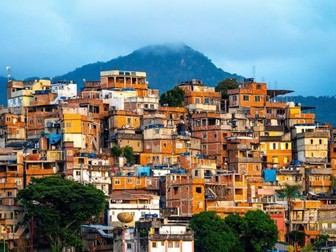
Unit of work with all lessons for Settlement Dynamics/Urbanisation for A Level Geography (Cambridge 9696). This scheme of work is very comprehensive, and includes an information resource for each lesson so students (or yourself) don’t need to complete any further research. This scheme of work can easily be adapted to fit other exam boards/curriculums due to the extensive subject knowledge/resources included. All in all, this unit of work required a huge amount of planning, reflecting the price. 6.1 Changes in rural settlements Contemporary issues in rural settlements in LICs, MICs and HICs, (e.g. depopulation, service provision) including the impacts of internal migration and the consequences of urban growth. Case study: candidates must study a rural settlement (village or hamlet) or a rural area showing some of the issues of its development and growth (or decline) and evaluating the responses to these issues. 6.2 Urban trends and issues of urbanisation Urban growth. The process of urbanisation and its causes and consequences in LICs, MICs and HICs, including counterurbanisation and re-urbanisation, competition for land and urban renewal. The concept of a world city: causes of the growth of world cities and the development of a hierarchy of world cities. 6.3 The changing structure of urban settlements Factors (social, economic, environmental and political) affecting the location of activities within urban areas (including planning) and how urban locations change over time for retailing, services and manufacturing. The changing central business district (CBD). Competition for space (spatial competition) in urban areas, the concept of bid rent, and functional zonation. Residential segregation: causes (income and race/ethnicity) and processes (e.g. operation of the housing market, influence of family and friends, culture and planning). 6.4 The management of urban settlements Case study: candidates must study urban settlements showing the challenges of, and evaluating the attempted solutions in, each of the following: • a shanty town (squatter settlement) in an LIC or MIC • providing infrastructure (either power or transport) for a city.