


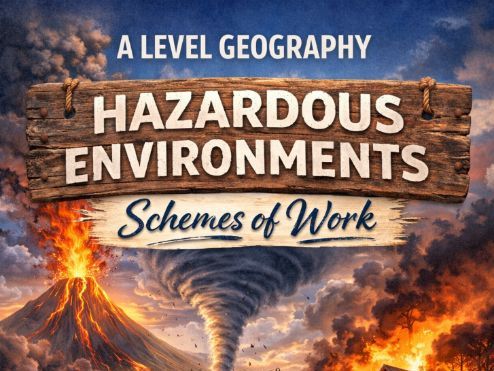
Full scheme of work for Cambridge A Level (9696) Geography. Can easily be adapted for other exam boards without issue.
This scheme of work follows a logical format, and each lesson includes an information resource which includes all required information so students do not require to conduct any further research.
This scheme of work involved a huge amount of effort and hours to create, hence the price.
Lessons cover mass movement, tectonic hazards, atmospheric disturbances, etc.
Content:
9.1 Hazards resulting from tectonic processes
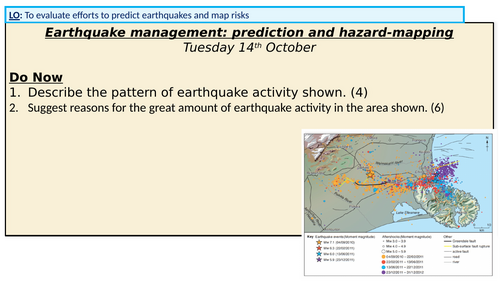
The global distribution of earthquakes and volcanoes related to plate tectonics.
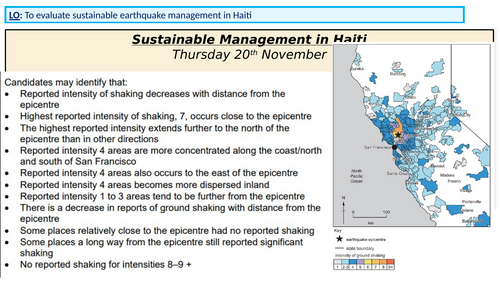
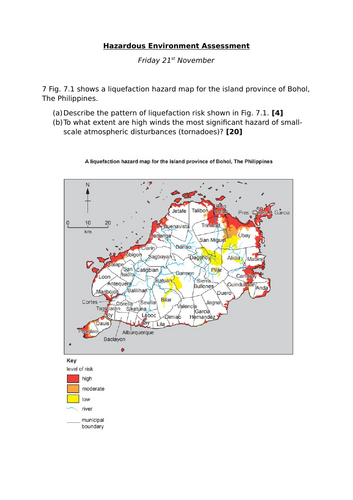
Earthquakes and resultant hazards: shaking, landslides, soil liquefaction, and tsunami.
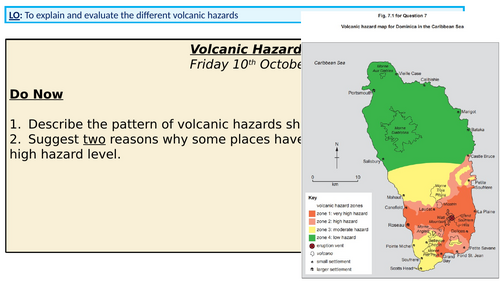
Volcanoes and resultant hazards: types of eruption and their products (nuées ardentes, lava flows, volcanic mudflows/lahars, volcanic landslides, pyroclastic flows, and ash fallout).
Primary and secondary impacts on lives and property.
Prediction, hazard mapping, preparedness and monitoring of earthquake and volcanic hazards and perception of risk.
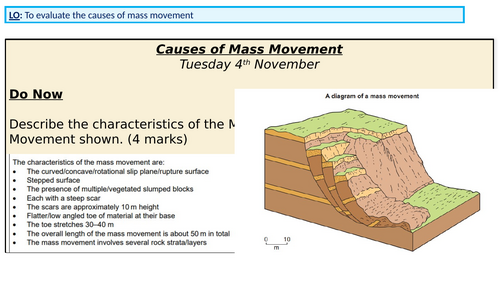
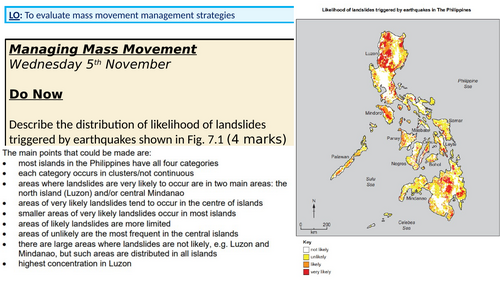
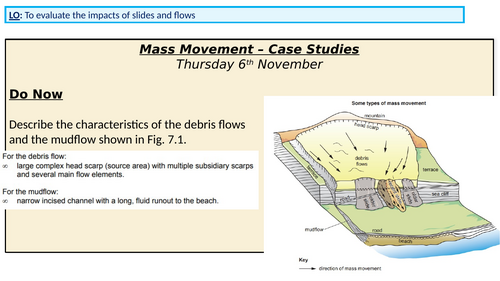
9.2 Hazards resulting from mass movements
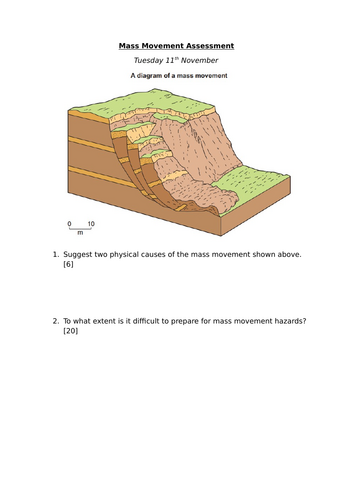
Mass movements and resultant hazards: nature and causes.
Impacts on lives and property.
Prediction, hazard mapping, preparedness and monitoring of the hazard and the perception of risk.
9.3 Hazards resulting from atmospheric disturbances
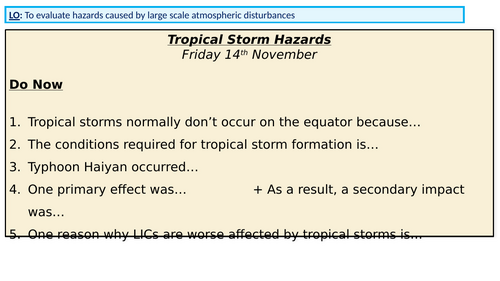
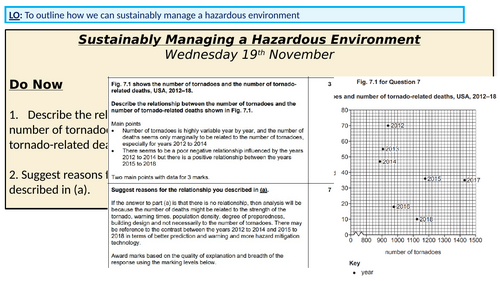
Global distribution of areas most at risk from large-scale tropical disturbances (cyclones, hurricanes, typhoons) and small-scale atmospheric disturbances (tornadoes).
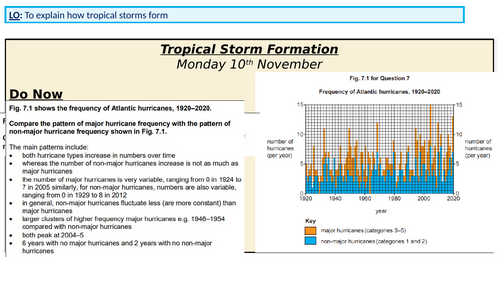
Processes causing the formation and development of cyclones, hurricanes, typhoons and tornadoes.
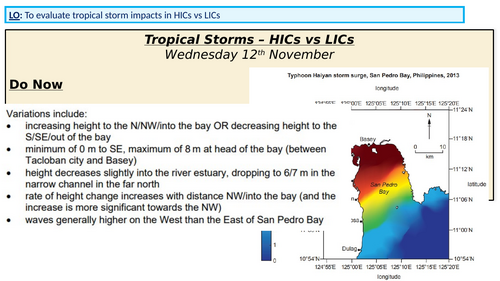
Hazards from large-scale atmospheric disturbances: storm surges, coastal flooding, intense rainfall leading to severe river floods and mass movement, and high winds.
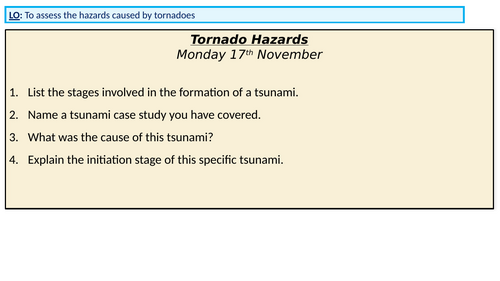
Hazards from small-scale atmospheric disturbances: intense precipitation (rain and hail), high winds, and pressure imbalances.
Primary and secondary impacts on lives and property.
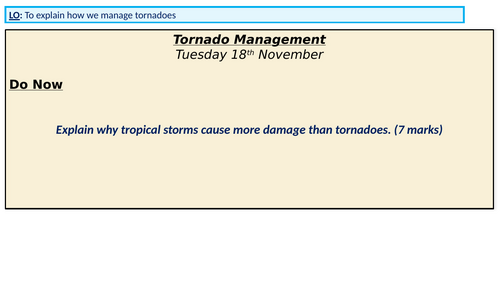
Prediction, preparedness and monitoring of large- and small-scale atmospheric disturbances and perception of risk.
9.4 Sustainable management in hazardous environments
Case study: candidates must study some of the problems of sustainable management of a hazardous environment and evaluate attempted or possible solutions.
Something went wrong, please try again later.
This resource hasn't been reviewed yet
To ensure quality for our reviews, only customers who have purchased this resource can review it
Report this resourceto let us know if it violates our terms and conditions.
Our customer service team will review your report and will be in touch.
£10.00