



Full scheme of work for A Level (Cambridge - 9696) Geography. This unit of work took a tremendous amount of man hours to research and create, reflecting the price.
Can easily be adapted for other exam boards.
Each lesson includes a comprehensive information resource for students, so independent research is not required for A-A*.
Content:
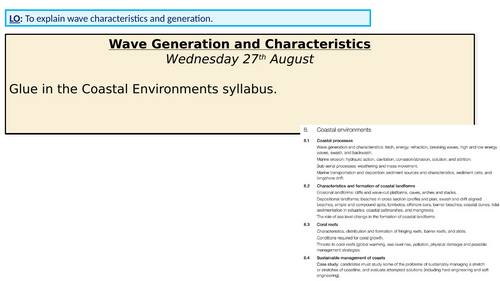
8.1 Coastal processes
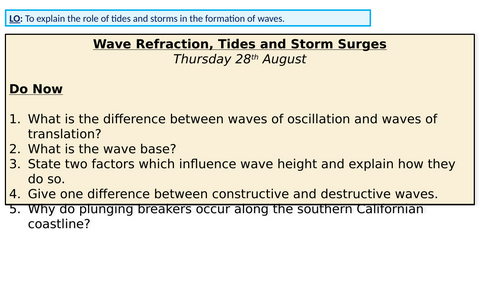
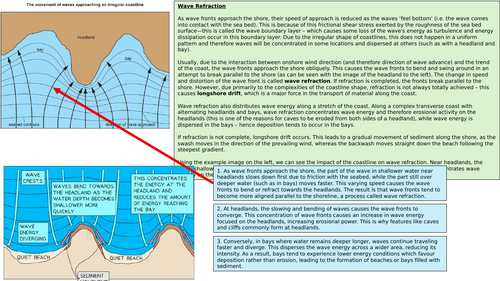
Wave generation and characteristics: fetch, energy, refraction, breaking waves, high and low energy waves, swash, and backwash.
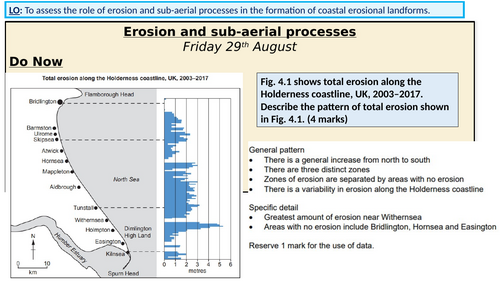
Marine erosion: hydraulic action, cavitation, corrasion/abrasion, solution, and attrition.
Sub-aerial processes: weathering and mass movement.
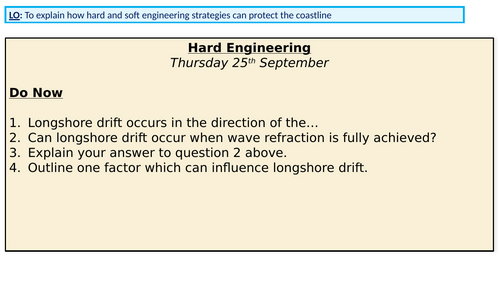
Marine transportation and deposition: sediment sources and characteristics, sediment cells, and longshore drift.
**8.2 Characteristics and formation of coastal landforms **
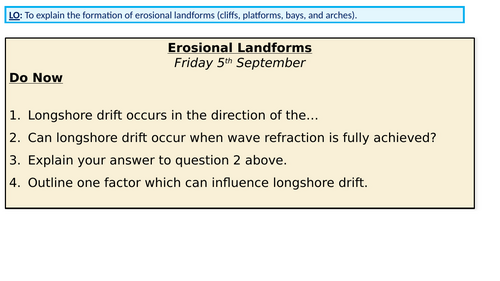
Erosional landforms: cliffs and wave-cut platforms, caves, arches and stacks.
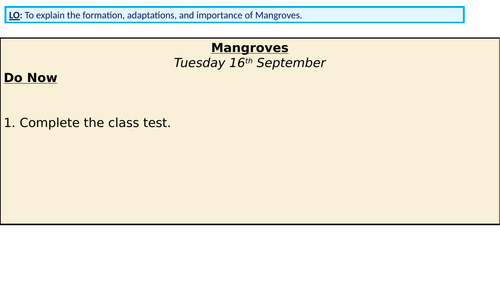
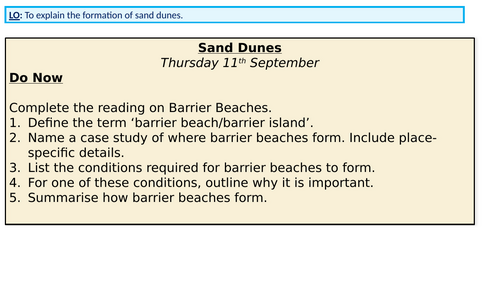
Depositional landforms: beaches in cross section (profile) and plan, swash and drift aligned beaches, simple and compound spits, tombolos, offshore bars, barrier beaches, coastal dunes, tidal sedimentation in estuaries, coastal saltmarshes, and mangroves.
The role of sea level change in the formation of coastal landforms.
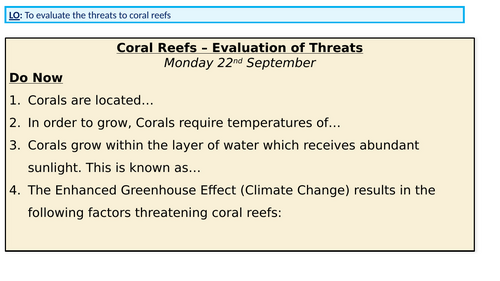
8.3 Coral reefs
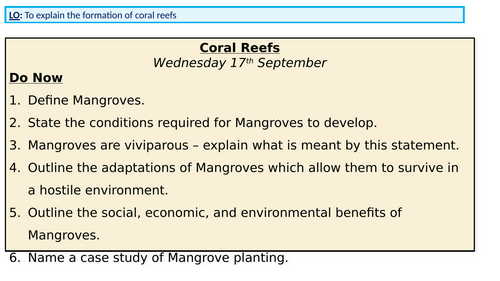
Characteristics, distribution and formation of fringing reefs, barrier reefs, and atolls.
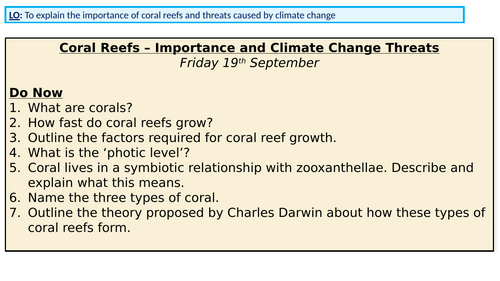
Conditions required for coral growth.
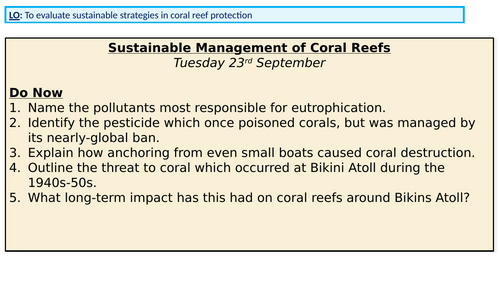
Threats to coral reefs (global warming, sea-level rise, pollution, physical damage) and possible management strategies.
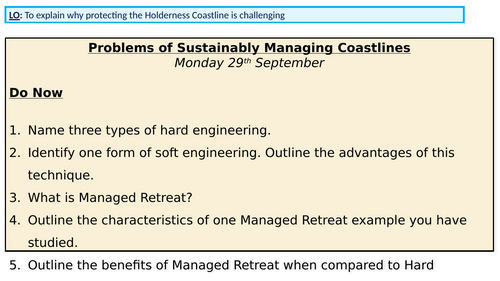
8.4 Sustainable management of coasts
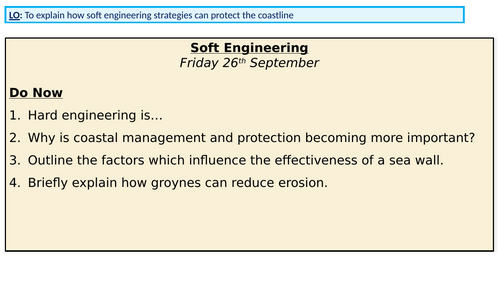
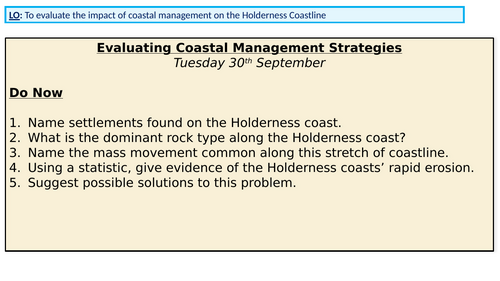
Case study: candidates must study some of the problems of sustainably managing a stretch or stretches of coastline, and evaluate attempted solutions (including hard engineering and soft engineering).
Something went wrong, please try again later.
This resource hasn't been reviewed yet
To ensure quality for our reviews, only customers who have purchased this resource can review it
Report this resourceto let us know if it violates our terms and conditions.
Our customer service team will review your report and will be in touch.
£10.00