








Updated with excel copies as per feedback.
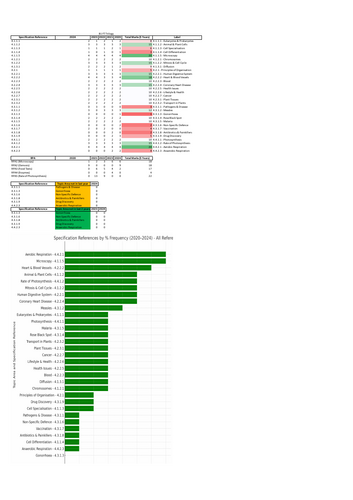
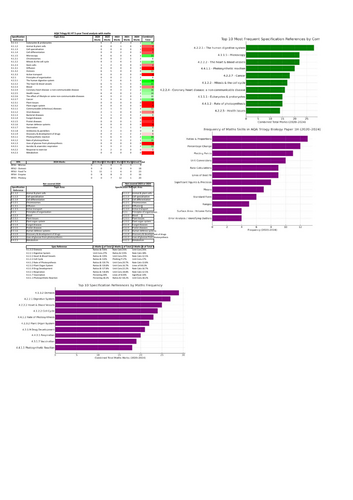
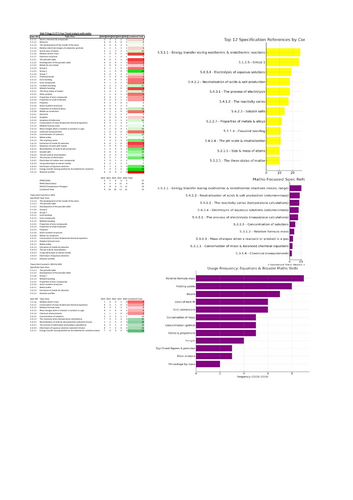
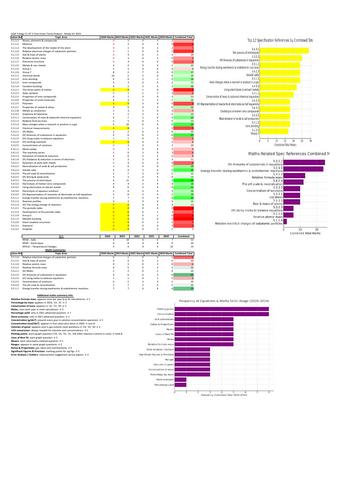
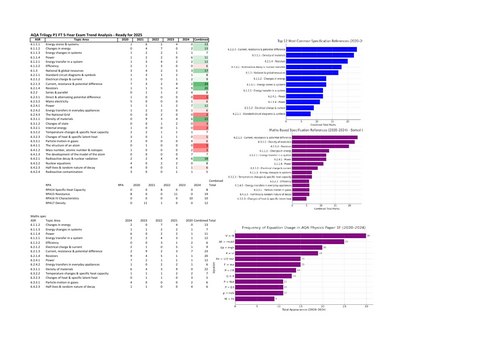
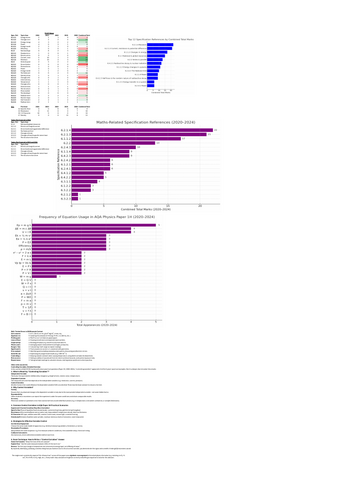
Support Exam Success with a 6-Part, 5-Year Trend Analysis package (2020–2024) for AQA GCSE Combined Science Trilogy.
Equip your department with data-driven insight and planning tools for the 2025 exam season *(see disclaimer). This package includes six reports—3x Foundation and 3x Higher Tier analysis for:
Biology Paper 1
Chemistry Paper 1
Physics Paper 1
Key Features:
Five-Year Question & Topic Trends: See exactly which specification areas, question styles, and in places maths skills have risen or fallen between 2020 and 2024. These have been made to support the run up to exams and what we found helpful to discuss in our team. May as well share this!
Tier-Specific Analysis: Separate FT and HT breakdowns identify content frequency in mark-Scheme deep dives.
Teaching & Prediction Toolkit: Heat-mapped spec coverage aims to highlight under- and over-represented areas, empowering you to interpret as you wish and make your own judgements and forecast on likely topics.
Visual Dashboards & Charts: bar charts and trend make data more actionable—and reduce the need to wade through raw PDFs for hours. These documents may be helfpul in department meetings, help with lesson planning those final few lessons, and making revision materials for students
Ideal For:
Curriculum leaders, science department heads, and classroom teachers who like to look at data to help deliver inform judgements and maximise exam performance in May–June 2025.
*Disclaimer:
While every effort has been made to ensure the accuracy and completeness of this five-year summary, minor errors or omissions may remain. Users should cross-check critical numerical values, specification mappings, and rounding conventions against the original AQA mark schemes before relying on this document for high-stakes teaching, assessment planning, or exam preparation. AI has been prompted to produce much of the information provided, more detailed checking has taken place in some places and not in others. It has taken hours to produce these, which i have found an enjoyable experience for my own CPD and practice, i thought worth sharing. AI’s ability to count marks etc does fall short in places and it could not pick up and count spec references and accurately link to number of marks. However it can pick up spec references and count these a little better. If you find this useful- great, if not have a play with AI. It has done more this year than it could do last year.
Something went wrong, please try again later.
Is it possible to send this in a different format? It's too small and pieces overlap making it very difficult to read. It scrambles the work when you try to enlarge it.
Report this resourceto let us know if it violates our terms and conditions.
Our customer service team will review your report and will be in touch.
£5.00