


Ideal for GCSE / Upper KS3 | Evaluation Skills | Sadness & Hope
This fully planned and ready-to-teach lesson helps students confidently tackle AQA Language Paper 1, Question 4, using an extract from The Lovely Bones (lines 42–49). The resource develops students’ ability to evaluate how a writer presents emotion, perspective, and reader impact, while offering clear differentiation, modelling, and scaffolding.
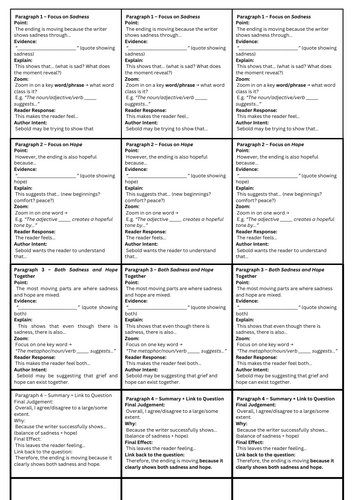
This download also includes a structured PEEZE scaffold bookmark, enabling students to write a high-quality, well-organised answer by breaking the task into four manageable paragraphs: sadness, hope, both combined, and a final judgement.
What’s Included
Complete PowerPoint Lesson
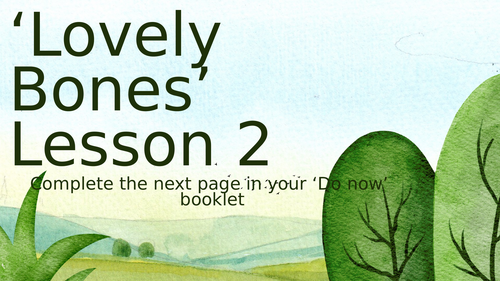
(From: ‘Lovely Bones’ Lesson 2.pptx
‘Lovely Bones’ lesson 2)
AQA-aligned learning objectives and clear success criteria
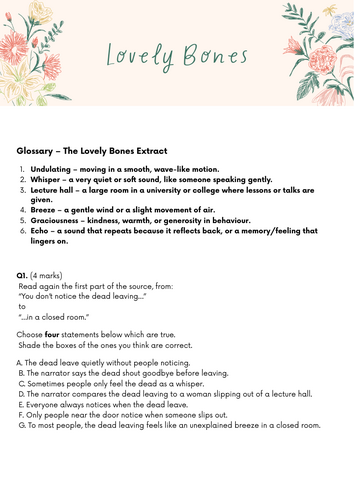
Contextual comprehension questions with model answers
Quote-finding task focusing on sadness, hope, and mixed emotions
No text dute to copyright but I use the end of the text from lines: ‘You don’t notice the dead leaving when they really choose to leave you.’ to ‘We have fun.’
Colour-coded key for students to identify structural features in the model
Guided writing prompts
Independent writing task: 3-paragraph response (sadness / hope / mix)
Reflection activity where pupils highlight and label their own paragraph elements
✔ Scaffold Bookmark for Students
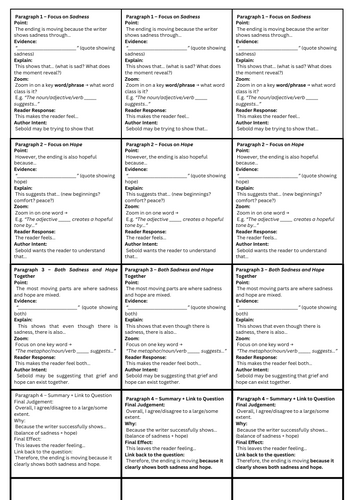
(From: Paragraph 1–4 Scaffold PDF
Paragraph 1 – Focus on Sadness …)
A clear, printable strip designed to sit next to student workbooks, guiding them through each paragraph:
Paragraph 1 – Sadness
Sentence starters
Evidence prompts
Zoom-in prompts with word class terminology
Reader response + author intent lines
Paragraph 2 – Hope
Point prompts
Quote selection space
Zoom + subject terminology support
Clear explanation and impact prompts
Paragraph 3 – A Mix of Sadness and Hope
Evaluative sentence starters
Language analysis scaffolding
Guidance for explaining dual emotions
Paragraph 4 – Summary & Judgement
Final judgement sentences
Linking back to the question
Evaluative conclusion supports
This bookmark greatly improves structure, consistency, and independence in extended evaluative writing.
Skills Developed
Confident evaluation (AQA Q4)
Selecting and embedding textual evidence
Zooming in on key words using word class terminology
Analysing writer’s intention and reader response
Balancing interpretations
Structuring multi-paragraph analytical writing
Perfect For
GCSE English Language Paper 1
High-ability KS3
Revision sessions
Intervention groups
Modelling strong Q4 responses
Teaching evaluative writing in a clear, structured way
If you found this resource helpful, I’d be incredibly grateful if you could leave a positive review. Your feedback helps other teachers find quality materials, and it makes a huge difference to small creators like me. Thank you so much for your support!
Something went wrong, please try again later.
This resource hasn't been reviewed yet
To ensure quality for our reviews, only customers who have purchased this resource can review it
Report this resourceto let us know if it violates our terms and conditions.
Our customer service team will review your report and will be in touch.
£3.00