


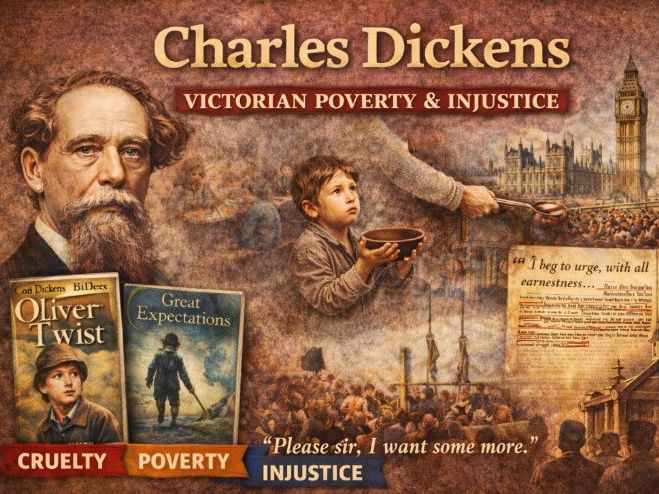

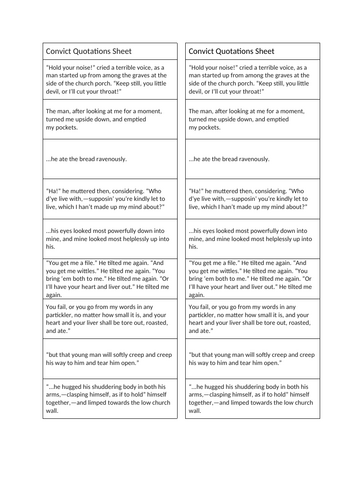
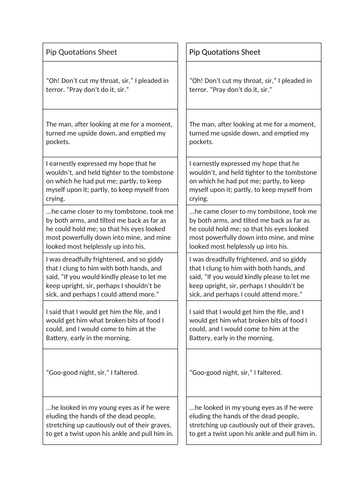
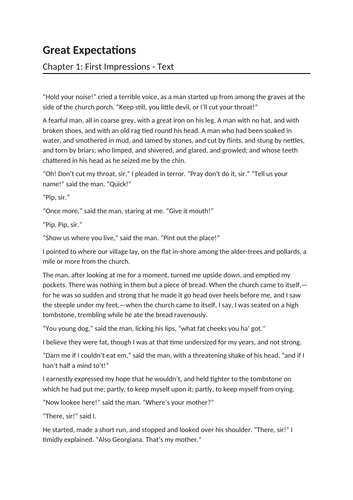
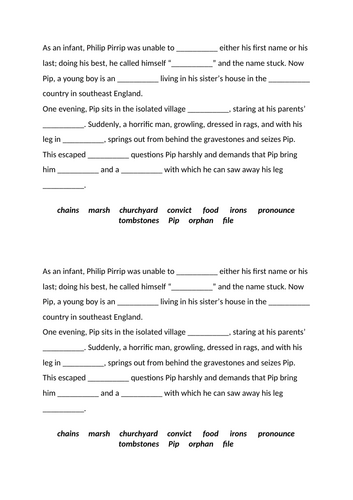
A complete KS3 Charles Dickens scheme exploring Victorian context, poverty and injustice through Oliver Twist, Great Expectations and Dickens’ non-fiction writing.
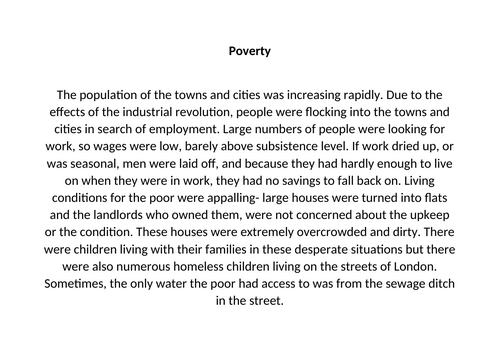
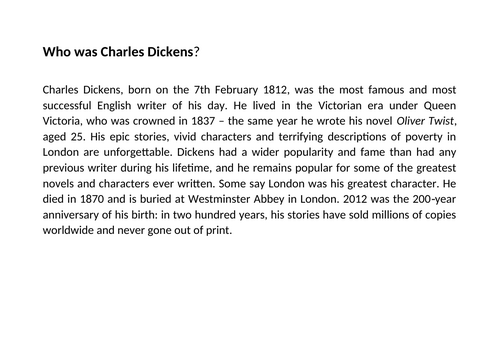
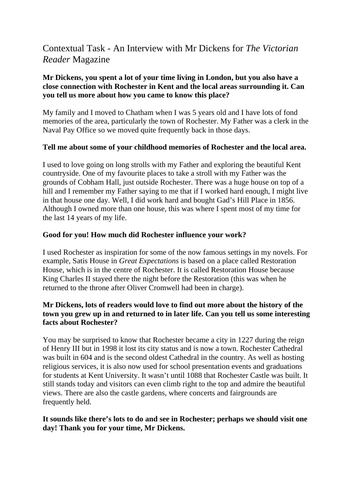
This comprehensive scheme of work introduces students to Charles Dickens as both a novelist and social commentator, exploring how his writing exposes poverty, injustice and human suffering in Victorian society. The unit is carefully sequenced to build historical, contextual and literary understanding, beginning with an exploration of the Victorian era, industrialisation and poverty before moving into close study of Dickens’ life, beliefs and purpose as a writer.
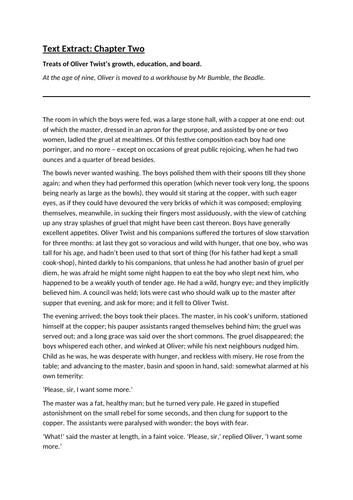
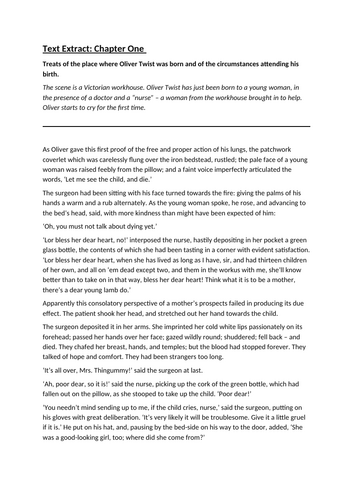
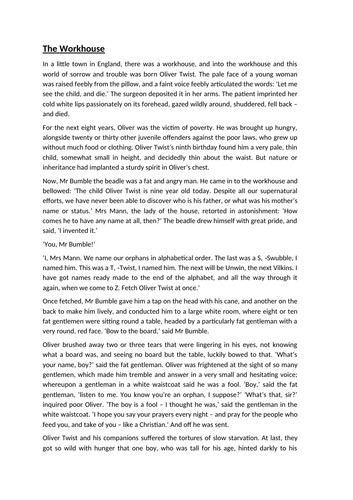
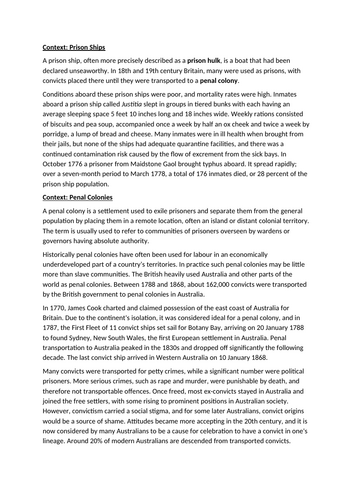
Students develop secure contextual knowledge of workhouses, the Poor Laws, public executions and the justice system, allowing them to understand why Dickens wrote so powerfully about the treatment of the poor and marginalised. This context is then applied through detailed study of Oliver Twist, including extended extracts focusing on the workhouse, the treatment of children, adult authority and the creation of sympathy for the lower classes. Lessons explicitly model how Dickens uses language, characterisation and narrative choices to influence the reader, with a strong emphasis on analysing word choices and their effects.
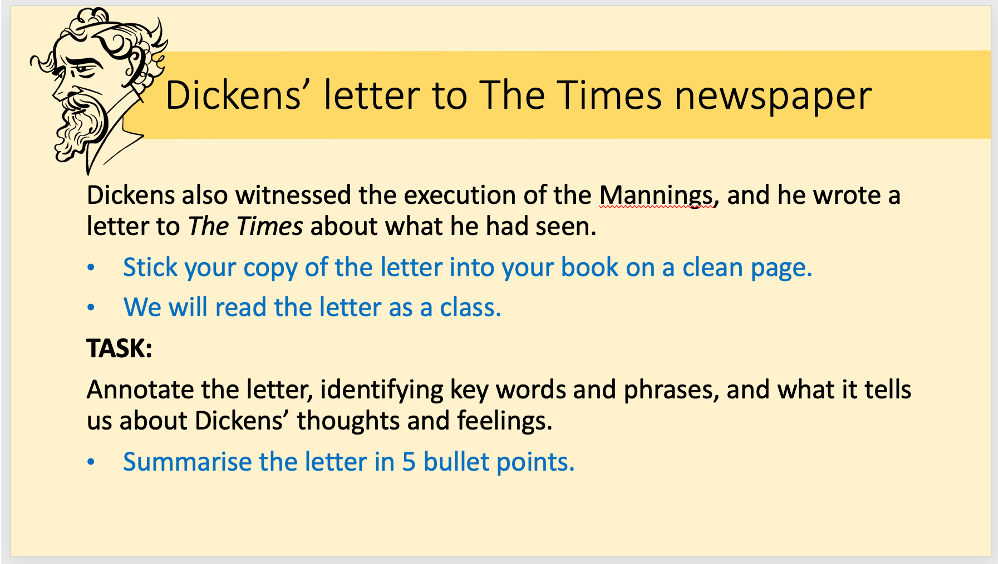
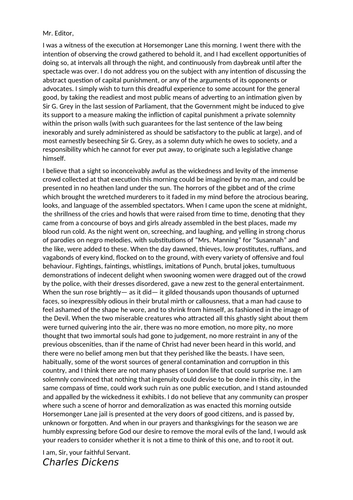
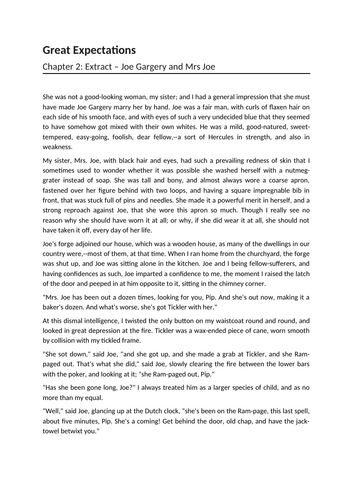
The scheme broadens students’ understanding of Dickens through study of his letter to The Times following the execution of the Mannings, allowing students to explore Dickens’ non-fiction writing and his views on public punishment, cruelty and spectacle. This develops students’ ability to analyse persuasive and emotive language while reinforcing Dickens’ moral purpose. The unit also includes focused study of Great Expectations, examining setting, atmosphere, character contrast and narrative voice, with attention given to the bildungsroman form and the presentation of childhood and social class.
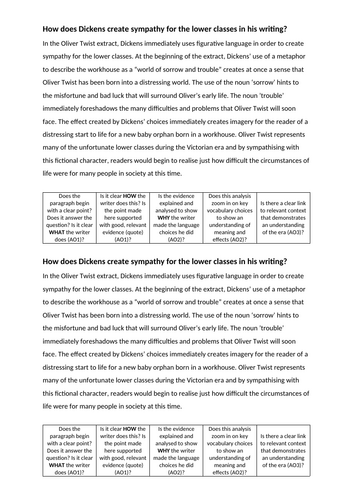
Throughout the scheme, students are consistently taught how to write analytical responses using a clear WHAT–HOW–WHY structure, supporting them to embed quotations, identify language techniques and link ideas to historical context. Vocabulary development is central, with students repeatedly applying ambitious terminology such as poverty, inhumane, monotony, sympathy and injustice in both discussion and writing. The scheme culminates in a summative assessment that asks students to evaluate how Dickens explores human suffering across his texts, drawing together knowledge and skills developed across the unit.
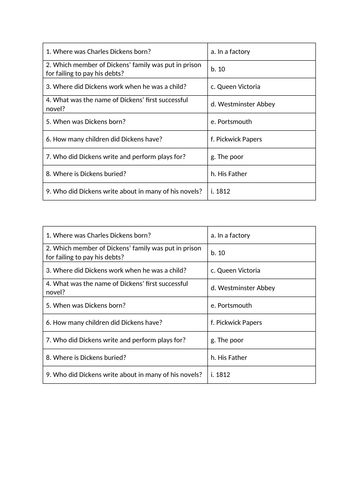
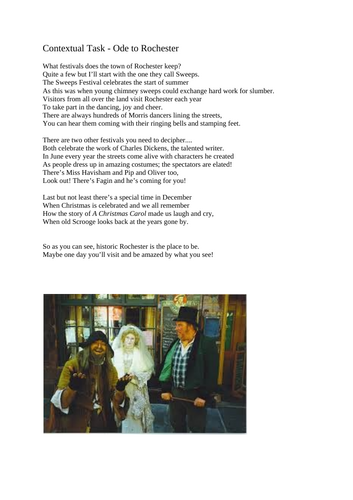
All lessons are fully resourced and presented as ready-to-use PowerPoint slides, including retrieval starters, guided reading, structured discussion tasks, model responses, formative assessment opportunities and a final summative assessment. This scheme is ideal for mixed-ability Year 8 classes and provides a strong foundation for later GCSE study of Dickens while developing key analytical, contextual and evaluative skills at Key Stage 3.
Something went wrong, please try again later.
This resource hasn't been reviewed yet
To ensure quality for our reviews, only customers who have purchased this resource can review it
Report this resourceto let us know if it violates our terms and conditions.
Our customer service team will review your report and will be in touch.
£5.00