


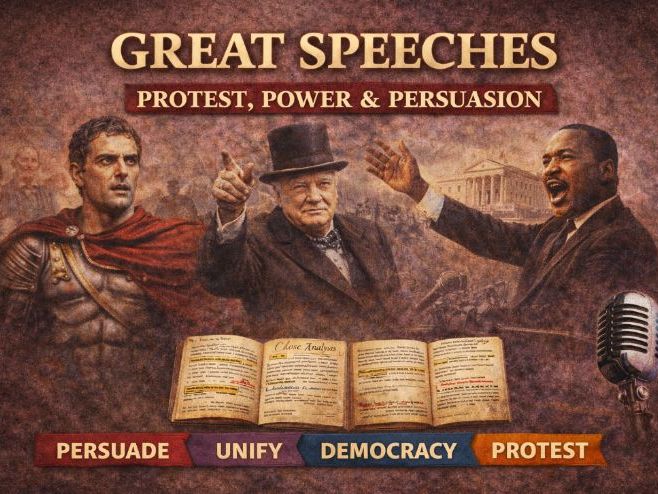
A complete Great Speeches scheme exploring protest, power and persuasion through Julius Caesar, Churchill and Martin Luther King, with structured analysis and writing.
This fully resourced Great Speeches scheme of work is designed to broaden students’ horizons by exploring how powerful speakers use language to incite change, challenge injustice and unify audiences. Across a carefully sequenced series of lessons, students develop a secure understanding of speech writing as a form of social and political protest, while building strong analytical and writing skills that transfer directly to KS3 and GCSE English.
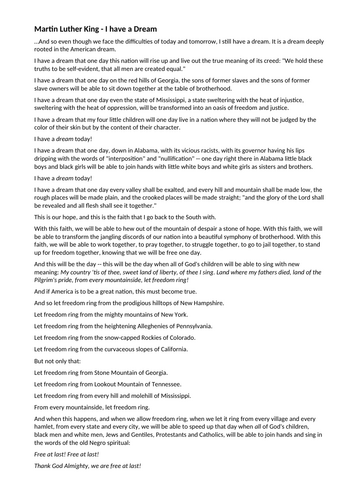
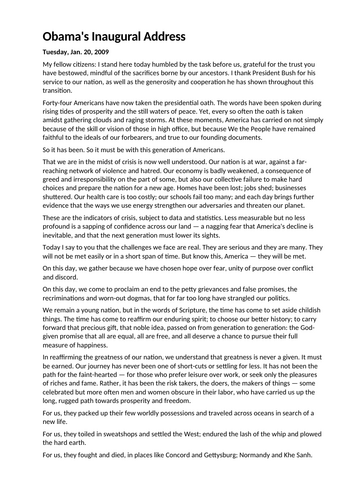
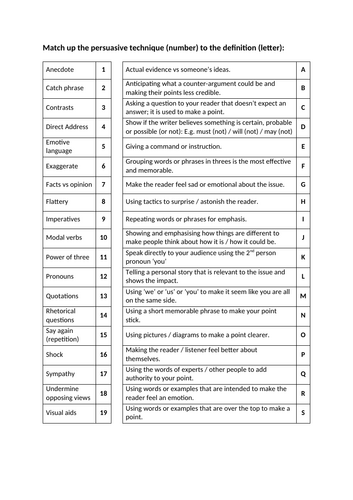
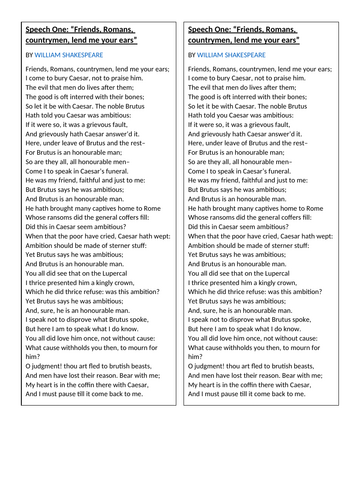
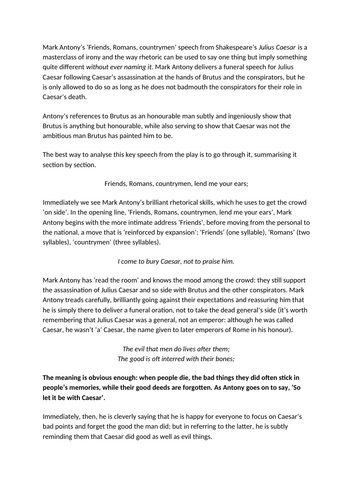
The scheme begins by establishing what speeches are, why they are delivered and how they function within social and political contexts, with a particular focus on protest, persuasion and the incitement of change. Students are explicitly taught key rhetorical and persuasive devices and learn to identify how speakers manipulate language, structure and delivery to influence an audience. This understanding is then applied through close study of influential speeches, including Mark Antony’s speech from Shakespeare’s Julius Caesar, Winston Churchill’s wartime speeches and Martin Luther King Jr’s I Have a Dream.
Contextual understanding is woven throughout the unit, ensuring students appreciate the historical, political and moral significance of each speech. Lessons on Churchill explore leadership, democracy and national unity during the Second World War, while the Martin Luther King sequence focuses on discrimination, persecution, civil rights and non-violent protest. Students are supported to engage critically with these ideas, developing empathy, cultural awareness and a deeper understanding of how language shapes society.
A consistent WHAT–HOW–WHY paragraph structure underpins the scheme, enabling students to analyse language choices with confidence, embed quotations accurately and explain the impact of rhetorical techniques using increasingly sophisticated vocabulary such as unify, democracy, persecution, discrimination, prosperity and inauguration. Scaffolded model responses, guided annotation tasks and regular opportunities for discussion ensure accessibility for mixed-ability classes while still offering challenge.
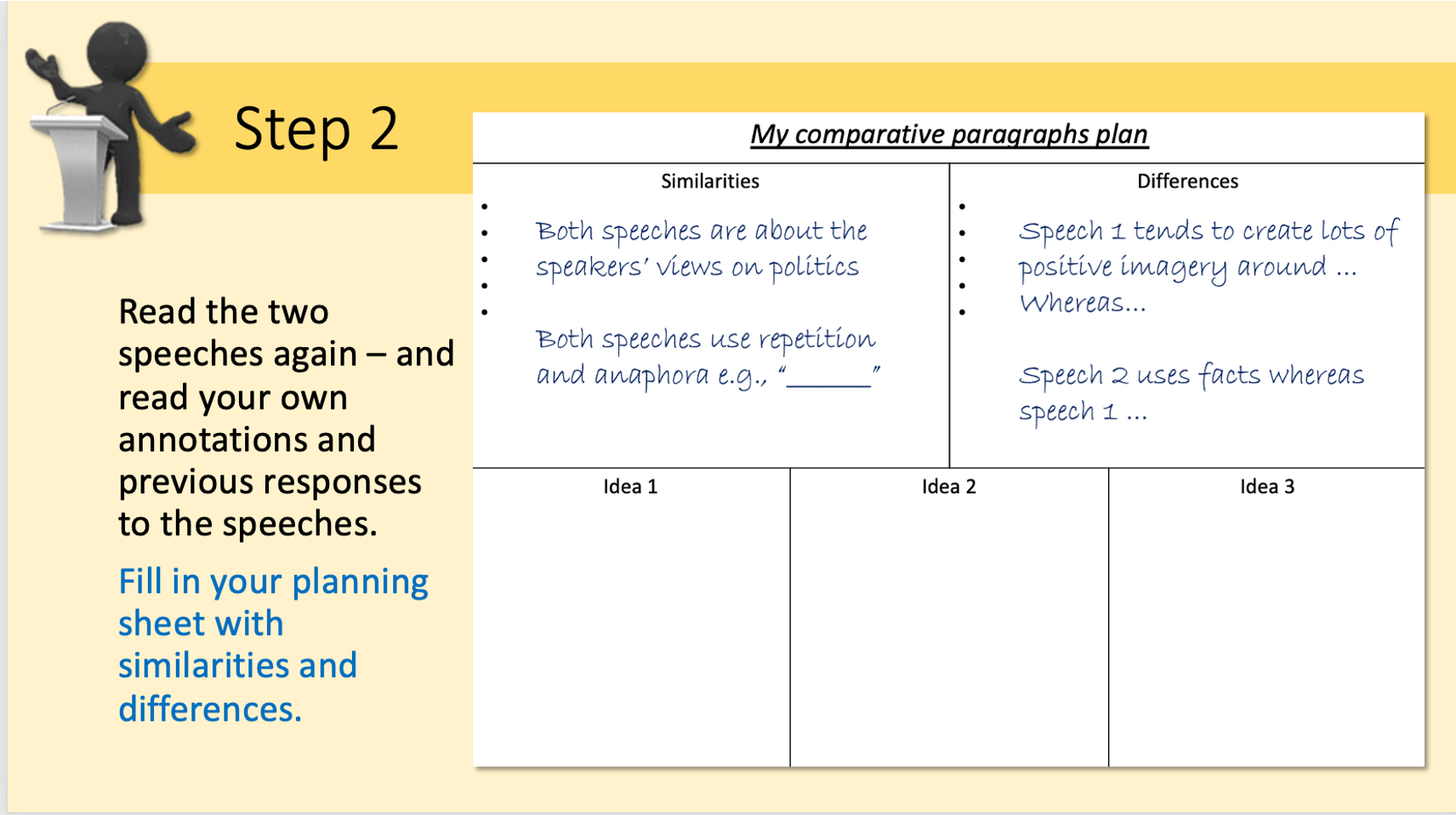
The unit culminates in extended analytical writing, where students independently respond to the question of how speakers present ideas about social and political protest, followed by opportunities to plan, write and present their own speeches. A final presentation lesson supports students in developing oracy skills, focusing on delivery, tone, gesture and audience engagement.
All lessons are provided as ready to teach PowerPoint presentations with clear starters, structured activities, vocabulary development, model answers and assessment opportunities. This scheme is ideal for Key Stage 3 English, supports progression towards GCSE English Language and Literature, and offers an engaging, purposeful exploration of language.
Something went wrong, please try again later.
This resource hasn't been reviewed yet
To ensure quality for our reviews, only customers who have purchased this resource can review it
Report this resourceto let us know if it violates our terms and conditions.
Our customer service team will review your report and will be in touch.
£5.00