


IGCSE Physics: Parallel Circuits | Edexcel Modular | Unit 2 | L7
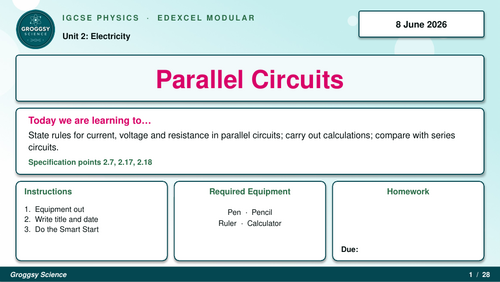
This lesson covers spec points 2.7, 2.17 and 2.18 — knowing that voltage is
the same across each branch of a parallel circuit, that total current is the
sum of branch currents, and explaining why parallel circuits are used for
domestic lighting.
PowerPoint includes:
• Retrieval starter reviewing series circuit rules from L6
• Direct Instruction (I Do) — parallel circuit defined; voltage rule stated and
explained; current rule stated: I_total = I₁ + I₂; current calculated for
each branch using I = V/R; junction rule explained; domestic lighting
application revisited and justified
• Guided Practice (We Do) — three tasks: state voltage across each branch;
calculate branch currents; find total current
• Independent Practice (You Do) — parallel circuit calculations; explain why
a broken branch doesn’t affect others; compare series and parallel
• Review and Reflect — 3 MCQs and exit ticket
Activity Sheet includes:
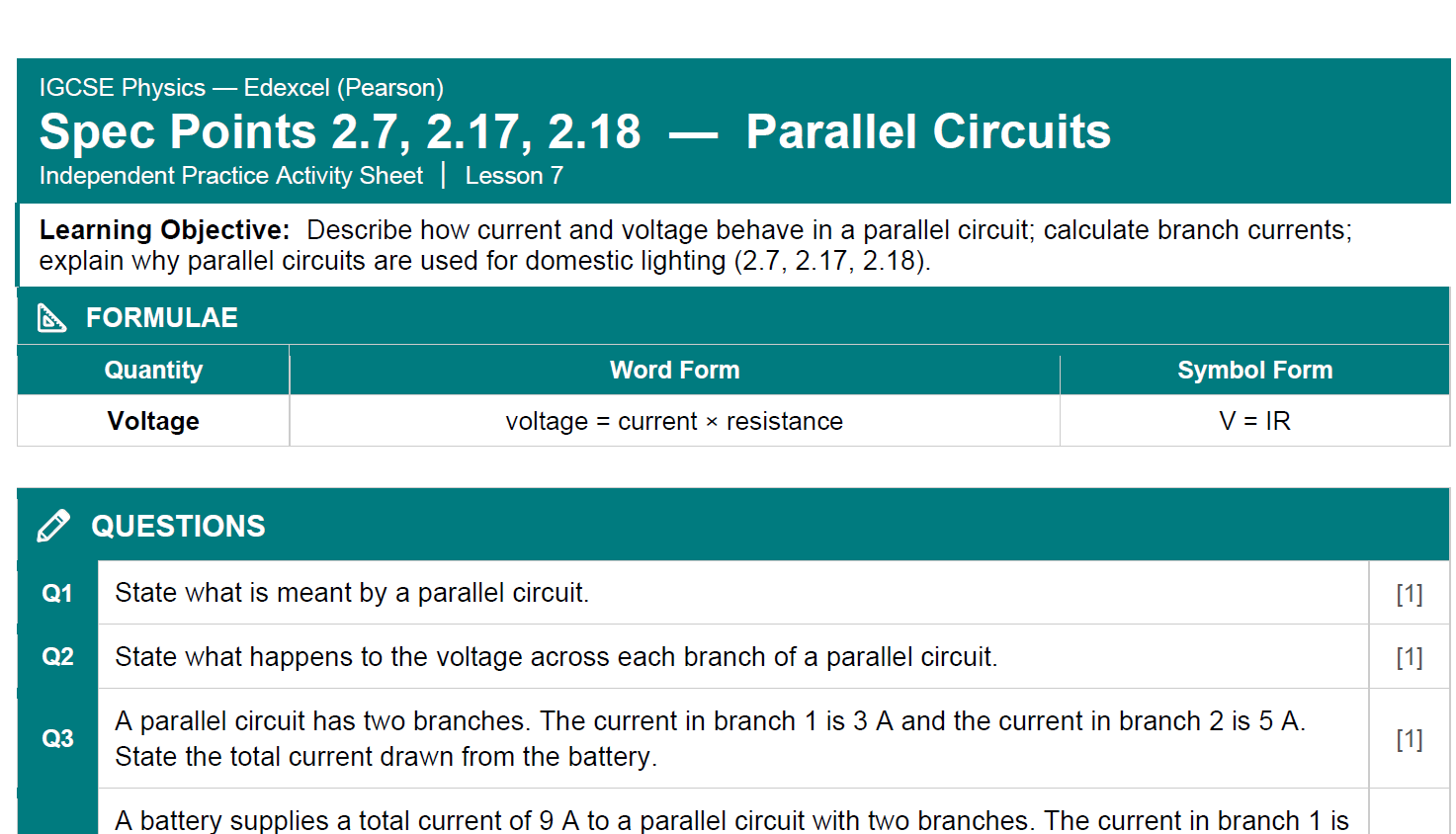
• Formula box: V₁ = V₂ = V_supply; I_total = I₁ + I₂
• Circuit drawing tasks in Q5 and Q8, with vertical-resistor parallel
circuit diagrams in the mark scheme
• 10 exam-style questions covering voltage and current rules, branch
calculations, domestic lighting and circuit comparison
• Stretch question: three-branch parallel circuit — calculate all branch
currents, total current, and justify that total resistance is less than
the smallest branch resistance
• Full mark scheme with circuit diagrams for teacher use
Something went wrong, please try again later.
This resource hasn't been reviewed yet
To ensure quality for our reviews, only customers who have purchased this resource can review it
Report this resourceto let us know if it violates our terms and conditions.
Our customer service team will review your report and will be in touch.
£1.99