Lesson 25
Subject: Physics
Age range: 14-16
Resource type: Lesson (complete)



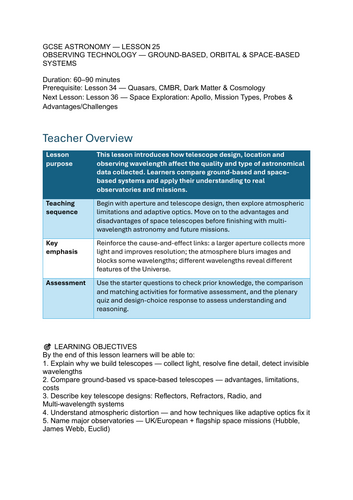
Lesson purpose This lesson introduces how telescope design, location and observing wavelength affect the quality and type of astronomical data collected. Learners compare ground-based and space-based systems and apply their understanding to real observatories and missions.
Teaching sequence Begin with aperture and telescope design, then explore atmospheric limitations and adaptive optics. Move on to the advantages and disadvantages of space telescopes before finishing with multi-wavelength astronomy and future missions.
Key emphasis Reinforce the cause-and-effect links: a larger aperture collects more light and improves resolution; the atmosphere blurs images and blocks some wavelengths; different wavelengths reveal different features of the Universe.
Assessment Use the starter questions to check prior knowledge, the comparison and matching activities for formative assessment, and the plenary quiz and design-choice response to assess understanding and reasoning.
A bundle is a package of resources grouped together to teach a particular topic, or a series of lessons, in one place.
Something went wrong, please try again later.
This resource hasn't been reviewed yet
To ensure quality for our reviews, only customers who have purchased this resource can review it
Report this resourceto let us know if it violates our terms and conditions.
Our customer service team will review your report and will be in touch.