


Macbeth – William Shakespeare – Structural turning points
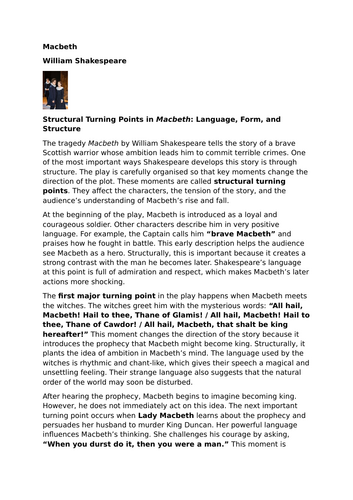
- This is a focused analytical resource examining the key structural turning points in Shakespeare’s Macbeth and their integration with language and form, written in English.
- The text traces Macbeth’s tragic trajectory from honoured warrior to tyrannical usurper, highlighting how pivotal plot moments—such as the witches’ prophecy, Duncan’s murder, Banquo’s ghost, and the final confrontation—are reinforced through distinctive language, soliloquies, and dramatic structure to build tension, reveal character transformation, and underscore themes of ambition, guilt, and downfall.
Key features:
- Clear explanation of the play’s opening portrayal of Macbeth as a heroic figure and the deliberate contrast with his later actions.
- Detailed analysis of major turning points, including the witches’ prophecies, Lady Macbeth’s persuasion, Duncan’s murder, the banquet hallucination, the second witches’ visit, and Macduff’s revelation.
- Examination of Shakespeare’s use of chant-like supernatural language, powerful persuasive dialogue, soliloquies conveying inner conflict, and frantic speeches showing guilt and instability.
- Discussion of how structural organisation around these turning points creates rising tension and illustrates the irreversible consequences of ambition.
- Exploration of the play’s progression from praise and order to chaos, tyranny, and retribution, demonstrating Shakespeare’s mastery of dramatic form.
This resource has been designed for GCSE level students. Includes an accompanying worksheet to reinforce and practise key concepts.
Something went wrong, please try again later.
This resource hasn't been reviewed yet
To ensure quality for our reviews, only customers who have purchased this resource can review it
Report this resourceto let us know if it violates our terms and conditions.
Our customer service team will review your report and will be in touch.
£1.50