



Keywords: KS3 DT, pewter casting, jewellery design project, resistant materials, self-assessment rubric, manufacturing skills, coping saw, metal casting, design development, moodboard assessment, making assessment, polishing techniques, Y9 product design, Y10 DT project
Overview - Pewter Casting Project
Design & Technology Pewter Jewellery Pendant Assessment - Research, Design Development & Making Skills with Self-Assessment Rubrics and Targeted Feedback
This comprehensive 12-week (one term) Design & Technology project resource provides structured assessment criteria and feedback banks for evaluating student work on a pewter jewellery pendant project. The resource covers three key performance areas with band descriptors (0-9 marks per unit, 27 marks total) and includes self-assessment rubrics that develop student reflection skills alongside targeted teacher feedback comments.
What’s Included:
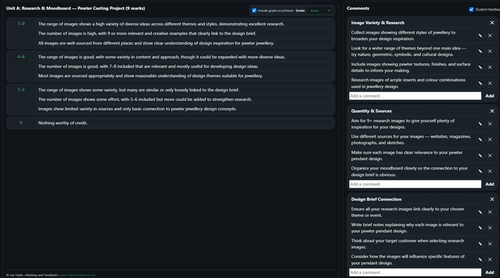
Unit A: Research & Moodboard (9 marks)
Assessment criteria for image variety, quantity, and relevance to design brief
Band descriptors evaluating research quality and diversity of inspiration sources
Feedback on collecting appropriate research for jewellery design, themed imagery, and design inspiration
Comments addressing pewter materials research and acrylic detail inspiration
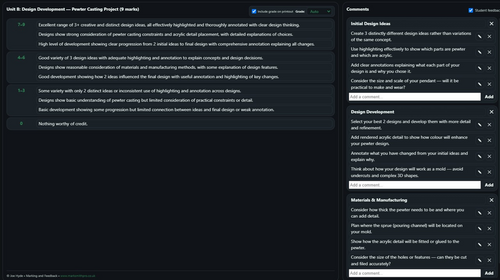
Unit B: Design Development (9 marks)
Rubric for evaluating 3 initial design ideas with highlighting and annotation
Criteria for developing 2 ideas into refined final designs with acrylic details
Assessment of design thinking, materials consideration, and manufacturing awareness
Comments on annotation quality, rendering techniques, and mold design constraints
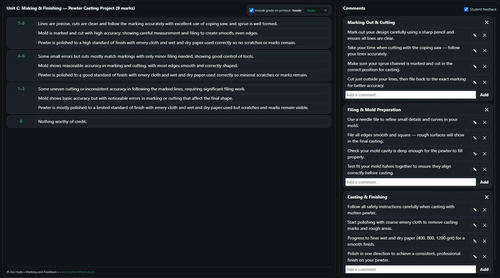
Unit C: Making & Finishing (9 marks)
Detailed criteria for marking out, cutting with coping saw, and filing accuracy
Assessment of pewter casting quality and sprue formation
Rubric for polishing and finishing standards using emery cloth and wet & dry paper
Comments on tool use, accuracy, and achieving professional surface finishes
Key Features:
Self-Assessment Integration
Student self-reflection boxes encourage metacognition and ownership of learning
Rubric system helps students understand progress
Comparison prompts help students gauge accuracy of self-assessment
Structured improvement prompts guide student reflection on next steps
How to Use in the Classroom:
This resource works as both a student workbook and teacher assessment tool. The clear band descriptors make it easy to justify grades while the extensive comment banks allow teachers to quickly select relevant, constructive feedback. The self-assessment rubrics encourage students to take ownership of their learning and develop realistic evaluation skills.
Perfect for KS3/KS4 product design units, resistant materials projects, or jewellery-making schemes of work. The resource supports consistent assessment across classes, develops student self-evaluation skills, and provides specific, actionable feedback linked to manufacturing quality standards.
Something went wrong, please try again later.
This resource hasn't been reviewed yet
To ensure quality for our reviews, only customers who have downloaded this resource can review it
Report this resourceto let us know if it violates our terms and conditions.
Our customer service team will review your report and will be in touch.
£0.00