


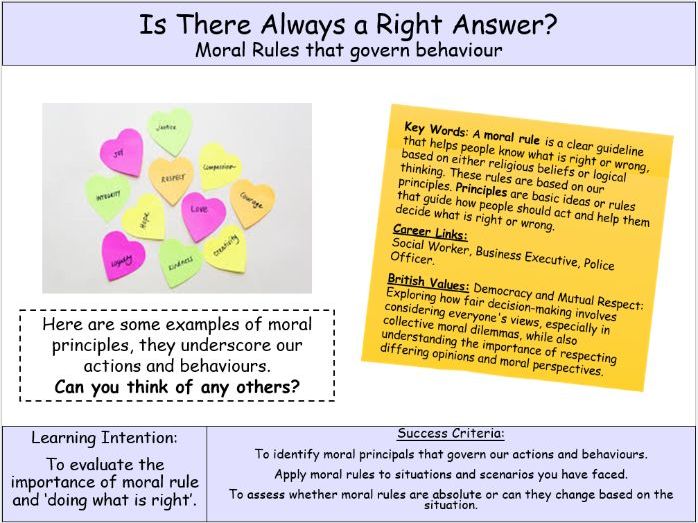
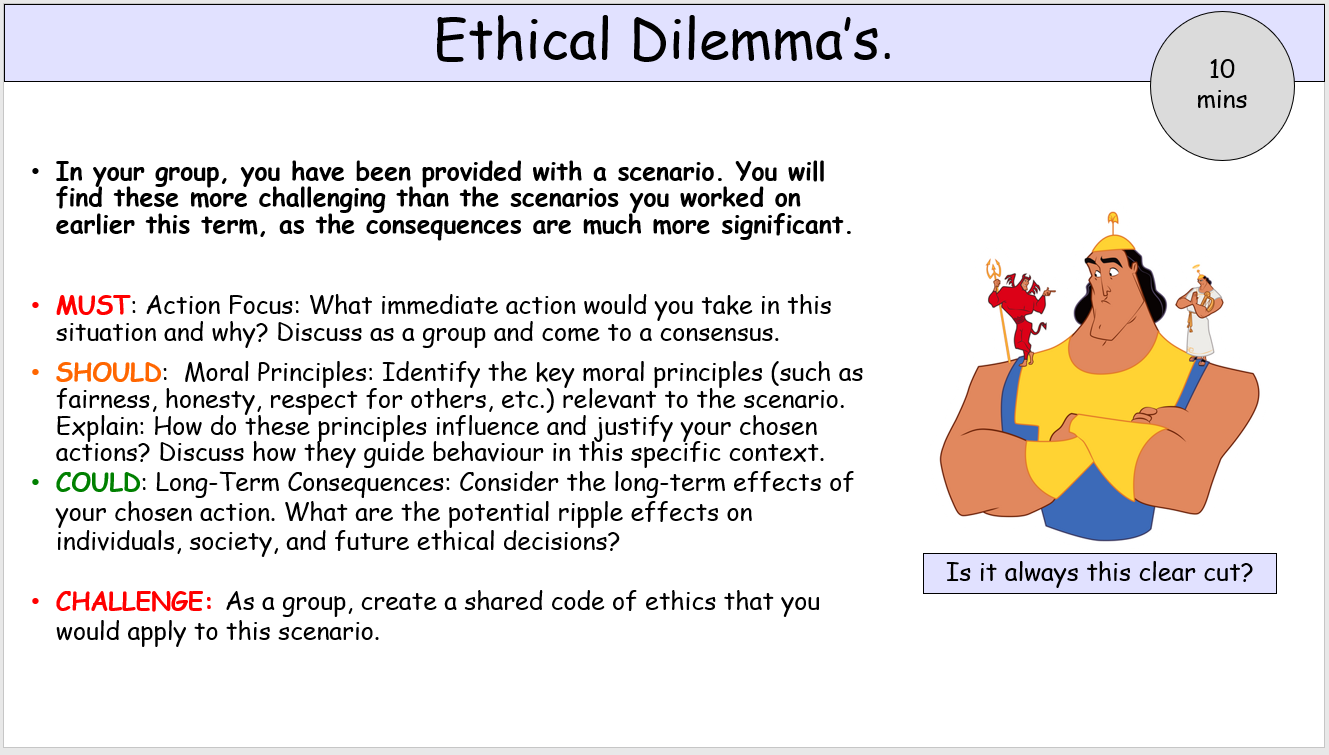
This engaging lesson explores moral rules and ethical decision-making, encouraging students to question whether there is always a clear right or wrong answer. Students examine key ethical theories such as deontology (duty-based ethics) and utilitarianism (outcome-based ethics), and apply these ideas to a range of real-world and hypothetical dilemmas, including the Trolley Problem. Through discussion, debate, and reflection, students evaluate whether moral rules should be absolute or flexible depending on context.
Learning Intention: To evaluate the importance of moral rules and how we decide what is right or wrong.
Success Criteria:
- Identify key moral principles that guide behaviour.
- Apply moral rules to different ethical scenarios.
- Explain key ethical theories such as deontology and utilitarianism.
- Evaluate whether moral rules are absolute or depend on context.
Activities Included:
- Starter discussion exploring what moral rules are and why they exist
- Group-based ethical dilemma tasks analysing real-life and hypothetical scenarios
- Introduction to key theories including deontology, utilitarianism, and contextual ethics
- Video-based exploration of dilemmas such as the Trolley Problem
- Debate and discussion tasks evaluating different viewpoints
- Reflection activity assessing how moral decisions are made
Format: PowerPoint lesson resource
Ideal For:
KS3 / Middle School PSHE, Citizenship, MSC or Religious Studies
Lessons exploring ethics, morality, and decision-making
Topics focused on philosophy and critical thinking
Discussion-based learning developing reasoning, debate, and evaluation skills
Something went wrong, please try again later.
This resource hasn't been reviewed yet
To ensure quality for our reviews, only customers who have purchased this resource can review it
Report this resourceto let us know if it violates our terms and conditions.
Our customer service team will review your report and will be in touch.
£3.10