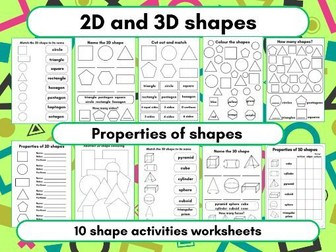
Boost shape recognition, geometry vocabulary and early maths skills with these 2D and 3D shapes activities worksheets - includes:
Match the 2D shape to its name
Name the 2D shape
Cut out and match
Colour the shapes
How many shapes?
Properties of 2D shapes - names, sides and vertices
Abstract 2D shape colouring
Match the 3D shape to its name
Name the 3D shape
Properties of 3D shapes - vertices, edges, faces and surfaces
Ten printable worksheets to support shape learning, in KS1 and KS2.
Perfect for
Classroom lessons
Home learning
Revision and assessment
Early geometry skills
Shape recognition and vocabulary building
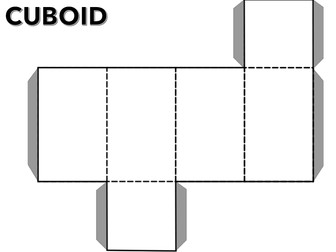
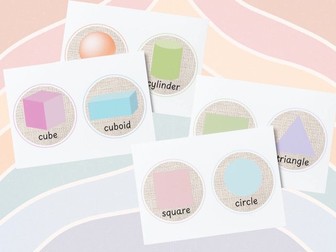
Yr 3-4. Originally designed as A6-sized desk prompts, laminated and made up as a carousel type thing - or as A2 posters, for TA course project. Please feel free to comment on clarity etc.
Double-sided worksheet focusing on 2D and 3D shapes. The worksheet contains four activities with objectives:
Identify the difference between 2D and 3D shapes
Explain the characteristics of a 2D/3D shape
Naming 2D and 3D shapes
Who am I? Recognizing characteristics of 3D shapes
Simply print and allow students to write straight onto the sheet.
2D and 3D Shape Patterns - Year 1
In this maths teaching resource, pupils make and complete simple patterns using 2D and 3D shapes. This Year 1 maths teaching resource has been created following the White Rose Small Steps guidance for year 1 - Autumn - Block 3 - Shape. The resource consists of interactive activities and accompanying worksheets to guide your class through the curriculum objectives of the Year 1 maths programme of study (Geometry - properties of shapes).
Content includes:
Varied fluency and reasoning and problem solving interactive class activities with 2 accompanying worksheets
1 further varied fluency and reasoning and problem solving worksheet with answers
‘2D and 3D Shape Patterns - Year 1’ is completely editable giving teachers the freedom to adapt the resource to suit their individual teaching needs.
Not quite what you’re looking for? Click below to see similar Year 1 geometry resources:
Sorting 2D Shapes - Year 1
2D Shapes - Year 1
Sorting 3D Shapes - Year 1
3D Shapes - Year 1
Year 1 Properties of Shape Bundle
2D Shapes - Year 1
In this maths teaching resource, pupils recognise and name 2D shapes (circles, squares, rectangles and triangles). They recognise 2D shapes on the surface of 3D shapes and see how the same 2D shape can look different in different orientations. This Year 1 maths teaching resource has been created following the White Rose Small Steps guidance for year 1 - Autumn - Block 3 - Shape. The resource consists of 1 lesson, including a PowerPoint presentation and worksheets, to guide your class through the curriculum objectives of the Year 1 maths programme of study (Geometry - properties of shapes). The worksheets contain varied fluency, reasoning and problem solving to reinforce and consolidate the children’s learning.
Content includes:
Varied fluency and reasoning and problem solving interactive class activities with 4 accompanying worksheets in colour and black and white
1 further varied fluency and reasoning and problem solving worksheet with answers
‘2D Shapes - Year 1’ is completely editable giving teachers the freedom to adapt the resource to suit their individual teaching needs.
Not quite what you’re looking for? Click below to see similar Year 1 geometry resources:
2D and 3D Shape Patterns - Year 1
Sorting 2D Shapes - Year 1
Sorting 3D Shapes - Year 1
3D Shapes - Year 1
Year 1 Properties of Shape Bundle
I made this for my class in order for them to understand the properties of 2D & 3D shapes. Understanding what the properties mean enabled them to give accurate description of the shapes.
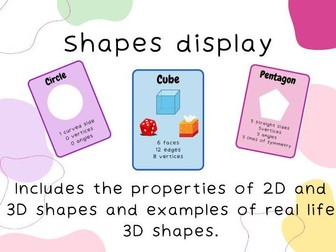
Support the teaching of 2D shapes and 3D objects with this versatile display!
Includes:
banner
bunting ‘2D SHAPES AND 3D OBJECTS’
space to record learning objectives and success criteria
headings (vocabulary, 2D shapes, 3D objects, 2D shapes in the environment, 3D objects in the environment, nets of 3D objects)
portrait working wall grid
landscape working wall grid
2x portrait ‘Our Shape Work’
2x landscape ‘Our Shape Work’
4x speech bubbles
This display includes labels and posters for the following shapes which depict the shape and examples found in the environment.
square
circle
triangle
rectangle
pentagon
trapezium
rhombus
kite
parallelogram
cube
cuboid
sphere
cone
cylinder
pyramid
square-based pyramid
triangular-based pyramid
triangular prism
tetrahedron
pentagonal prism
Labels and definitions for the following words are included:
edges
corners / vertex / vertices
regular shape
irregular shape
diagonals
faces
quadrilateral
lines of symmetry
equilateral triangle
isoceles triangle
right-angled triangle
scalene triangle
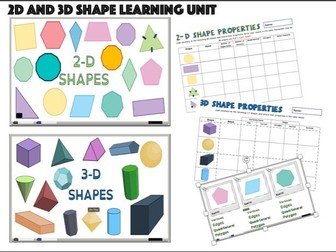
This set of resources is used for teaching 2D and 3D shapes and their properties.
The Power Points take the students through the different shapes and allow them to fill in the details of all the shapes into the accompanying shape properties booklet.
One of the Power Points is simply used as a revision template for the names of shapes - print out the slide and get the children to write down the names of the shapes. You can then reveal all the names.
Poster-style information about common 2D and 3D shapes that encourage discussion about the properties of each shape. Interactive activity 'Square or rectangle?' Worksheets: identifying faces, edges and vertices, regular or irregular and looking for right-angles. Suitable for year 3 onwards.
Looking for a fun interactive teaching idea for 3D and 2D shapes? Well look no further as 2D and 3D Shape Sort Game Puzzles, for CCSS K.G.3, will serve as an exciting lesson plan for kindergarten elementary school classrooms. This is a great resource to incorporate into your unit as a guided math center rotation, review game exercise, small group work, morning work, remediation, intervention, or rti. It can also be used as a quiz, drill, test, or assessment tool to help determine student mastery of the learning target. Whether a student is homeschooled or given this as a homework assignment, kids will also love working on these at home to improve their skills.
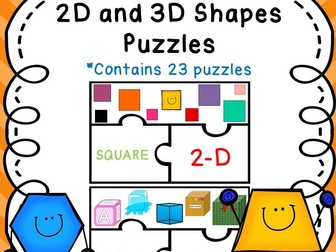
This puzzle set includes 23 colorful jigsaw puzzles, answer key, and an optional station instruction page with an example. These come as pdf printable sheets that can be printed on card stock and laminated for long-term use. As a suggestion, store them in a sealable gallon storage bag and place them in a tub or bin for students to use throughout the year for enrichment when they finish early. Another idea, for a project, is students can glue the completed puzzles into a notebook or journal as a reference sheet. They can also be glued on a poster for displaying on a bulletin board or as a wall anchor chart.
It covers identifying the name of a geometric shape based on its picture and determining if it is a flat 2D or solid 3D figure. By sorting and matching the puzzle pieces, students can gain confidence in an important and sometimes challenging skill. Your students will love to practice and learn to develop strategies about of two dimensional shapes and three dimensional shapes with this resource!
Geometry Vocabulary Terms included:
circle
cone
cube
cylinder
hemisphere
hexagon
hexagonal prism
octagon
octagonal prism
oval
parallelogram
pentagon
pentagonal prism
pyramid
quadrilaterals
rectangle
rectangular prism
rhombus
sphere
square
trapezoid
triangle
triangular prism
I hope you download and enjoy this engaging hands-on manipulative activity with your students! So set those worksheets aside and give our puzzles a try!
Relevant Kindergarten Common Core Standard K.G.A.3
Identify shapes as two-dimensional (lying in a plane, “flat”) or three-dimensional (“solid”).
Cross Reference: Texas TEKS K.6A K.6B
Students are introduced to 2D and 3D shapes with the key vocabulary introduced and practised ( length, width, height, cube) in a 2 page interactive worksheet with reading, writing, speaking and drawing activities.
Suitable for online teaching, home schooling, Primary and English as a Foreign Language students.
Word and PDF files included.
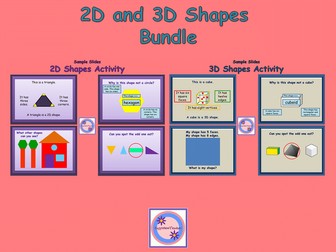
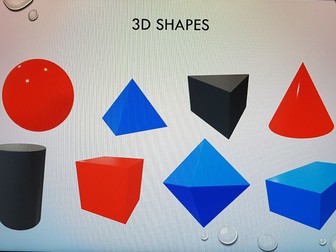
Two fun Maths activity PowerPoints to introduce children to 2D and 3D shapes.
The PowerPoints include interactive activities for the children to join in with. The PowerPoints show different 2D or 3D shapes and describes their properties. Children then have to guess the shape that is being described or the shape that is being slowly revealed. There is also a shape spotting activity and an odd one out activities. My classes have enjoyed using these PowerPoints to learn about 2D and 3D shapes and they encourage lots of talk about shapes.
The activities could be used as a whole class activity or in small intervention groups.
Aimed at Early Years and Year 1 children however could be used as a recap or booster session for Year 2 children.
2D and 3D Shapes Sorting Activities – 4 Pages
Boost shape recognition skills with this engaging set of 12 sorting activities focused on both 2D and 3D shapes.
Children will investigate each line of shapes and identify the odd one out, helping to develop their visual discrimination and reasoning skills.
Perfect for Early Years and Key Stage 1 learners, these activities support understanding of:
Shape names and properties
Sorting and categorizing
Critical thinking skills
Ideal for use in the classroom or at home, these sheets can be printed and laminated for repeated use.
#ShapeActivities #2DShapes #3DShapes #EarlyYearsMaths #KS1Maths #VisualDiscrimination #SortingActivities #TESResources #MathsLearning #EYFSShapes #ShapeRecognition #HandsOnMaths
Powerpoint showing and developing learning about 2D and 3 D shapes which can be difficult for students to grasp.
Can be used in numeracy or cross curricular as a starter.
Answers given
colours used to help students identify different shapes.
Good for all learners
Students will practice distinguishing between 2D shapes and 3D shapes with this shape sorting math center. This shape sort assesses whether a student can distinguish between 2D and 3D shapes with both basic shape images and with real world shape images.
Students will love this hands on and engaging way to practice seeing the difference between 2D and 3D shapes. This sorting activity makes a great math station, small group activity or hands on assessment for students learning about shapes.
Ways to Use
math centers
independent practice
hands on assessment
small group
This sorting math center is an easy to prep activity. Simply print the mats and shapes, cut out the shapes, then place in the desired center for students to complete the activity.
There are two different sorts to assess student knowledge on shapes.
one sort with basic 2D and 3D shapes
one sort with real world examples of shapes.
By having two sets of sorts, teachers are able to differentiate this math activity for students based on visual needs. This also provides teachers with more than one sort option when setting up centers or small group activities.