The way back home- colourful semantics- build a sentenceQuick View
elloxxx

The way back home- colourful semantics- build a sentence

(0)
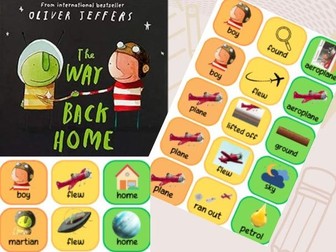
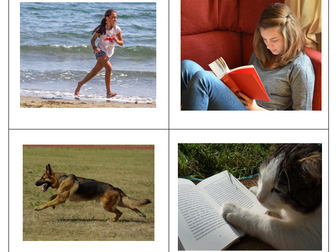
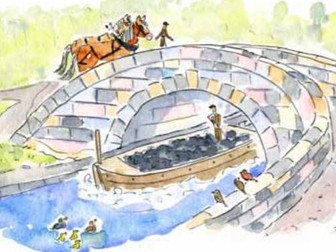
This pack has been created to support writing linked to the story The way back home by Oliver Jeffers. Pack includes: How to use colourful semantics. Over 10 pages of labelled cards and unlabelled cards Who? What doing? What? Describe? 8 templates to support building sentences Colourful Semantics is a fun and creative way to help students structure their sentences in a way that makes sense and is interesting to read or hear. It helps them understand the different parts of a sentence and how they work together. These cards are best suited to children working at a Year 1 or Year 2 level, children who have English as an additional language or children who have additional learning needs. This is a digital download. This items work best when printed on to card and then laminated for repeated use. Alternatively, the pictures will fit into a school exercise book.
Art Home Learning Hundertwasser Buildings WorksheetsQuick View
ladybugssloan

Art Home Learning Hundertwasser Buildings Worksheets

(0)
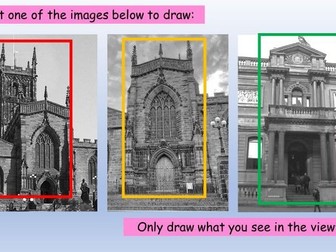
Series of worksheets exploring the work of artist Hundertwasser. This set of worksheets looks at Hundertwasser work as an architect, and his refurbishment of old factory buildings. Students get the opportunity to redesign a famous building from around the world using Hundertwassers style.
KS3 Home Numeracy WorkbookQuick View
newgreenshoots

KS3 Home Numeracy Workbook

(0)
KS3 Home Numeracy Workbook Build Confidence in Key Maths Skills at Home This comprehensive Year 7 & 8 numeracy workbook is designed to support students’ maths fluency and problem-solving skills at home. Structured across 19 weeks, it covers essential topics including addition, subtraction, fractions, decimals, percentages, ratio, algebra, and more. Each week includes: Core skills practice Real-world problem-solving tasks Mental maths challenges Tiered vocabulary and key definitions ‘To improve I am going to…’ self-reflection prompts Perfect for independent practice, catch-up learning, or homework support, this workbook helps students build solid foundations, develop confidence, and prepare for success in KS3 Maths and beyond
Building sustainable homesQuick View
jc242

Building sustainable homes

(1)
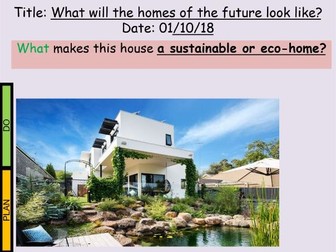
This is part of a series of Geography lessons designed for KS3 around the concept of sustainability. This SOW is complete with fully resourced lessons, assessments, furthering reading and ideas for building in cultural capital to the curriculum. This lesson focuses on building sustainability. The objectives of the lesson are: Describe what an Eco-home needs. Compare the sustainability features of a sustainable home. Suggest the best features for your own sustainable home.
GCSE Physics Heating and Insulating Buildings: Complete LessonQuick View
Malachite44

GCSE Physics Heating and Insulating Buildings: Complete Lesson

(1)
**Save 61% with the Complete Temperature and Heat Transfer Bundle! ** Get this lesson as part of our GCSE Temperature and Heat Transfer Bundle and enjoy a huge discount! Instead of buying lessons individually, grab the entire unit with 9 lessons, including the required practicals, for just £7.00. Click here to get the bundle now: https://www.tes.com/teaching-resource/resource-13155109 This PowerPoint resource provides an interactive approach to teaching the concepts of heat transfer, energy efficiency, and insulation. Perfect for secondary school science classes, it includes: Starter Activity: Review key heat transfer concepts with targeted questions on conduction, convection, and radiation. Big Questions: Investigate how heat is lost from homes and how insulation helps reduce costs and energy waste. Detailed Explanations: Explore real-life applications of heat transfer, including loft insulation, cavity walls, radiator reflectors, and double-glazed windows. Practice Problems: Include payback time calculations to analyze the financial and environmental benefits of insulation. Interactive Tasks: Fill-in-the-blank activities, practical questions, and opportunities to reflect on energy-saving strategies. This resource is designed to support student understanding of thermal energy transfer and encourage critical thinking about sustainable living.
Heating and insulating buildingsQuick View
CMGsSciencelessons

Heating and insulating buildings

(0)
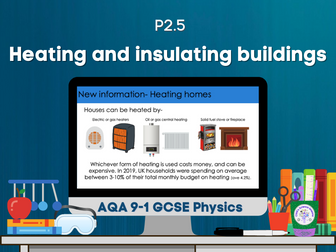
During this lesson (P2.5 Heating and insulating buildings) GCSE students work through a variety of tasks to develop their understanding of how homes are heated and how to reduce the rate of cooling. Based on the 5th from the AQA 9-1 GCSE Physics (OUP scheme) P2: Energy transfer by heating chapter. Also available as a digital worksheet, which is ideal for distance learning, independent study or catch-up of missed work through absence. Presentation contains (28 slides)- Bell work activity Lesson objective and success criteria Information slides Challenge activities (group work) Practical activity (where appropriate) Demonstrate understanding tasks (with answers) Lesson resources (additional to scheme) Aimed at a mixed ability class covering content 1-8. Please note: Kerboodle worksheets from scheme are not included due to license.
Homes & Buildings - Conversation FlashcardsQuick View
fingertips-resources

Homes & Buildings - Conversation Flashcards

(0)
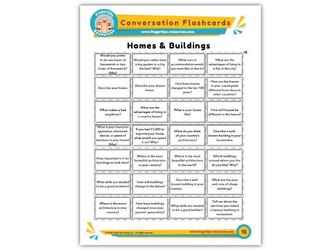
Thematic discussion questions designed to encourage fluency & confidence in English Ideal to use as an engaging warmer or as a dynamic speaking activity to finish a class. Aimed at adults and teenagers. 1. Print & cut 1 set (double-sided) of flashcards for each pair of students. **2.**Students draw a question card and ask their partner. Encourage students to: • Extend their answers • Elicit more information • Agree / disagree with their partners • Justify their arguments 3. Change pairs 4. Students try and report to their new partner everything they can remember which their old partner has just told them.
Science at Home - Build a RainforestQuick View
davieskirsty

Science at Home - Build a Rainforest

(0)
This group of resources has been created for use as induction to science work for year 6 students preparing for secondary school. They can generally be used by KS2 and KS3 students (years 3 to 8) though. Build a Rainforest: In Science, some of the things we learn about are ecosystems, photosynthesis and the water cycle. All of these things can be explored by building our own mini ecosystem.
Green Home/Green Building-PresentationQuick View
norhazlindaidros

Green Home/Green Building-Presentation

(0)
This is presentation slides about green home definition, it’s characteristics, organizations that give green status to buildings, examples of green home and building and mini task for students to do at the end.
Building a cool eco homeQuick View
eharrage

Building a cool eco home

(0)
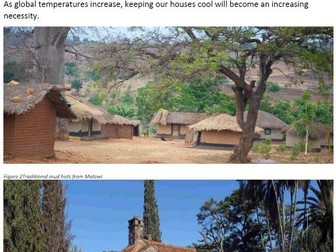
Building a house from sustainable materials with the intention of keeping the interior naturally cool. Booklet includes research resources, building specifications. Also includes construction, research and peer assessment rubrics
Learning from Home: Build a CanalQuick View
CanalAndRiverTrust

Learning from Home: Build a Canal

(0)
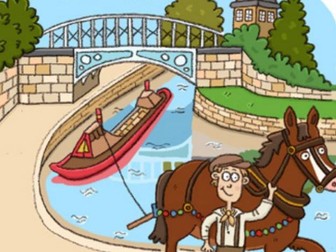
Activities and resources to encourage children to read, watch, play, create and do as they learn how and why canals were built and how they changed Britain. Use the activity plan to guide your learning.
Learning from Home STEM: Building BridgesQuick View
CanalAndRiverTrust

Learning from Home STEM: Building Bridges

(0)
Bridges are found all over the country forming links across a range of natural and artificial barriers to travel. Find out about different beam, arch, cantilever and suspension bridges using real examples on our canals and rivers. Carry out simple activities to build and test different bridge designs. Activity plan included to guide your learning at home.
SEND home school communication matQuick View
yorkshiresendteacher

SEND home school communication mat

(0)
Builds communication between home and school. A double sided, widget created resource with empty squares to add members of staff that your children are familiar working with. Please get in touch for any personalisations, such as change of subjects or sessions.
Aliens - Create, make and build your own space aliens!Quick View
martinjgoulden

Aliens - Create, make and build your own space aliens!

(0)
Create your own aliens in this drag and drop PowerPoint file. Choose from four different coloured bodies and six different body shapes. Then, customize them with various eyes, antennas, mouths and legs. Get your children to try and remake some of the pre-made aliens on the home page or simply let them get creative. Challenge them further by getting them to focus on number and shape. E.g. Create an alien with a mouth shaped like a pentagon, give it 5 eyes and 4 legs.
Whose Home is This?Quick View
Deborah Jane Smith

Whose Home is This?

(6)
The PowerPoint shows animal/bird homes: Whose home is this? A robin with eggs; a hegehog; squirrel & kits; a crow; a swan with eggs; a mouse and her babies; a rabbit with hers; ducks and duckings. The final slide shows children building dens in the woods.
English- The Hobbit- Building tension and suspense in writingQuick View
ResourcesForYou

English- The Hobbit- Building tension and suspense in writing

(0)
The Hobbit, or There and Back Again is a children’s fantasy novel by English author J. R. R. Tolkien. The Hobbit is set within Tolkien’s fictional universe and follows the quest of home-loving Bilbo Baggins, the titular hobbit. This lesson looks at how authors can build tension and suspense in their writing with a focus on The Hobbit. It looks specifically at the part when Bilbo meet Gollum in the cave. Presentation, lesson plan and resources included. Students look at a poster slide detailing different ways authors build tension and suspense and then come up with their own examples. They then identify these techniques in an extract from chapter 4. They read the rest of the chapter, illustrating the levels of tension from main events on the graph. Finally, they write the part when Bilbo meets Gollum after watching a clip and reading the start of chapter 5 and write their own narrative of the scene. Leave a review for this resource and send a copy of your receipt to resourcesforyou100@outlook.com to receive a FREE single resource of your choice!
Insulation in the homeQuick View
filnolan

Insulation in the home

(1)
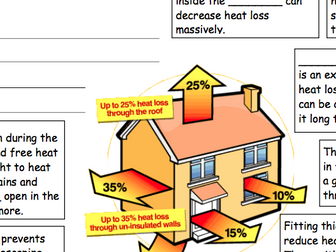
Pupils begin by researching insulation or watching a small video (plenty on Youtube), the second task is to discuss way in which a house can lose heat (open windows, damage and leading to poor insulation), the main task is list ideas to reduce heat loss, looking at main areas of the house where heat is lost. The plenary allowed pupils to discuss houses of the future and how they need to be built to reduce heat loss. The lesson could also be guided to show eco friendly ideas.
Home Reading LeafletQuick View
missb_year1

Home Reading Leaflet

(0)
Support Your Year 1 Reader at Home! What to write in your child’s reading diary; Simple phonics tips & key definitions Example comments for phonics, fluency, and comprehension Guidance on using phonics books and why re-reading the same book builds confidence
Home Building Loan Association v. Blaisdel 1934 SCOTUS SpotlightQuick View
asocialstudieslife

Home Building Loan Association v. Blaisdel 1934 SCOTUS Spotlight

(0)
This activity explores the Supreme Court case Home Building & Loan Association v. Blaisdell (1934), which tested if states could change contracts during emergencies. Students will learn how the Court upheld a Minnesota law that delayed foreclosures during the Great Depression, showing that the government can act to protect people in times of crisis—even if it affects private agreements. Included in this resource: Supreme Court Case Spotlight analysis with scaffolding questions Answer key for teachers (suggested) ©2025 A Social Studies Life For personal use only. Duplication for an entire school, an entire school system, or for commercial purposes is strictly forbidden. Please have other teachers purchase their own copy. If you are a school or district interested in purchasing several licenses, please contact me for a district-wide quote.