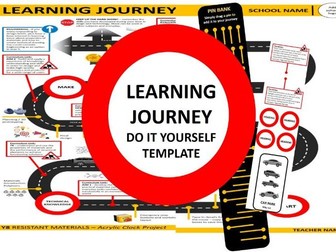
A template with tips on how to create your own eye-catching journey
Size is preset to fit A3 paper
With location pin bank, red roadwork boxes (for even more detail, such as curriculum links) and there are even some vehicles parked ready in the car park - just get creative!
Includes help notes that can be over typed
This is a powerpoint document
PPT that follows the sentence stacking sequence for 'The Write Stuff’s year 3 unit. I have put the powerpoint together with a mixed year 3/4 class in mind. I have also included a boxing up grid which I used to aid their planning process for the independent write, and an additional powerpoint for two additional lessons to help develop the ending of the story. We talked a lot about the effect on the reader.
Top tips from my teaching experience of this unit:
I began with a lesson looking at different openings using a variety of picture books, we talked about how the openings worked to draw the reader in and used what we knew from the book Journey to write an effective opening.
I taught a lesson before the start of the sequence giving them the picture of the girl talking to family members and they wrote/drew speech bubbles for the scenes which we then used for SS1 and talked about using different verbs for ‘said’ - this gave them a clearer idea of where the inverted commas needed to go.
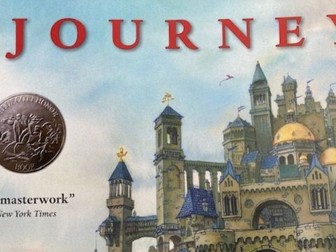
All pictures included in the powerpoint come from the original text ‘Journey’ by Aaron Becker
A Christmas Speed, Distance, Time lesson. Students have to calculate Santa’s speed as he travels the globe, they then use this to figure out what time he will be at each destination. The task uses speed, distance, time skills as well as the added difficulty of calculating with different time zones.
All instructions are provided on the slides as well as a table that can be printed to help the pupils with their calculations.
It typically takes an older more able class at least 20 minutes, and younger groups need most the lesson.
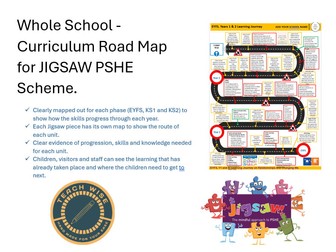
learning journey map template to edit to visually show the long term planning intent for a department, whole school or could be changed to key stages.
This is an effective and interesting method of showing your intent for students learning and your full curriculum overview. It is currently designed for year 7 - year 11 but could be edited to suit a primary setting.
Example of how it can be used in the cover photo - the blank template is in the preview.
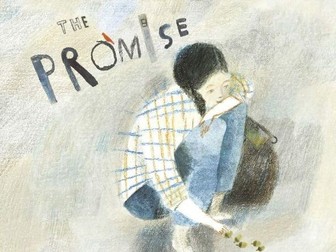
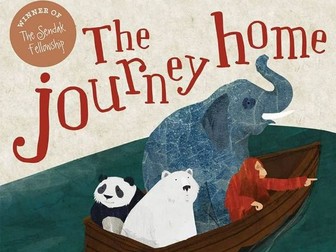
A set of worksheets relating to the Journey Home, along with a word mat of key words from the story.
Sheets include tasks based on:
Sequencing/identifying the main parts of the story
Writing expanded noun phrases
Using inference to form ideas
Adding -s and -es suffix to a root word
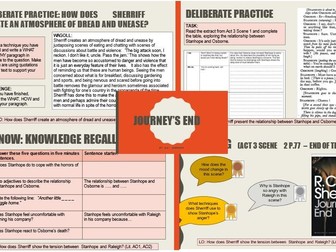
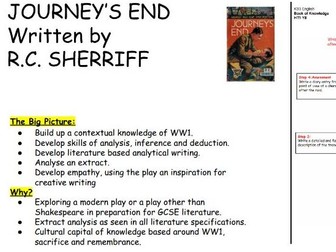
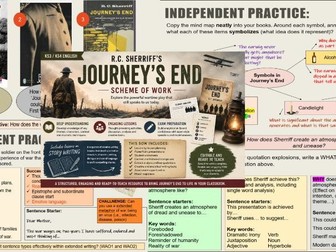
Over thirty sides of Journey's End resources! The booklet guides students through the entire play, asking questions that cover the events, the literary devices and characterisation. The questions are differentiated, allowing students to stretch and challenge themselves based on their answers. It is interactive, with some questions asking for letters to be written, artwork, personal interpretations and reflections.
The booklet concludes with essay questions, essay writing tips and techniques on how to write a strong answer! A great resource which the students enjoy and engage with.
A 15 lesson SOW on R.C. Sherriff’s Journey’s End, guiding students through the play with an exploration of:
Character
Theme
Context
Language Analysis
Photocopiable resources included
This resource contains everything you need to teach ‘Beyond the Sky and the Earth: A Journey into Bhutan’. Based on the Edexcel GCSE/IGCSE English Language curriculum, but easily adaptable to any curriculum that you teach, this product contains:
54 Editable Google Slides with notes on each slide containing tips for how to use the information for different classes (editable links can be found in the product info booklet)
Interactive quizzes and activities with answer keys included
Printable PDF versions of all activities
Engaging starter activity
Definitions and examples for 8 literary techniques used in the extract
Detailed annotations of language and structure for the whole extract
Comprehension quiz on the text with answer key
Practice exam questions based on the Edexcel GCSE/IGCSE English Language exam (questions 1, 2, 3, 4 & 5) but easily adaptable to any other curriculum
Structure, plan, mark schemes for each question + example answer for Q5
Question 5 (22 mark essay) comparison with ‘Explorers or boys messing about?’ - rubric, planning table, paragraph structure & example
Optional creative activities based on text, designed to develop skills in preparation for the transactional writing component of the exam - can be used as extension or homework
You can find a detailed guide on how to use this resource on my blog - expatedventures.com
I would love to see your students engaging with this activity in the classroom. Feel free to post pictures and tag me on Instagram.
I hope you find the resource useful for you and helpful to your students. If you have any questions or comments about the resource, contact me on expatedventures@gmail.com.
If you enjoy this resource, you might also enjoy my comprehensive resources for other English Language texts, such as The Danger of a Single Story and Chinese Cinderella.
Thank you and enjoy!
Let’s connect! You can find me on Facebook, Pinterest, YouTube, Instagram and my blog - expatedventures.com.
This is a 1 day DIFFERENTIATED English plan/ TEACHING POWERPOINT complete with success criteria’s for the task and differentiated scaffolds for the book: JOURNEY by Aaron Becker
The learning objective is making a PREDICTION based on the clues given on the FRONT COVER. The teaching input and questions guide children to making predictions and to give reasons for their prediction, teaching them to pay attention to all the clues given on the front cover. The lesson also includes a grammar focus of nouns and adjectives.
The teaching powerpoint allows you to model answers on the different task pages. It includes a word bank to support EAL/SEN learners.
This lesson gives guidance on the best pedagogical approaches to use in the classroom such as AFL questions to gather what learners’ already know, the use of talk partners to share learning, allowing learners to choose their own task (this works wonders for their self esteem), differentiated tasks that are progressive from MILD to Spicy, Spicy to Hot and from HOT to Extra HOT and assessment at the end of the lesson against the success criteria to assess learning and inform future planning.
Complete half term English planning for ‘Journey to the River Sea’ by Eva Ibbotson for Year 5 or 6 - a book full of wonderful description and adventure. A great book for developing higher level writing. Planning includes differentiated work and on-going opportunities for assessment. Lesson resources included. This unit of work has been taught many times and has always been enjoyed by the pupils and the teachers who have taught it. I am the English Lead for my school and have always been praised for my clear and detailed planning.
I have uploaded flipcharts, using Activinspire. I have also uploaded these flipcharts as a Powerpoint for those who do not have the Activinspire software.
Please let me know if any resources are missing.
Fully editable learning journeys for all key stages. Created on PowerPoint.
KS3 geography
KS4 AQQ GCSE geography
KS5 AQA A Level geography
I have used a couple of downloaded fonts from Dafonts if you find that it doesn’t always look the same as the photos.
If you want to change the icons, they can be downloaded from Noun project.
A completely adaptabe learning journey that encompasses all aspects of the Edexecl (9-1) GCSE Business Studies qualification. Created using new Ofsted framework in mind, showing 3 year journey from year 9 through to 11 including Year 9 Business Studies taster and options advice and a two-year GCSE delivery model. It highlights the content and sequence for the Edexcel Business Studies course.
This can be used as:
A student as it can be printed large scale and be used as posters in classrooms, as well as given to students as part of their assessment matrix.
A teacher or HOD is used to support curriculum map, detailing lessons and project objectives in more detail, alongside scheme of work overviews and lesson powerpoints for each project.
A parent who can understand the key knowledge that underpins the GCSE and can support Year 9 parents/carers thinking of taking GCSE Business Studies.
Bring festive cheer and environmental awareness into your classroom with this engaging Eco-Friendly Christmas Activity Pack, designed specifically for 10–12 year olds. Filled with ten creative, curriculum-linked tasks, this resource helps pupils explore sustainability through a seasonal lens — all while having fun!
Perfect for end-of-term lessons, enrichment sessions or eco-themed units, this pack requires zero planning. Simply print and teach!
What’s Included?
Recycling Sort Station
Pupils identify and categorise Christmas-themed items into the correct recycling bins, building real-world environmental literacy.
Santa’s Sustainable Sleigh
Children compare sleigh designs — traditional, solar-powered and wind-assisted — before choosing the most eco-friendly, supported by clear criteria.
Santa’s Carbon Footprint Challenge
A fun maths-based activity where pupils calculate and compare CO₂ emissions from Santa’s journey around the world. Includes extension questions and a full answer scheme.
Eco-Friendly Christmas Wordsearch
Key vocabulary such as renewable, zero-waste, reusable and sustainable supports cross-curricular literacy.
…plus six more engaging activities exploring reusable materials, eco gift-wrapping, energy saving, mapping skills, and more!
Why Teachers Love This Resource
No planning required — print-and-go format
Perfect for festive fun without losing learning time
Differentiation-friendly with accessible layouts
Covers geography, science, literacy and PSHE/Eco-Schools themes
Includes a complete answer scheme for easy marking
Encourages critical thinking and environmental responsibility
Ideal For:
Upper KS2 / Lower KS3 (ages 10–12)
Eco schools projects
Christmas activity days
End-of-term lessons
Cover or supply teachers
Give your pupils a Christmas they’ll remember — one that’s fun, meaningful, and eco-friendly!
A visual mind-map analysing the writers use of language and structure for the Edexcel IGCSE Anthology extract Beyond the Sky and Earth: A journey into Bhutan.
Careers Tube Map Journey Poster. We have transformed the iconic London Tube Map into a jobs journey resource , with over 100 different jobs arranged on different themed lines. Not all marry up many do.
This is a one off fantastic careers resource that will grab staff and students attention.
This resources come in a nice PDF. If you require the editable Powerpoint version - Just leave a review and then email mike at thecre8tiveresources@gmail.com we will be happy to send this to you.
How could you use this resource?
Print A4 Copies for students and use as a discussion prompt get students to colour code the jobs into categories of their own choosing
Great for open evenings
Print an A3 or A5 Copy and use an engaging Classroom Display
Give a copy to the science department and help achieve Gatsby Benchmark 4
Use as a tutor time activity or bonding activity with a KS4 or KS5 class to open up discussions about different careers
Minimal preparation required – Just print and go!
Description of Product
Ready-to-Print pack classroom activity poster that will enthuse and engage students.
Resource showing and explaining the journey of a river from source to mouth and the physical features of rivers along the way.
I created this to use with my year 5 class but it would be suitable for year 6 as well.
There are hyperlinks to videos on BBC learning zone and to a BBC bitesize activity - some of the questions in the activity are more complex as it is aimed at KS3 but I do not think this would be an issue as it is reinforcing what is learnt through the PowerPoint and extending the children further.
I have created this worksheet to accompany the PowerPoint I created of the same name.
Created to be used with my year 5 class, though suitable for other KS2 classes.
Children have to label the physical features of a river from source to mouth.