Locating tropical rainforests on a world map - KS2Quick View
TeachItForward

Locating tropical rainforests on a world map - KS2

(2)
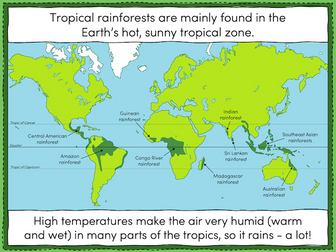
This lesson is part of Tropical Rainforests, a Geography unit designed for students in KS2, but can also be taught as a stand alone lesson. All resources are compatible with both Microsoft Office and Google Workspace. The presentation introduces students to tropical rainforests, including some of the flora and fauna that live in them. Students then learn about the Earth’s tropical belt and the location of the various rainforests within it. The activity challenges students to label features of a world map including the Equator, the Tropic of Cancer and the Tropic of Capricorn. Students then locate 8 of the world’s tropical rainforests. Easier - Students use a prompt map and have activity clues. Harder - Students use a prompt map but have no activity clues. Extension - Students fill in the missing words in a paragraph about tropical rainforests. If you like this resource, we would appreciate a review! We will happily send you a free resource in return for a review or useful suggestions/feedback. Contact us at ed@teachitforward.co.uk.
Locational Knowledge - Yorkshire - Knowledge Organiser!Quick View
TandLGuru

Locational Knowledge - Yorkshire - Knowledge Organiser!

(0)
This clear, detailed and visually-appealing resource offers a complete reference point for students revising knowledge relating to Yorkshire, as a part of locational knowledge/local study in geography. It contains comprehensive sections on: Overview and map; Population and area figures; Important places; Longest rivers; Highest hills; Human Geography Features; Physical Geography Features. The resource is designed to be printed onto A3, and is provided as both a PDF and a Word version (so that you can edit if you want to). All images used are licensed for commercial use. The resource is most suitable for students in KS2 or lower KS3.
Motte & Bailey Castles - Location Medieval Norman ConquestQuick View
RAResources

Motte & Bailey Castles - Location Medieval Norman Conquest

(1)
Students will use prior knowledge of motte & bailey castles to identify and explain the best location for a motte and bailey castle, using the two maps and criteria tables provided. The lesson pack includes: 19-slide fully resourced PPT 4 pages of printable worksheets including maps, tables and writing frames. The 19-slide fully resourced and teacher created lesson includes: Slide 1: Title slide Slide 2-3: Motte and bailey diagram labelling recap with answers provided. Slide 4-6: Motte and bailey gap fill knowledge recap with answers and printable worksheets. Slide 7-8: Background information about the importance of motte and bailey castles and the issues the Normans had to consider when building them. Slide 9: Mapping Task - Instructions and outline of the main task. Slide 10-11: Map 1 - Students select the best site from a choice of 5 sites using the map and criteria in the table. They score each site out of 5. Slide 12-13: Map 2 - Students pick the best site using more detailed criteria. Slide 14: An overview of the linked worksheets Slide 15: Extended historical writing frame to help students write a ‘Baron’s Report’. Slide 16: Follow up challenge activities. Slide 17: More from RA Resources Slide 18-19: Original map designs which you may wish to adapt/edit for your own use. All images used in this resource are in the public domain and are therefore copyright free. Images which require attribution have been attributed in the notes section of each slide where the image appears. Any images where AI technology has been used are labelled in the notes section and are property of RA Resources. Other than AI images, all other lesson content is teacher created. If you feel any errors have been made, please contact me at raschoolresources@gmail.com in the first instance to resolve any issues. My lessons are completed using PowerPoint and designed on widescreen formatting. Thank you. This resource is for personal use only unless a school license is purchased and for copyright reasons any slides, worksheets, RA Resources maps or diagrams should not be copied/amended for commercial use.
Locational Knowledge - East Anglia - Knowledge Organiser!Quick View
TandLGuru

Locational Knowledge - East Anglia - Knowledge Organiser!

(0)
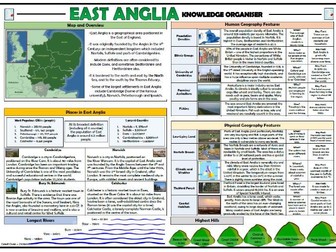
This clear, detailed and visually-appealing resource offers a complete reference point for students revising knowledge relating to East Anglia, as a part of locational knowledge/local study in geography. It contains comprehensive sections on: Overview and map; Population and area figures; Important places; Longest rivers; Highest hills; Human Geography Features; Physical Geography Features. The resource is designed to be printed onto A3, and is provided as both a PDF and a Word version (so that you can edit if you want to). All images used are licensed for commercial use and are cited on a separate document (included). The resource is most suitable for students in KS2 or lower KS3.
Oceans and Seas Knowledge Organiser - Geography Locational Knowledge!Quick View
TandLGuru

Oceans and Seas Knowledge Organiser - Geography Locational Knowledge!

(0)
This clear, detailed and visually-appealing resource offers a complete reference point for students revising knowledge relating to the five oceans and seven seas, as a part of their study of locational knowledge in geography. It contains comprehensive sections on: Overview and world map; The Five Oceans Facts; The Five Oceans by Size; Deepest Points in the Oceans; Interesting Ocean Features; Seas. The resource is designed to be printed onto A3, and is provided as both a PDF and a Word version (so that you can edit if you want to). All images used are licensed for commercial use and are cited on a separate document (included). The resource is most suitable for students in KS1 or lower KS2.
Locational Knowledge - United Kingdom - Knowledge Organiser!Quick View
TandLGuru

Locational Knowledge - United Kingdom - Knowledge Organiser!

(0)
This clear, detailed and visually-appealing resource offers a complete reference point for students revising knowledge relating to the United Kingdom, as a part of locational knowledge in geography. It contains comprehensive sections on: Overview and map; Counties and Cities of the UK; Longest Rivers; Highest Mountains; Human Geography Features; Physical Geography Features. The resource is designed to be printed onto A3, and is provided as both a PDF and a Word version (so that you can edit if you want to). All images used are licensed for commercial use and are cited on a separate document (included). The resource is most suitable for students in KS2 or lower KS3.
Locating the world's famous volcanoes - KS2Quick View
TeachItForward

Locating the world's famous volcanoes - KS2

(4)
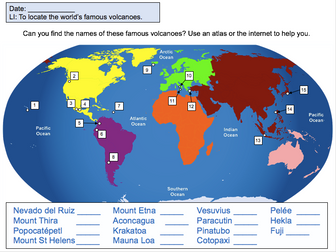
This lesson is designed for KS2 students. It can be taught as a stand alone lesson but is also available as part of two wider units, both of which are available on TES: -Volcanoes -Volcanoes & Earthquakes First the presentation introduces some of the world’s most famous volcanoes and classes them as active, dormant or extinct. The activity then challenges students to locate volcanoes using an atlas or the internet (e.g. Google maps). Alternatively, a map of famous world volcanoes is also provided. Easier – Students locate volcanoes using the map of famous volcanoes (writing numbers). Medium – Students locate volcanoes using the map of famous volcanoes (writing volcano names). Harder – Students locate volcanoes using an atlas. (N.B. It is recommended you check the atlas has the relevant maps prior doing the activity.) If you like this resource, we would appreciate a review! We will happily send you a free resource in return for a review or useful suggestions/feedback. Contact us at ed@teachitforward.co.uk.
Geography - Location Knowledge - 7 ContinentsQuick View
ClassroomSolutions

Geography - Location Knowledge - 7 Continents

(0)
A simple, catchy song that will help your pupils to remember the names of the 7 continents in no time. Resource features: 1) High quality PowerPoint with lyrics 2) Audio embedded within the PowerPoint For queries/comments contact: support@songsforteaching.co.uk Website: songsforteaching.co.uk
Location and Logistics Knowledge OrganiserQuick View
Mrbusiness96

Location and Logistics Knowledge Organiser

(0)
Knowledge organiser looking at factors that affect location and logistics. Aimed at OCR A level business but is an editable file meaning you can cater to your needs. Also comes with a completed knowledge organiser (answers)!
Locational Knowledge: The UK Year 2 Planning and ResourcesQuick View
SaveTeachersSundays

Locational Knowledge: The UK Year 2 Planning and Resources

(0)
Year 2 Geography: Locational Knowledge: the UK planning and resources. Each lesson plan has every resource needed to teach it: Lesson 1) Continents and oceans. Lesson 2) Continents and oceans and compass points. Lesson 3) Capitals of the UK and directional language. Lesson 4) The United Kingdom. Lesson 5) The four countries of the UK. Lesson 6) Cities and seas of the UK. Lesson 7) Human or physical features of the UK. Lesson 8 & 9) Researching & presenting about UK cities. Lesson 10) Rainfall and temperature in the UK. There is a PDF of all of the files and an editable version of each file. You can find more Year 2 Geography lesson plans, worksheets and other teaching resources on the Save Teachers’ Sundays website. This unit was updated on 29th August 2022. If you bought it before this date, please download and use the updated files.
Locating UK cities using compass directions - KS1/KS2Quick View
TeachItForward

Locating UK cities using compass directions - KS1/KS2

(2)
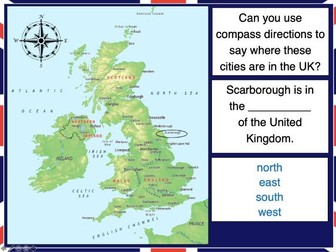
This lesson is part of Exploring the United Kingdom, a Geography unit designed for KS1 and lower KS2 (Y2-4). N.B. If students are new to compass directions, use Introduction to compass directions to introduce the topic prior to this lesson. First the presentation reminds students of the four cardinal compass directions. It then encourages them to use compass directions to describe the position of towns and cities around the UK. In the activity, students have to find UK cities using compass clues. There are two differentiated activity worksheets: Easier – Students locate cities using compass clues and starting letter clues. Harder – Students locate cities using compass and harder starting letter clues. Extension – Students complete cloze procedure sentence about the location of cities in the UK. If you like this resource, we would appreciate a review! We will happily send you a free resource in return for a review or useful suggestions/feedback. Contact us at ed@teachitforward.co.uk.
The United Kingdom Naming and Locating Countries Lesson - KS1 GeographyQuick View
explore_education

The United Kingdom Naming and Locating Countries Lesson - KS1 Geography

(0)
This KS1 geography lesson introduces children to the four countries of the United Kingdom through map work, simple compass directions and clear visual modelling. The lesson supports early locational knowledge and helps pupils understand what “united” and “kingdom” mean in context. This complete KS1 geography lesson is where children learn to name and locate the four countries of the United Kingdom. Includes a PowerPoint, differentiated worksheets and a detailed lesson plan. Ideal for building early map skills and confidence using compass directions. What’s Included ✔ Full lesson plan ✔ 11‑slide PowerPoint presentation ✔ 3 differentiated worksheets (blank map, colour‑coded support map, challenge version) Lesson Overview ★ Starter: Use a world map to zoom into the UK and gather children’s prior knowledge. ★ Main: Teach the meaning of “united” and “kingdom”, introduce the four UK countries, and model compass directions using classroom movement. Children label a UK map with differentiated support. ★ Plenary: Children direct the teacher to solve a jumbled UK puzzle using compass points and share one new fact learned. Why It’s Useful ✔ Differentiated for mixed‑ability KS1 classes ✔ Meets National Curriculum geography objectives ✔ Builds early map‑reading and compass skills ✔ Fully resourced and ready to teach ✔ Printable materials for flexible planning Suggested Use Cases Perfect for KS1 geography units on the UK, map skills lessons, topic starters, cover lessons or as part of a wider “Our Country” or “Where We Live” theme. Purchase the whole 6-lesson United Kingdom Geography unit here. Search Tags KS1 geography | United Kingdom lesson | UK countries worksheet | Year 1 map skills | Year 2 geography lesson | outstanding KS1 geography | UK map activity | naming UK countries | KS1 locational knowledge
Locating seaside towns and cities in the UK - KS1/KS2Quick View
TeachItForward

Locating seaside towns and cities in the UK - KS1/KS2

(1)
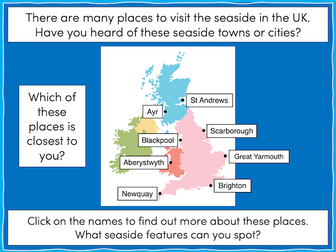
This lesson is part of The Seaside, a Geography unit designed for students in KS1 and lower KS2, but can also be taught as a stand alone lesson. The presentation takes students on a tour of eight seaside towns and cities around the United Kingdom including: Ayr and St Andrews in Scotland; Aberystwyth in Wales; Blackpool and Newquay in England. The activity then challenges students to use their map skills to locate these towns and cities on a map of the UK. This can be done using an atlas or the prompt maps included. Easier - Students label 8 seaside towns and cities using a prompt map. Medium - Students label 12 seaside towns and cities using a prompt map. Harder - Students label 12 seaside towns and cities using an atlas. Extension - Students locate and label 2 further seaside towns and cities from each country of the UK. If you like this resource, we would appreciate a review! We will happily send you a free resource in return for a review or useful suggestions/feedback. Contact us at ed@teachitforward.co.uk.
Landmarks in the World – Flashcards | Geography & Location KnowledgeQuick View
carmenhernandezturon

Landmarks in the World – Flashcards | Geography & Location Knowledge

(0)
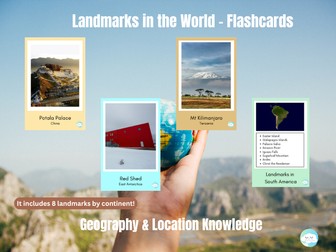
Bring global geography to life with these engaging Landmarks in the World Flashcards, designed to help students identify famous landmarks and link them to their respective continents. Perfect for introducing world geography, enhancing location knowledge, and sparking curiosity about the world around us. What’s Included: 7 PDF files, each featuring 8 flashcards of well-known landmarks from a different continent. Each flashcard includes a high-quality visual of the landmark, the name of the landmark and the country it belongs to, and a colour-coded border to match the continent for easy identification and sorting. Perfect For: Geography lessons and units on continents and landmarks Classroom displays and discussion prompts Enhancing understanding of the world Visual learners and EAL students Quizzes, matching games, or memory activities Topics Covered: Identifying famous landmarks Connecting landmarks to continents World geography and map skills Cultural awareness and global knowledge Thank you for checking out this resource! If you find it helpful, please consider leaving a review or comment.
KS1 & 2 Progression of Locational KnowledgeQuick View
sammyl

KS1 & 2 Progression of Locational Knowledge

(2)
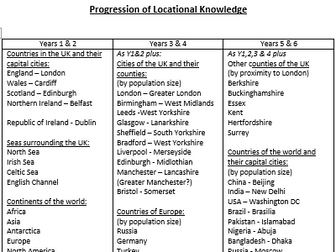
Simple outline of counties, countries, capitals, oceans, continents that need to be learnt in Y1&2, Y3&4 and Y5&6 in line with the geography curriculum. Counties will differ according to the location of your school. This plan is designed for a school in London.
Locating world capital cities using latitude and longitude - KS2/KS3Quick View
TeachItForward

Locating world capital cities using latitude and longitude - KS2/KS3

(1)
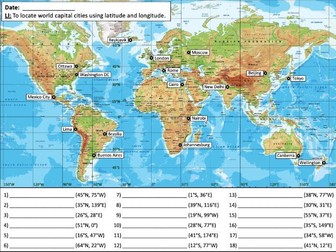
This lesson is part of Understanding Latitude and Longitude, a unit designed for students in upper KS2 and KS3. It can also be taught as a stand-alone lesson. This lesson gives students a chance to consolidate the skills the have learned in the unit so far. The presentation first encourages students to estimate latitude and longitude and then challenges them to work out the coordinates of several capital cities. The activity can be used as an assessment tool for the unit or done in partners to promote discussion and sharing of ideas. There is also an extension activity. Activity – Students identify world capital cities using latitude and longitude clues. Extension – Students locate and label 6 more capital cities on their world map and answer further challenge questions. If you like this resource, we would appreciate a review! We will happily send you a free resource in return for a review or useful suggestions/feedback. Contact us at ed@teachitforward.co.uk.
KS1 Locational Knowledge - United Kingdom - Knowledge Organiser!Quick View
TandLGuru

KS1 Locational Knowledge - United Kingdom - Knowledge Organiser!

(0)
This clear, detailed and visually-appealing resource offers a complete reference point for KS1 students revising knowledge relating to the United Kingdom, as a part of locational knowledge in geography. It contains comprehensive sections on: Overview and map; Counties and Cities of the UK; Longest Rivers; Highest Mountains; Human Geography Features; Physical Geography Features. The resource is designed to be printed onto A3, and is provided as both a PDF and a Word version (so that you can edit if you want to). All images used are licensed for commercial use and are cited on a separate document (included). The resource is aligned with the expectations of the KS1 geography national curriculum.
Just Know It Extra - USA Locational KnowledgeQuick View
chrisconners

Just Know It Extra - USA Locational Knowledge

(0)
Just Know It Extra - USA Locational Knowledge This is a fun, extra and challenging pack from Just Know It. This will help your students learn and locate the names the states of the USA. You can either do this in school or perhaps suggest it for homework.
Geography - Locating Rivers of the World Activity SheetQuick View
stephgrimes86

Geography - Locating Rivers of the World Activity Sheet

(1)
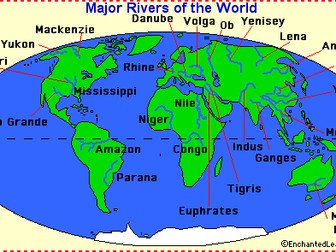
This resource is a worksheet with a clear outline of a world map, on which children are challenged to draw key world rivers on. This can be used in a Water topic or to simply develop geographical knowledge / map reading skills. Using atlases and/or Google Maps, the children will locate each river, match it to the area on their map and try to accurately draw it on and label it. The rivers children are challenged to locate are: 1. Mississippi 4. Thames 7. Nile 2. Danube 5. Huang Ho 8. Niger 3. Ganges 6. Amazon