Downloadable PPT for Professional Development Training!
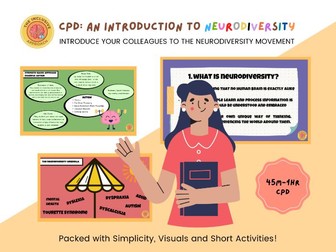
Resource Description: This PPT contains information, activities and visuals to introduce teachers to the concept of neurodiversity and how to embrace and adopt a neurodiverse approach in their teaching practice.
The PPT covers four key areas:
What is Neurodiversity?
What do these Differences Look Like?
A Strength-Based Approach
Neurodiversity in Your Teaching Practice
The estimated running time of the CPD is 45-60m depending on time spent on activities and discussion opportunity.
This lesson is designed for CPD sessions/teacher training as a guide to professional conduct and responsibilities. It includes a number of engaging discussion points and interactive activities plus access to an online Kahoot game and demonstrates a wide range of pedagogical strategies including the inclusion of literacy and numeracy in the curriculum.
In this unit, you will:
A Investigate career and job opportunities in the uniformed protective services
B Explore own skills, using a skills audit, to inform a career development action plan
C Undertake a recruitment activity to demonstrate the processes that can lead to a successful job
offer in a selected career pathway
D Reflect on the recruitment and selection process and own individual performance.
Full unit presentation which includes 100 slides split into 11 lessons, with some worksheets provided as well. This is for the BTEC Level 3 Nationals in Sport (2016 specification). Lesson include a starter activity, lesson objectives, tasks, inclusion of Maths & English skills, and a plenary task.
Lesson 1 - Scope & provision of the sports industry
Lesson 2 - Careers & jobs in sport
Lesson 3 - Types of employment
Lesson 4 - Legislations in the sports sector
Lesson 5 - Continuing professional development (CPD)
Lesson 6 - Personal skills audit
Lesson 7 - Assignment 1 workshop
Lesson 8 - Applying for a job
Lesson 9 - Interviews
Lesson 10 - Review & evaluation
Lesson 11 - Assignment 2 workshop
This article evaluates the use of a community of practice model for redesigning a lecturer professional development course investigating the impact of mobile web 2.0 technologies in higher education. The results show a significant change in lecturer conceptions of pedagogy were achieved by this approach. Drawing on our experience of two iterations of implementing the new course model we propose a mobile social media framework for enabling pedagogical transformation as part of lecturer professional development.
Empower your students to master Topic Area 2 with this premium, highly visual resource bundle. Designed specifically for the OCR Level 1/2 Cambridge National in Child Development (R057), these materials transform complex medical information into engaging, student-friendly learning experiences.
What’s Included?
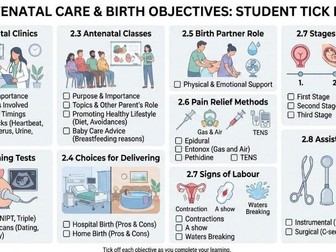
Highly Visual Learning Aids: Includes the signature “Student Tick List”—a one-page visual roadmap that breaks down the entire TA2 specification into digestible objectives, from antenatal clinics to assisted births.
Pedagogy-Led Tasks: Activities are structured to move students from basic recall to higher-level evaluation (e.g., analyzing the “Pros & Cons” of delivery choices).
Oracy & Collaborative Learning: Integrated tasks designed to spark classroom discussion on the role of the birth partner and the importance of healthy lifestyle choices during pregnancy.
Integrated Multimedia: Links to engaging videos and visual prompts to maintain student focus and cater to diverse learning styles.
Exam Readiness: Comprehensive revision materials covering:
Antenatal Care: Clinics, screening tests (NIPT, Triple, Anomaly), and the role of professionals.
Preparation for Birth: Antenatal classes and the role of the birth partner.
Labour & Delivery: Signs of labour, the three stages of labour, and pain relief methods (Epidural, Entonox, TENS).
Medical Intervention: Detailed visuals on assisted births, including instrumental (Forceps, Ventouse) and surgical (C-section, Episiotomy) methods.
Why Choose These Resources?
Dual Coding Approach: By combining clear icons with concise text, these resources reduce cognitive load and improve long-term retention of key terminology.
Self-Regulated Learning: The “Student Tick List” allows learners to track their own progress, fostering independence and confidence as they move through the unit.
Teacher-Tested: Perfect for non-specialists or experienced practitioners looking for high-quality, “plug-and-play” materials that don’t sacrifice depth.
It is for the education with the help of the computer science, technology, computer science, foreign languages, science and other sources. (Este pentru educație cu ajutorul informaticii, tehnologiei, limbilor străine, științei și altor surse)
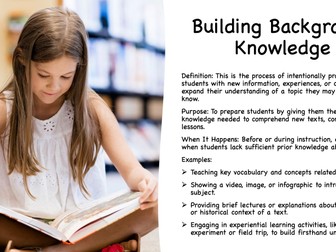
Elevate your building’s literary instruction with the Reading Professional Development Bundle. This 95-slide bundle is designed for educators, literacy specialists, and instructional leaders that features three expertly crafted PowerPoints on the Science of Reading, the Importance of Background Knowledge, and Understanding Dyslexia.
Key Features:
Engaging visuals and research-backed content to bring complex literacy concepts to life.
Practical turnkey strategies and tools to apply across grade levels and content areas.
Interactive elements to foster reflection and collaboration during professional development sessions, including bridge-to-practice activities.
Empower your team with the knowledge and skills to make a lasting impact on students’ literacy success. Download this essential bundle today and take your professional development to the next level!
This PowerPoint is all you need to deliver an effective CPD/Training session to your staff on the crucial issues raised in Doing Middle Leadership Right’ by Bawden, Hickin and Macis-Riley.
For a the accompanying video please visit:https://www.youtube.com/watch?v=YlHEwaOEbtc Hope it helps.
Wolsey Academy, a non-profit resource provider, directs all profits to various charities, including refugee support, youth sports, educational programs, and carbon capture, achieving a carbon-negative status. Explore our site for resources and free history role-playing games loved by students. Thank you for your dedication to teaching and for supporting our mission.
In this paper we discuss the impact of redesigning a lecturer professional development course with the aim of embedding a community of practice (COP) model supported by the use of mobile web 2.0 technologies. This approach was based upon a model developed to support 30 mlearning projects between 2006 and 2010, which also informed the institutions’ new elearning strategy developed in 2009.
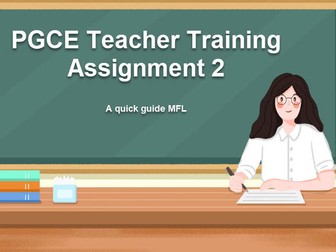
A quick guide of PGCE teacher training assignment 2, which involves exploring professional development for obtaining PGCE in Secondary and post-16 MFL teaching. It was a successful submission (Distinction/Grade A), and it includes a reference list with supporting data for my final PGCE assessment .
Please be advised that Assignment 2 is intended to serve as an example and as a guide for secondary MFL trainee teachers. You must not copy them if you don’t want to be charged with plagiarism. Citations or paraphrasing are advised
This Professional Development Session Feedback Form is a simple and effective tool to gather meaningful feedback from educators at the end of a training session. The form includes 8 clear, easy-to-understand rating questions using a 4-point scale (1 – Poor to 4 – Excellent), plus space for additional written comments.
It covers key areas such as session clarity, usefulness, instructor delivery, engagement, and time management. Perfect for instructors and facilitators who want quick, actionable feedback to improve future PD sessions.
Clean layout
Print-ready PDF
Great for in-person or virtual sessions
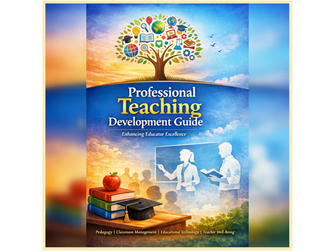
This comprehensive guide is designed for educators seeking to elevate their professional practice and make a lasting impact in the classroom and beyond. Covering essential areas such as pedagogy, lifelong learning, classroom management, communication, educational technology, teacher well-being, and leadership, this book provides practical strategies, reflective activities, and tools to foster excellence. Whether you are a new teacher or an experienced educator, this guide offers insights and actionable steps to enhance your skills, inspire students, and sustain your teaching career.
In this resource, you will find a PDF of a CPD professional development tracker for staff. Within the PDF, there are three different styles to chose from!
Each of them provides space to:
list the title of the CPD
who delivered the CPD
the date it was completed
key learning takeaways
how the CPD links with the teaching standards
Perfect for new and experienced teachers alike!
Please make sure you follow me: facebook.com/teachcoach
Leading Professional Development? Teaching adult learners? This 125-slide Best Practice Professional Development Bundle includes three comprehensive Optimal Learning PowerPoints:
Best Practice Strategies and Activities Featuring Marzano’s Nine
Differentiation
Formative and Summative Assessments
Product includes Teaching Tips, Practical Classroom Ideas, and Problems of Practice Assessments. Perfect for instructional coaching, professional development, or New Teacher Induction programs.
A CPD journal template.
The idea behind this is to front load a term/half term with the relevant reading that will be the basis for CPD to allow staff to read and engage ahead of a CPD session.
The reading included is based around the school priorities and ensures that CPD is research based.
Space is provided for staff to reflect on each CPD session and prioritise their actions.
A series of posters covering various aspects of pedagogy and practice. Covering the following areas
Questioning
Behaviour
Feedback
Plenaries
Retrieval Practice
Checking for Understanding
What makes excellent teaching
How to make observations fair
How to build relationships with pupils
This is an easy to use, professional and aesthetically pleasing CPD form for you to fill in. All schools and colleges specify that you take part in staff development and that you prove it. Many establishments state you should do 32 hours of CPD. No need to add up the hours yourself this form adds it up for you. Just keep this saved and add to it when you need to, print or email when needed. Looks great in a Record of Achievement folder when on a job interview.


 Quick View