Flowers and Pollination KS3 Activate ScienceQuick View
ychebbout

Flowers and Pollination KS3 Activate Science

(0)
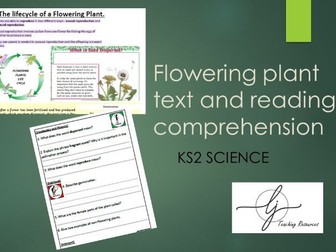
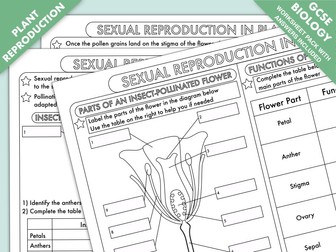
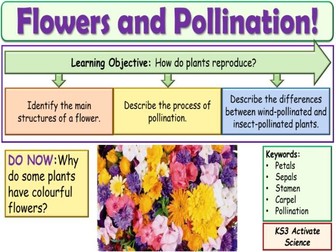
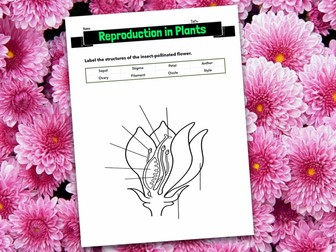
Perfect lesson resource for KS3 Biology! A fully differentiated and resourced lesson that assists students in learning about how plants reproduce. Students will identify the main structures of a flower, describe the process of pollination, and describe the differences between wind-pollinated and insect-pollinated plants. The resource includes a detailed and engaging lesson PowerPoint with differentiated activities, activity sheet, information sheets and quizzes for students to complete. This resource is part of the Reproduction topic and has been created for the delivery of the Activate KS3 Science course. Also great for KS2 lessons. Included: 20 slides in total for the lesson PPT Activity sheet Information sheets
Pot the Digraph - Flower SortingQuick View
medmunds43

Pot the Digraph - Flower Sorting

(0)
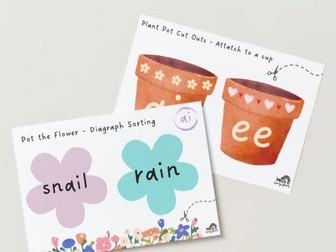
Pot the Digraph - Phonics Game Flower Printouts - Add to lollypop sticks Plant Pots - Stick on to a cup Children can pick a flower, read the word and sort into the correct digraph ‘pot’ Includes ai ee oa ar or ur ow oi 4 flower words for each sound Inspired by miss_t_earlyyears
Parts of a FlowerQuick View
Sherwen

Parts of a Flower

(0)
This worksheet comprises of four activities that all relate to the parts of a flower - stamen, petals, sepal, receptacle, filament, ovary, pollen etc. The activities are as follows: Anagrams of the parts of a flower Label a diagram with some of the parts of a flower A word search with the parts of a flower with extra bonus words hidden within Describing the function of one or two of the parts It serves as a review or follow-up to an introduction of the parts of a flower. Children are expected to know the names of the parts, how to spell them, identify them on a diagram and understand what their basic role is. The document is mostly editable so you can change some of the parts to suit your children’s needs.
Plants and FlowersQuick View
peterfogarty

Plants and Flowers

13 Resources
Are you wanting the keywords, English writing prompts and guided reading support for teaching about plants and flowers? I’m sure your students will really love the different resources and images in this plant and flowers bundle!
Plants and FlowersQuick View
CuriosityCrows

Plants and Flowers

(0)
A collection of flowers and plants photos I took to use with my students for our plants, flowers, countries, habitats, seasons, and environment topics. Please note that some of these photos were taken on slide film before digital cameras came out, others were with a digital camera.
Plants and FlowersQuick View
CuriosityCrows

Plants and Flowers

(0)
I created this colouring page for my class as part of our module on plants, habitats, and the ecosystem. Please leave me a review and I will send you any other resource of your choice for free (contact me: office@oceansproject.com). Check out my other resources at my shop: https://www.tes.com/teaching-resources/shop/sarah277 Let me know if you have any resource requests and I will tailor make a resource for you.
Peg the FlowerQuick View
tecimener

Peg the Flower

(0)
Contains 4 different flower templates stick to boxes and pierce holes. Provide pegs for children to use to decorate
Science- plants bundle- continuous provisionQuick View
elloxxx

Science- plants bundle- continuous provision

7 Resources
Worksheet or provision activities for the Science unit Plants Label a flower Label a tree Evergreen and Deciduous tree sorting Create a flower garden cut and stick Plants vocabulary
KS3 Parts of a flower flowering plant labelQuick View
jessicasand91

KS3 Parts of a flower flowering plant label

(0)
Full lesson on labelling the parts of a flowering plant, their functions, tasks with answers, and a printable model flower students love to build and stick in their books, 3D lift the flap style. I get them to label the parts afterwards and they love colouring it. Thank you for supporting me, please check out my other lessons too
Plants: Fresh Flowers LabQuick View
stemcenter

Plants: Fresh Flowers Lab

(0)
Plants: Fresh Flowers Lab The "Fresh Flowers" Experiment provides a written laboratory detailing the question, materials list, and procedure for a student to investigate whether cold water or hot water is better to sustain flowers. In addition to the written lab, you are provided the step by step guide to the scientific method, a fill in the blank lab report (question, research, hypothesis, planning or procedure, record sheet, and conclusion), fact sheet, data sheet, and reflection sheet. All science teachers are looking for resources for hands on, demonstrations, or possible science fair investigations. This STEM Center series solves that problem! Print and enjoy!
Flowering and non flowering plantsQuick View
romiolivetti

Flowering and non flowering plants

(0)
Suitable for year 5 science presentation about reproduction of flowering and non flowering plants ppt about pollinators with clip about fungi ppt about using a dychotomous key to identify plant types
Plant anatomy & flower dissectionQuick View
BioInspired

Plant anatomy & flower dissection

(8)
Created for a low-attaining year 7 class but could be used across KS2-3. This resource is a whole lesson, consisting of a worksheet and accompanying powerpoint presentation. There are 8 tasks designed to help pupils develop their understanding of the anatomy of flowering plants, including labelling diagrams, filling in the blanks, a hands on flower dissection, creative task and plenary questions. To deliver this lesson you will need to provide flowers such as lillies or daffodils and print the worksheet.
Flowering Plants - Key WordsQuick View
phileusfogg180

Flowering Plants - Key Words

(0)
An activity matching key terms to their definitions. Could be used as an independent or pair activity or as homework or assessment. Part of a wider group of resources on flowering plants.