Lessons for the F182 ‘Investigating Science’ unit in the new OCR Level 3 Alternative Academic Qualification in Applied Science.
Includes to cover:
Section 1- Prepare for a scientific investigation
Section 2- Plan the scientific investigation
Section 3- Collect and record results fro the full investigation
Section 4- Process the data
Section 5- Present and review your investigation
14 Rounds of a Christmas Quiz for use within Science lessons towards the end of term (each with a minimum of 10 questions).
There is a combination of science specific rounds, loosely based science rounds and nothing to do with science rounds.
The rounds are:
2025 Google Searches
2025 in Science
2025 Movies
Celebrities in the Lab
Christmas Animal Science
Christmas Elements
Memory Test
Movie Science
Music in 2025
Periodic Table Winter Words
Science in the News
Snow Science
The Grid
Where’s Einstein (at Christmas)
Answer sheet and spreadsheet for keeping score also included!
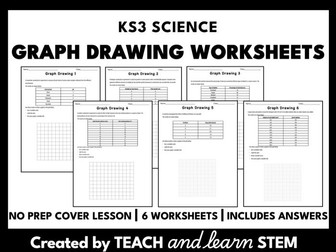
6 worksheets designed to practice graph drawing skills.
I generally use these with Year 7s, but I have also used them with GCSE foundation students (also great activity for cover work).
Difficulty gradually increases.
Answer sheets included.
Worksheet 1: Bar chart, 1cm graph paper, plotting whole numbers ( values up to 10 on y-axis).
Worksheet 2: Line graph, 1cm graph paper, plotting whole numbers (values up to 10 on y-axis).
Worksheet 3: Bar graph, 1cm graph paper, whole numbers (values up to 100 on y-axis).
Worksheet 4: Line graph, 1cm graph paper, whole numbers (values up to 100 on y-axis).
Worksheet 5: Bar chart, 1mm graph paper, plotting values to 1 decimal place.
Worksheet 6: Line graph, 1mm graph paper, plotting values to 1 decimal place.
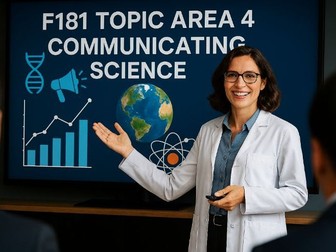
OCR AAQ Applied Science F181 Science in Society: Topic Area 4 Communicating science
For previous FREE sample work see here:
https://www.tes.com/teaching-resource/resource-13481144
The following FREE bundle contains PowerPoints for the whole topic. All PowerPoints are** fully aligned with the specification** and OCR’s F181 Scheme of Work. Exam questions are also included (with mark scheme).
PowerPoints:
4.1.1 Communicating science to the public using the media
4.1.2 Communicating science between experts
4.2 Plagiarism
4.3 Using science to inform decision making
4.4.1 Public trust in the scientific community and developments
4.4.2 Bias in science communication
.
All PowerPoints are designed for a typical 1 hour lesson and include:
.
Title slide
Specification points
Starter activity
Main ideas from the specification
Summary table of advantages and disadvantages
Exam questions (and answers)
Lesson summary and recall
Homework and further resources (with embedded links)
_
All ANSWERS to questions and INFO can be found in the “notes” section of the PowerPoint
Perfect lesson resource for KS3 Biology! A fully differentiated and resourced lesson that assists students in learning about how variation occurs in species. Students will state what is meant by variation, describe the difference between environmental and inherited variation, and explain how variation occurs in species.
The resource includes a detailed and engaging lesson PowerPoint with differentiated activities, worksheets, and quizzes for students to complete. This resource is part of the Adaptation and inheritance topic and has been created for the delivery of the Activate KS3 Science course. Also great for GCSE Science.
Included:
18 slides in total for the lesson PPT
Worksheets
PowerPoint Quiz
Perfect lesson resource for KS3 Biology! A fully differentiated and resourced lesson that assists students in learning about how characteristics are inherited and how scientists have worked together to develop the DNA model. Students will describe how characteristics are inherited, describe the relationship between DNA, genes, and chromosomes. Students will also explain how a DNA mutation may affect an organism and its future offspring.
The resource includes a detailed and engaging lesson PowerPoint with differentiated activities, worksheets, reading sheets and quizzes for students to complete. This resource is part of the Adaptation and inheritance topic and has been created for the delivery of the Activate KS3 Science course. Also great for GCSE Science.
Included:
22 slides in total for the lesson PPT
Differentiated worksheets
Reading sheets
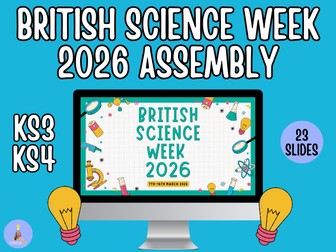
NEW FOR 2026! This engaging assembly celebrates British Science Week 2026 and is aimed at KS3 and KS4 students. This assembly explores the theme of curiosity and discusses science research and progress in space, medical, nature and technology. There are lots of opportunities for students to answer thought-provoking questions and ask their own.
Slides:
Introduction
British Science Week
Introducing Space and Medical Science
Introducing Nature and Technology Science
Images and question to spark conversation
British Science Week 2026 Theme: Curiosity
What Does Curiosity Actually Mean?
The Brain
British Curiosity That Changed The World
What Are You Curious About? Space
Conversation Points- Space
Recent Breakthroughs- Space
What Are You Curious About? Medical
Conversation Points- Medical
Recent Breakthroughs- Medical
What Are You Curious About? Nature
Conversation Points- Nature
Recent Breakthroughs- Nature
What Are You Curious About? Technology
Conversation Points- Technology
Recent Breakthroughs- Technology
What Are You Going To Discover- add in your school’s activities
Albert Einstein Quote
Duration:
This assembly is designed to last 15-20 minutes.
No prep needed!
Every slide has instructions for the assembly lead so the assembly is ready to go!
Like what you see?
Please leave a review, we love to hear from you!
Check out other engaging assemblies and resources at my store [https://www.tes.com/teaching-resources/shop/SchooledResources]
Bundle of 8 complete No-Prep lessons with exam questions, tasks and answers on Waves for AQA GCSE (9-1) Science , covering the complete topic for Combined Science.
This bundle contains all the lessons needed for the Waves topic in AQA Combined Science. If you are teaching AQA GCSE Physics then you need the larger bundle: https://www.tes.com/teaching-resource/waves-gcse-physics-12747109
As a Secondary Science teacher, Deputy Headteacher, writer and examiner for many years I make high quality no-prep lessons so busy teachers can teach outstanding lessons without spending hours planning. These high quality lessons include explanations, different types of in-lesson assessment (all with answers) and unique exam questions.
My lessons are ideal for non-Physicists - as a Biologist who retrained as a Physics teacher I know how to take learners on a journey that builds up their understanding step by step, while still going into a lot of depth. The preview videos show a representative sample of slides from each resource so that you get a good idea of what it includes before you buy.
Teaching Order
Transverse and Longitudinal Waves
Wave Properties (Wavelength, Amplitude, Frequency, Period)
Wave Speed Equation and Required Practicals: Ripple Tank & Vibrating String
Electromagnetic Spectrum
Refraction
Absorbing, Emitting and Dangers of Electromagnetic Waves
Uses of Electromagnetic Waves
Required Practical: Infrared
What’s Included in each lesson:
• Starter / Do Now Activity
• Explanation slides in “chunked” sections with animated diagrams.
• Worked examples of calculations / questions.where applicable
• Multiple questions in different question styles and difficulties - no need for worksheets. Each “chunked” explanation section typically includes a set of “learning check / quick questions” followed by a set of in-depth questions on the learning from that “chunk” of the lesson. All questions have answers.
• Exam-style questions on the whole lesson at the end of the lesson- these are unique, based on real exam questions but not just copied from exam boards.
• Answers for all questions
• All easily editable to adapt to your teaching or to use in existing lessons.
• Slightly humorous, at points, if you like that sort of thing.
The lessons were written for AQA GCSE Science / Physics but are very likely to be applicable to other exam specifications.
Please leave a rating / review and all other feedback gratefully received!
Perfect lesson resource for KS3 Biology! A fully differentiated and resourced lesson that assists students in learning about the mechanics of breathing. Students will describe the process of inhaling and exhaling, and explain how to measure lung volume. The lesson also includes teacher notes for guidance on the lung dissection demo.
The resource includes a detailed and engaging lesson PowerPoint with differentiated activities, worksheet and class practical/demos for students to complete. This resource is part of the Structure and Function of Body Systems topic and has been created for the delivery of the Activate KS3 Science course. Also great for KS2 Science.
17 slides in total for the lesson PPT
A selection of Science Christmas activities on a A3 worksheet that are designed for a class competition. Lots of puzzles (wordsearch, riddles, codes, anagrams etc) and a few Science problems. Includes a easier version and sheet with all the answers. A periodic table is required to work out the codes.
GCSE Science Christmas Quiz – Engaging and Educational!
Bring festive fun into your science lessons this Christmas with a professionally designed quiz packed with over 53 questions and 10 varied rounds. Perfect for GCSE students, this quiz blends challenge and cheer, making it ideal for end-of-term celebrations.
Quiz Rounds Include:
Round 1: Picture Match
Round 2: True, False, or Fake News
Round 3: Term Search Challenge
Round 4: Match the Captions
Round 5: Connections
Round 6: Multiple Choice
Round 7: Connections (Part 2)
Round 8: Science Anagrams
Round 9: General Knowledge
Round 10: Science by Numbers
Tie Breaker: Creative Drawing Task
All answers are animated and revealed round-by-round for an interactive experience. This quiz can be delivered in class, remotely via Zoom, or as part of a digital learning session.
New for Online Learning:
Now includes a fully interactive digital PDF answer sheet—students can fill it in online, self-mark, and track their scores with built-in tick boxes and counters.
What’s Included:
PowerPoint quiz with 10 interactive rounds
Student answer sheets (printable and digital)
Full set of animated answers
Certificates for 1st, 2nd, and 3rd place teams (editable)
Designed for individuals or small teams
Whether you’re running a science-themed Christmas competition, a form time activity, or just treating your class to something fun and educational, this quiz has everything you need for a memorable end-of-term lesson.
✰✰✰✰✰✰✰✰✰✰✰✰✰✰✰✰✰✰✰✰✰✰✰✰✰✰✰✰✰✰✰✰✰✰✰✰✰
You may also want to check out these other great Science Cre8tive resources for your students
⇨ Science Christmas Quiz
⇨ Science KS3 Christmas Quiz
⇨ Women in Science
⇨ Scientific Discoveries
⇨ The Heart Revision Task Cards
⇨ Science End of Year Escape Rooms Bundle
⇨ How to Draw Graphs in Science
⇨ Organic Chemistry
⇨ Genetics - Biology
Product Code: C8/QZ/245
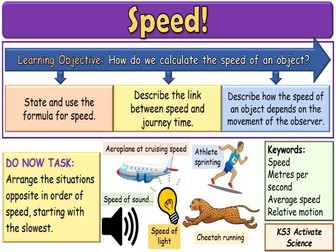
Perfect lesson resource for KS3 Physics! A fully differentiated and resourced lesson that assists students in learning about how to calculate the speed of an object . Students will use the formula for calculating speed, describe the link between speed and journey time, and describe how the speed of an object depends on the movement of the observer.
The resource includes a detailed and engaging lesson PowerPoint with differentiated activities, worksheet and quizzes for students to complete. This resource is part of the motion and pressure topic and has been created for the delivery of the Activate KS3 Science course. Also great for GCSE Science.
14 slides in total for the lesson PPT
This revision resource is designed for AQA GCSE Combined Science Biology revision 9-1 but is equally suitable for other boards, this resource contains links to over 60 videos tutorials for all topics covered in the combined science specification to help your students revise.
Topics include; Cell Biology, Organisation, Infection & Response, Bioenergetics, Homeostasis & Response, Inheritance Variation & Evolution and Ecology.
There are over 70 exam style practice questions with mark schemes.
Exam style paper questions can also be printed from the word documents included.
Click on the tabs to take you to the topic of your choice and use the home icon to take you back to the home page.
Includes:
Exam style paper questions with mark scheme for each topic (70 Short answer question 10 for each topic & 7x Long answer questions for each topic)
Over 60 selected video tutorials to help with revision
Over 120 slides of content.
Videos sources from FUSE school, Cognito, Ted Ed, Freesciencelessons and more.
All YouTube links are included within the document under the photograph of the video thumbnail.
Videos have not been embedded due to copyright.
GCSE Combined Science Chemistry & Physics are also available to purchase.
If you have any issues or would like to get in touch, please email me at: MsM.Hanson@gmail.com
Please leave a review if you find my resources helpful.
Thank you.
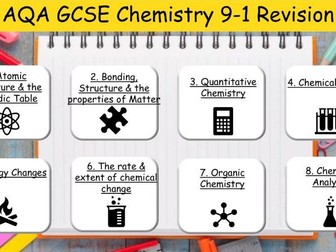
This revision resource is designed for AQA GCSE Combined Science Trilogy Chemistry revision 9-1 but is equally suitable for other boards, this resource contains links to over 90 videos tutorials for all topics covered in the Combined Science Chemistry specification to help your students revise.
Topics include; Atomic Structure & the Periodic Table, Bonding Structure & the Properties of Matter, Quantitative Chemistry, Chemical Changes, Energy Changes, The Rate & Extent of Chemical Change, Organic Chemistry, Chemical Analysis, Chemistry of the Atmosphere and Using Resources.
There are over 100 exam style practice questions with mark schemes.
Exam style paper questions can also be printed from the word documents included.
Click on the tabs to take you to the topic of your choice and use the home icon to take you back to the home page.
Resource includes:
10 Exam style paper questions with mark schemes
Over 100 Short answer questions with mark schemes
Over 90 selected video tutorials to help with revision
Over 200 slides of content.
Videos sources from FUSE school, Ted Ed, Freesciencelessons and more.
All YouTube links are included within the document under the photograph of the video thumbnail.
Videos have not been embedded due to copyright.
GCSE Combined Science Biology & Physics are also available to purchase.
If you have any issues or would like to get in touch, please email me at: MsM.Hanson@gmail.com
Please leave a review if you find my resources helpful.
Thank you.
Perfect lesson resource for KS3 Chemistry! A fully differentiated and resourced lesson that assists students in learning about the properties and uses of acids and alkalis. Students will recall the hazards of acids and alkalis and how to handle them safely, describe the differences between concentrated and dilute solutions of an acid, and compare the properties of acids and alkalis.
The resource includes a detailed and engaging lesson PowerPoint with differentiated activities, worksheet, quizzes and information slides to be displayed in the classroom. This resource is part of the Acids and Alkalis topic and has been created for the delivery of the Activate KS3 Science course. Also great for KS2 Science.
Included:
15 slides in total for the lesson PPT
Worksheet
Information slides for display
Perfect lesson resource for KS3 Biology! A fully differentiated and resourced lesson that assists students in learning about how we digest the food we eat. Students will describe the structure and function of the main parts of the digestive system, and describe how components of the digestive system are adapted to their function. The lesson also includes an engaging and interactive demo for students to observe (list of materials and an instruction video are provided on the lesson PowerPoint).
The resource includes a detailed and engaging lesson PowerPoint with differentiated activities, worksheets, information sheets and quizzes for students to complete. This resource is part of the Health and lifestyle topic and has been created for the delivery of the Activate KS3 Science course. Also great for KS2 Science.
Included:
28 slides in total for the lesson PPT
Differentiated worksheets
Literacy tasks and extended writing tasks with success criteria
Handouts
OCR AAQ Applied Science F181 Science in Society: Topic Area 2 Handling scientific data
For previous FREE sample work see here:
https://www.tes.com/teaching-resource/resource-13481144
The following FREE bundle contains PowerPoints for the whole topic. All PowerPoints are fully aligned with the specification and OCR’s F181 Scheme of Work. Exam questions are also included (with mark scheme).
PowerPoints:
2.1 Types of scientific data
2.2 Collecting scientific data
2.3.1 How Scientific data can be stored on databases
2.3.2 Scientific data can be represented in different graphical forms
2.4 Interpreting data
.
All PowerPoints are designed for a typical 1 hour lesson and include:
.
Title slide
Specification points
Starter activity
Main ideas from the specification
Summary table of advantages and disadvantages
Exam questions
Lesson summary and recall
Homework and further resources (with embedded links)
_
All ANSWERS to questions and INFO can be found in the “notes” section of the PowerPoint
OCR AAQ Applied Science F181 Science in Society: Topic Area 3 Scientific developments
For previous FREE sample work see here:
https://www.tes.com/teaching-resource/resource-13481144
The following FREE bundle contains PowerPoints for the whole topic. All PowerPoints are** fully aligned with the specification** and OCR’s F181 Scheme of Work. Exam questions are also included (with mark scheme).
PowerPoints:
**
3.1.1 Scientific use of terms
3.1.2 Scientific theory vs scientific law
3.2.1 New technologies play an important part in continuing scientific development
3.2.2 Limitations and risks of new technologies in society
3.3.1 Considerations for scientific developments
3.3.2 Contemporary issues that science will need to solve in the future
.
All PowerPoints are designed for a typical 1 hour lesson and include:
.
Title slide
Specification points
Starter activity
Main ideas from the specification
Summary table of advantages and disadvantages
Exam questions
Lesson summary and recall
Homework and further resources (with embedded links)
_
All ANSWERS to questions and INFO can be found in the “notes” section of the PowerPoint
A collection of plenaries designed for Key Stage 3 and Key Stage 4 Science lessons. Resources made so the powerpoint slide can be transferred and then adapted for any lesson.