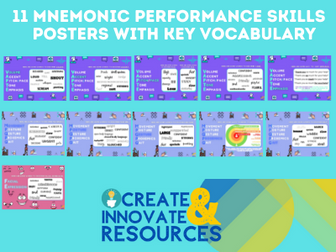
These posters are an excellent way to support pupils in developing their vocabulary when describing performance skills from the perspective of an actor and/or direction. They are great for giving your Drama students handy mnemonics to remember vocal and physical skills. The posters can be used for revision for GCSE or A-Level Drama to help students remember the variety of performance skills they can refer to in their writing. Also these bright visuals are ideal for brightening up your Drama studio or for giving out to pupils as revision materials.
Please see my shop for the poster version of this resource without the descriptors. They are also available as a bundle!
*You will recieve a high quality pdf document which you can use to print in colour or black and white. Printed in A4 they are perfect as revision materials and printed A3 they are ideal for displays. *
Road Map path from KS3-KS4. This road map follows the Drama curriculum from Y7 to Y11 completing BTEC Tec Award in Performing Arts. As most students who pick drama are visual learnings I have tried to use as many images as possible so they can track their own learning.
BTEC Performing Arts – Component 1 Writing Structure Pack
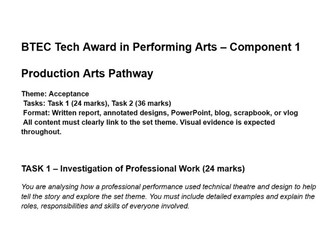
Pathway: Production Arts
Theme Example: Acceptance
Simplify Component 1 with this step-by-step Production Arts Pathway writing structure, designed to help students create high-quality portfolios for Tasks 1 and 2. This resource guides learners to analyse professional productions and reflect on their own practical work, with a focus on technical theatre and design.
What’s Included
Complete Production Arts Pathway writing structure
Task breakdowns aligned with BTEC assessment criteria
Guided sections for analysis, rehearsal reflection, and theme-focused design
Suitable for written reports, annotated designs, PowerPoints, blogs, scrapbooks, or vlogs
Support for including visual evidence such as sketches, cue sheets, photos, and diagrams
Task 1 – Investigating Professional Work
Students analyse how a professional production used technical and design elements to explore a theme, covering:
Set, costume, lighting, sound, hair and makeup design
Creative intentions and influences
Skills required and roles/responsibilities of the production team
Annotated visual evidence linking design choices to the theme
Task 2 – Exploring Performing Arts Processes
Students explore how the production was created and rehearsed, including:
Idea generation and early design development
Rehearsal and collaborative design processes
Workflow from mood boards and prototypes to technical and dress rehearsals
Reflection on personal learning and practical exploration
Visual documentation to demonstrate process and understanding
Perfect For
BTEC Tech Award in Performing Arts – Production Arts Pathway
Year 10 and 11 students preparing Component 1 portfolios
Teachers seeking a ready-to-use structure that saves time and supports theme-focused analysis
Help students write, reflect, and present like professional theatre designers.
Download the Production Arts Writing Structure Pack today.
some resources to support this unit: medium term plans, ppt slide with various headwear for children to analyse, hat design analysis sheet, design plan, step by step guide
In this lesson, students use the Aboriginal play ‘The 7 Stages of Grieving’ as a means by which to explore the relationship between performing arts and identity in Aboriginal culture.
A 'Sector Skills Council' Factsheet on the Performing Arts industry, giving advice on all types of jobs in this area. Employment, careers, job roles, work-related learning, Range of opportunities, Types of work, Skills & qualities and Business structures / work roles, work placements, employability. (Apprenticeships, Further Education, Getting a Job, Higher Education, Work Experience, Volunteering é Gap Year, Self-employment/Entrepreneurship).
A 'Sector Skills Council' Factsheet on the Visual Arts industry, giving advice on all types of jobs in this area. Employment, careers, job roles, work-related learning, Range of opportunities, Types of work, Skills & qualities and Business structures / work roles, work placements, employability. (Apprenticeships, Further Education, Getting a Job, Higher Education, Work Experience, Volunteering é Gap Year, Self-employment/Entrepreneurship).
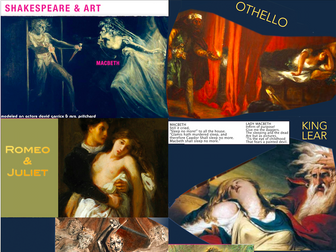
This is a complete powerpoint presentation about Art History visual images and the Literature of William Shakespeare. There are many slides in the slideshow box on this page to give you a very complete idea of whether the product will suit you.
EXCERPT:
Unlike novels, plays and screenplays were meant to be seen, not read. Even the most avid readers enjoy watching a performed play or film as opposed to reading it on the page. By contrast, favorite novels oftentimes never find an adaptation to stage or screen which satisfies devoted readers.
Artists are attracted to visual media. Many of the artists in this presentation were avid theater goers. Eugène Delacroix, for example, a major artist from the Romantic Era, regularly attended plays. He then painted portions of them, including a self portrait of himself as Hamlet.
Students will be surprised to discover other major artists painting these plays. They are more well known for their entire output, not just Shakespeare. These include William Blake, Théodore Chassériau, Dante Gabriel Rossetti, John William Waterhouse, Odilon Redon and others.
Some artists mostly painted the theatrical world as their subjects. These included Henry Fuseli, Edwin Austin Abbey, and Benjamin West.
The stage provides more “give” for a production than a film. Because it is set back from the audience, the actors’ ages, for example, can be stretched to fit. Not so on camera where every pore of the actor’s skin is visible in close up shots.
With this close up ability, art history became more and more important as the productions had to measure up to the expectations of the original source. No longer could a wig be put on a 40 year old woman playing Juliet who was wearing a Victorian gown. Or, as in Shakespeare’s day, a young man be used to play Juliet.
This has carried over to the stage where productions nowadays are also more closely tailored to achieve scrupulous attention to details.
The artists mostly chose high points of the most famous plays. The most frequently painted subject is Ophelia in “Hamlet.” Usually Ophelia’s painted scenes involve her drowning in the stream or they immediately lead up to her drowning. Other artist favorites are the three witches in Macbeth, Lady Macbeth and her involvement in murder, Hamlet with his father’s ghost, Romeo and Juliet on the balcony or in death in the crypt, King Lear in the storm, and so forth.
Lines from the plays are added to the paintings herein. The lines match up to the overall theme of each painting. The lines do not exactly match the still image. The painters never intended for their paintings to exactly match the lines in the play.
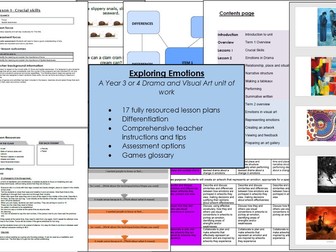
The ‘Emotions’ unit, allows students to be able to explore their own emotions through self-expression, as well as build capacity in personal and social capability. This unit will require students to demonstrate situational, emotional awareness through developing a group drama, as well as demonstrate their emotions visually through an artwork. They will explore selected Elements of Drama, as well as Visual Arts techniques, in order to create their final products.
Included in this unit are:
16 fully resourced, comprehensive lesson plans
Assessment options
A Glossary of Great Games
Differentiated options
Assessment task output
Students will be expected to:
Create a narrative structure representing a change in emotion
Devise, polish and perform a tableaux
Analyse visual art for how techniques are used to demonstrate an emotion
Create an artwork
Write about their artwork
This unit is based around three major concepts and skills.
1. Representing emotions in Drama
Students will identify why emotions are important in Drama, and explore how to portray them. They will need to develop an understanding of facial expressions and body language as well as the elements of drama of role, relationships and situation. Students will be able to consider how the above elements of drama can be used to create tension, conflict and a change in emotions.
**2. Narrative structure and tableaux **
Students will understand how to develop a narrative structure that includes a change in emotion. They will then demonstrate their narrative structure through a series of tableaux, while representing their knowledge of role, relationship and situation through the use of body language and facial expressions.
**3. Visual Art techniques **
Students will develop an understanding of colour and line. They will then analyse how a range of different visual art pieces represent emotions through the use of these techniques. Students will need to create artwork that represent an emotion, applying techniques appropriately to communicate their meaning.
A perfect Unit of Work for NQT’s, teachers new to the subjects, or experienced practitioners who would like to expand their toolkit.
What, How, Why, Evidence – Writing Prompt Display
Support students in structuring their BTEC assignments with this clear visual display. Perfect for guiding reflective logs, meeting assessment criteria, and encouraging stronger written responses.
What’s Included:
Printable poster with the What, How, Why, Evidence framework
Student-friendly prompts to support assignment writing
Ready-to-print PDF for classroom display or handouts
Ideal for KS4–KS5 BTEC courses in performing arts, production arts, and beyond.
BTEC Tech Award in Performing Arts – Writing Bundle (All 6 Resources)
Unlock success for SEND learners with this complete bundle of 6 resources for Component 1: Acting, Musical Theatre, and Production Arts pathways.
This bundle includes:
3 Writing Structures – clear, step-by-step frameworks for Acting, Musical Theatre, and Production Arts, tailored to BTEC Tech Award Component 1.
3 SEND-Friendly Writing Guides – fully broken down, with sentence starters, prompts, examples, and templates for each pathway.
Key Features:
Theme-Focused: Everything links directly to the theme of Acceptance, helping learners stay on task and connect ideas.
SEND-Friendly Design: Short, clear sentences, visual prompts, and step-by-step guidance reduce cognitive load.
Practical & Flexible: Works for reports, slideshows, blogs, scrapbooks, or vlogs.
Confidence-Building: Sentence starters, templates, and examples help learners produce detailed, structured work independently or with support.
All Pathways Covered: Acting, Musical Theatre, and Production Arts — each with full guidance for Task 1 (Investigation of Professional Work) and Task 2 (Exploring Performing Arts Processes).
Benefits for Teachers and Students:
Saves planning time with ready-to-use, structured resources.
Supports differentiation for SEND learners in your class.
Encourages creative thinking and practical exploration alongside written work.
Helps learners understand professional processes, skills, and roles across all pathways.
Perfect for:
Teachers preparing SEND-friendly materials for Component 1 of the BTEC Tech Award.
Students who need clear, scaffolded support to produce detailed written work.
Lesson planning, homework tasks, or independent study.
Get the complete SEND-friendly bundle and make Component 1 accessible, structured, and engaging for every learner!
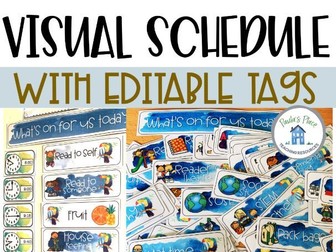
Visual timetable cards with strawberry background that matches the 25/26 calendar. Cards include:
English
Maths
Guided Reading
Science
Geography
History
PE
RE
Music
Languages
Computing
Art
DT
Handwriting
Times Tables
School Trip
PSHE
RSE
Free Time
Lunch
Breaktime
Register
Hometime
Party
Food
Library
Visitor
Surprise
Swimming
Snack
Assembly
Church
Phonics
Drama
Independent reading
Class reading
Forest School
Outdoor learning
Show and Tell
Test
Tidy Up Time
Intervention
SPAG
Brain Break
Daily exercise
Circle time
Arithmetic
News
Performance
Our Performance Bundle is aimed at upskilling senior students (upper KS3, GCSE, senior phase GET and IB Diploma Program) using a cross-curricular approach which intersects with English Language and Literature, Media Studies and Visual Arts. This entire bundle is expected to be achievable for students over the course of 8 to 12 weeks when using a 2 hours per week lesson model.
Inclusive of a 30-page upskilling workbook which covers the following topics using interactive discussion starters, scaffolded theory knowledge with a range of associated activities and tasks, as well as progress checkpoints for AFL/
This bundle also includes a 55-slide upskilling Powerpoint Presentation which follows the same structure as the workbook whilst also leaving space for teachers to adapt content for their cohorts as they see fit:
Direct links to workbook content
Aesthetically engaging cross-curricular approach
Opportunities to apply analytical and evaluative skills throughout
Back to Basics revision section
Homework and discussion tasks embedded throughout
Practical is rooted in theory
Opportunities for extension and differentiation work throughout
Scaffolded lessons and examplars to achieve mastery task
Full breakdown of The System with mini-activities and exemplars
In this bundle, you will also receive an additional A4 triple-page “Character Sketch” for those students who want to explore their characters more thoroughly. We have also included a “Scenario Starters” set of keycards with various scenarios which can be used throughout this course for additional application of Stanislavskian theory.
BTEC Performing Arts – Component 1 Writing Bundle + Full Scheme of Work
Make Component 1 accessible, structured, and engaging for all learners with this complete SEND-friendly bundle.
This bundle includes:
6 SEND-Friendly Writing Resources
3 Writing Structures – step-by-step frameworks for Acting, Musical Theatre, and Production Arts.
3 Detailed Writing Guides – sentence starters, prompts, and examples for each pathway, tailored to SEND learners.
Full Component 1 Scheme of Work (Pearson Level 2)
A full-term, 12-week plan using Disney’s The Lion King: The Musical as a central focus.
Covers all pathways: Acting, Musical Theatre, and Production Arts.
Fully adaptable to different timetables and teaching groups.
Key Features:
Theme-Focused: Everything links to Acceptance, helping learners stay on task and connect ideas across practical and written work.
SEND-Friendly Design: Short, clear sentences, visual prompts, and scaffolding reduce cognitive load and build confidence.
Pathway-Specific Support: Detailed guidance for Acting, Musical Theatre, and Production Arts, including Task 1 (Investigation of Professional Work) and Task 2 (Exploring Performing Arts Processes).
Practical & Academic Integration: Combines workshops, research, reflection, and evaluation for complete coverage of Component 1 assessment criteria.
Ready-to-Use: Saves hours of planning with structured lessons, prompts, and activities.
Scheme of Work Highlights:
Practical Workshops: Movement, voice, singing, and ensemble work inspired by The Lion King, exploring storytelling through choreography, characterisation, and staging.
Acting Pathway: Character development, script work, and ensemble performance linked to key scenes.
Musical Theatre Pathway: Integration of singing, acting, and movement to develop triple-threat skills.
Production Arts Pathway: Study of set, costume, lighting, sound, and stage management; how technical elements support storytelling and atmosphere.
Research & Contextual Study: Tasks exploring professional repertoire, production styles, and comparisons with other shows.
Reflection & Evaluation: Opportunities to analyse practical work and link personal development to professional practice.
Assessment Alignment: Embedded checkpoints and guidance for collecting evidence to meet Component 1 criteria.
Benefits:
Fully planned and ready to deliver, saving teachers hours of preparation.
Flexible for different pathways and group abilities.
Supports SEND learners with structured guidance, sentence starters, and clear prompts.
Motivates students through engaging, well-known material.
Prepares learners not only for Component 1 but builds foundations for Components 2 and 3.
Perfect For:
Teachers delivering Component 1 of the BTEC Tech Award.
SEND learners needing clear, scaffolded support.
Classrooms using practical, research, and reflective tasks to explore Performing Arts.
Any group aiming to achieve Component 1 outcomes efficiently and confidently.
Get this complete bundle and provide your learners with all the tools, guidance, and planning they need to succeed in Component 1 of BTEC Performing Arts!
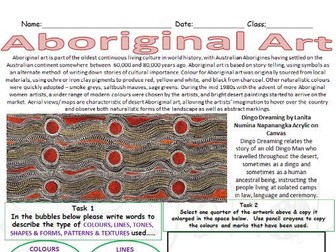
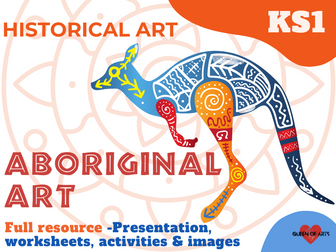
This resource is ideal for teaching children about Aboriginal art and using patterns and symbols.
Children will first learn about Aboriginal x-ray art, complete a worksheet where they practice creating Aboriginal style patterns and motifs and then be guided to create their own piece of Aboriginal style artwork based on a fish.
This is a full resource that includes:
Lesson plan
Introduction to Aboriginal x-ray art presentation
Worksheet (differentiated)
Fish templates
X-ray examples
Activity instruction presentation
I have used this successfully with years 1 and 2 and children have produced really nice artwork that can be hung on the wall.
The main activity is written for children to use crayons but, chalk, pastel or paint could also be used. Otherwise minimal supplies are needed- pencils, erasers and black paper.
Another more general Aboriginal Art presentation is also available https://www.tes.com/teaching-resource/resource-11902001
Empower your IB Diploma Programme (IB DP) students in Dance, Film, Theatre, Music, and Visual Arts with these professionally designed information posters, ideal for both Standard Level (SL) and Higher Level (HL) courses. This comprehensive bundle includes PDF versions of the posters as well as Canva links for easy customization. Buy purchasing these as a bundle, you will receive a 20% discount on all Arts posters.
Key Features:
Detailed Course Information: Each poster covers essential aspects of the IB DP syllabus for Dance, Film, Theatre, Music, and Visual Arts, including key concepts, assessment criteria, core areas, and units for both SL and HL.
Visually Engaging: Designed with vibrant colors and clear fonts, these posters create an appealing and stimulating learning environment.
Editable Format: Access to Canva links allows you to tailor each poster to fit your specific classroom needs, making them versatile and adaptable.
Educational and Practical: Provides comprehensive details on the course structure for each subject, helping students understand and engage with the curriculum.
Versatile Use: Perfect for classroom display, student handouts, or digital resources, these posters are a valuable addition to any teaching toolkit.
Benefits:
Supports Student Learning: Helps students grasp the core components of each IB DP subject, fostering skills such as creativity, collaboration, and confidence.
Saves Teacher Preparation Time: Ready-to-use and customizable posters allow teachers to focus more on instruction and student interaction, reducing prep time.
Enhances Classroom Aesthetics: Adds a professional and informative touch to your classroom decor, inspiring students and creating a conducive learning environment.
Whether you’re an experienced IB educator or new to the program, this bundle is an invaluable resource to help your students succeed. Make your teaching more effective and your classroom more dynamic with these essential IB DP posters for Dance, Film, Theatre, Music, and Visual Arts.
This poster is part of a series demonstrating how the techniques of visual literacy can be applied in every subject so that students can deconstruct a visual image in order to find the hidden meanings behind the image. In this poster a screen shot of computer screen demonstrates the use of pose, lighting and tone, mood and atmosphere and audience. Visual literacy is a great way to help students build extended responses. There is a template on the second page that can be used as a scaffold.
This is an original Scheme of Work for Secondary Schools inspired by Tonesight, a system that uses music and motion sensing to make visual artworks accessible to the visually-impaired. It encourages students to consider the links between visual art and music before guiding them through a series of listening, performing and composing activities.
*There are 12 lessons of varied and engaging activities including listening exercises, performance tasks and tests followed by a project guiding the students through the steps to creating their own ‘Tonesight’ composition. *
Links to multiple resources including relevant and engaging Youtube videos are provioded throughout.
**This is particularly suitable for final year KS3 students or first-year GCSE Music students. **
By the end of this topic students should:
understand some of the creative and philosophical links between music and image
become more confident performing music together and as soloists
develop the creative, technical and theoretical skills for composing original music for an artwork, preparing it for playback at an art exhibition as a means for helping a blind or visually-impaired person
*please note that Logic Pro X and Sibelius, or two similar MIDI and notation applications, are required to complete this SOW
Save 91%. Support your students with the 2018 GCSE Art and Design Exam (Component 2). A range of support resources including a step by step framework for developing thorough preparatory work, a student friendly explanation of the Assessment Objectives, visuals, a guide to securing outstanding performance, review sheets and more!