Highly challenging and fully resourced 5 lesson introductory unit to Shakespeare. All lessons contain 18-20 PowerPoint slides with a variety of tasks, formative assessment opportunities, analysis of key play extracts, scaffolding and modelling.
Topic 1- Context and introduction
Topic 2- Comedies (AMND)
Topic 3- Tragedies (King Lear)
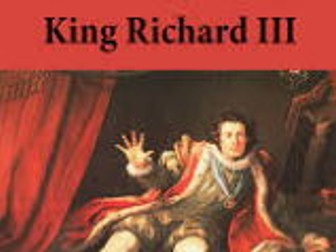
Topic 4- Histories (Richard III)
Topic 5- Shakespeare’s Leading Ladies (Lady Macbeth)
Bundle deal- typically £2.50 per lesson (saving over 50%)!

This PowerPoint presentation on **Shakespeare’s King Lear **is a great introductory lesson that includes:
A brief plot summary
Historical context (referring to James I of England)
Why Shakespeare is relevant today (drawing on Coleridge)
A close textual analysis of Lear’s reconciliation with Cordelia
King Lear’s **‘madness / enlightenment’ **
Scholarship on major concepts in King Lear: religion and psychoanalysis
Actors’ commentary on playing King Lear and Edmund
*** Essay questions **
‘Thinking Further’ activities that focus on Lear’s famous quote: ‘nothing will come of nothing’
**Fact File **
Quick Quotes
Recommended Research
References
This research is great for exam revision. It also provides useful context for writing an essay on Shakespeare’s King Lear.
An introduction to Othello suitable for A Level or GCSE. Seven lessons and handouts. Two lessons on background to Shakespeare and his enduring appeal, character lessons on Othello and Iago, Two lessons on tragedy and tragic hero and theme of jealousy.
Lessons are on powerpoint with accompanying handouts.
Take a look at my other resources in my shop!
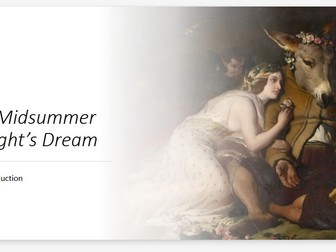
This lesson introduces students to Shakespeare’s A Midsummer Night’s Dream. Students will explore the play’s main characters, setting, and themes, including love, magic, and mistaken identity. The lesson also provides context on Shakespeare’s language and dramatic techniques, preparing students to engage with the play through reading, discussion, and performance activities.
This download includes a detailed sequence of 6 planned lessons with power-points and worksheets building up to a recount in the style of a letter, from Macbeth to Lady Macbeth. Pupils will explore Shakspearean language, build a bank of atmospheric vocabulary and phrases to describe the heath and battle scene, plan and write their recount. All resources are included- including a teacher model write. This planning accompanies the Leon Garfield Shakespeare Animated Tales.
Two introductory lessons to Hamlet and how it displays tragedy.
This was designed for KS3; higher level set.
All you could need for an introductory couple of lessons.
An introductory lesson to William Shakespeare.
Explores language he created and changed, facts about his life and a writing task about the Globe theatre. Could be split to two lessons.
Contains A PowerPoint presentation and accompanying worksheets (4-6 lessons plus potential homework tasks) to compliment students' early reading of the text.
Activities include:
-Three adapted summaries of Act 1 scene 2 with quotes from the original text with comprehension questions
-Drama task
-Diary writing tasks
-Descriptive/creative writing tasks
These resources are aimed at lower ability KS3 students.
I'd appreciate your feedback (positive or constructive) should you choose to purchase this resource.
A word-search including answers which contains all of Shakespeare's comedy plays. A good introductory activity for the beginning of a lesson or as an extension/reward task.
Introductory lesson for teaching Shakespeare. Includes a worksheet with famous quotes for students to look at and analyse as an introduction to his language and themes.
Flipchart the explores the different genres of Shakespeare's plays. Useful as an introductory lesson to Shakespeare. Aimed at Y7 middle ability students so you may need to adapt to suit your class.
Flipchart the explores the layout of The Globe and labels the different elements. Useful as an introductory lesson to Shakespeare. Aimed at Y7 middle ability students so you may need to adapt to suit your class.
A collection of introductory lessons that will enable students to engage with Shakespeare and prepare them for studying his plays. The students will look at the playwright himself, the historical context, his use of language and his dramatic methods in order to help them equip them with the background knowledge that they need of the playwright.
A word-search including answers which contains a number of Shakespeare's most famous plays. A good introductory activity for the beginning of a lesson or as an extension/reward task.
Complete lesson plan powerpoint and resources for an introductory context lesson on Much Ado About Nothing by William Shakespeare. Group work, paired discussion and other activities are included.
A word-search including answers which contains all of Shakespeare's tragic plays. A good introductory activity for the beginning of a lesson or as an extension/reward task.
Fun introductory lessons to Shakespeare and his language to help students through some of the points rarely broken down for them. Suitable for year 6 onwards.
This introductory lesson launches the unit by placing Richard III within the dramatic and political world of Elizabethan England. Students explore the key historical background of the Wars of the Roses and consider how Shakespeare’s writing was shaped by Tudor expectations, royal propaganda, and the need to appeal to Queen Elizabeth I’s court. Clear teacher explanation helps pupils understand why Richard is presented as a villain and how playwrights relied on powerful patrons for success.
The lesson builds towards a creative, purposeful writing task in which students produce a persuasive ‘Pitch’ for their own imagined play, aimed at impressing the Queen’s officials. This allows them to apply their understanding of context, audience, and Shakespeare’s motivations while developing confident, historically informed writing.
What’s included:
Clear lesson objectives
Context slides on the Wars of the Roses and Tudor influence
Teacher explanations of Shakespeare’s purpose and audience
Structured guidance for crafting a persuasive pitch
An introduction aimed at Year 9 students (high ability) to Shakespeare. I was asked to write a scheme of work to avoid the gap we had between students studying Shakespeare in Year 8 and then never again until Year 11. This unit encompasses extracts from: Macbeth, Romeo and Juliet, Much Ado About Nothing and the Merchant of Venice. The final assessment is based on an extract from Titus and Andronicus. The question is also based on Question Four of Paper One of the English Language GCSE (AQA). There is a mix of questions aimed also at Question Five of Paper Two AQA GCSE and the Literature exam. I haven’t put the introductory lesson on here as I actually adapted it from someone else’s resource on the TES. Please contact if you would like a link to that resource. Have fun!