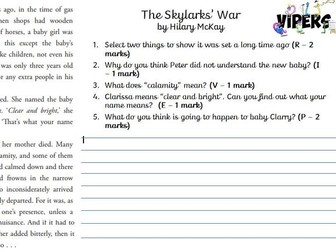
Slides to help children learn how to read words in context as well as a short extract to analyse with children and answer SATs style questions. Also includes a comprehension sheet.
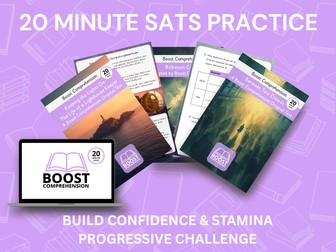
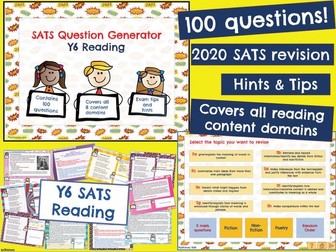
SATS - 100 reading questions organised by content domain, created for SATS revision. This is a popular revision tool for the Y6 Reading SATS test! The resource can be used all year round to help prepare pupils for the requirements of the KS2 test or as a last minute revision tool.
Get ready for the KS2 reading assessments with this SATS Question Generator! Covering all of the reading content domains, you can use this SATS revision resource to practise the different types of questions that might come up in the KS2 SATS paper.
Select one of the following modes:
- Choose a particular reading content domain to revise
- Practise those tricky 3-mark questions where pupils often lose marks
- Revise fiction/non-fiction/poetry questions
- Random mode, giving you a mixture of all types of questions
The SATs revision resource also includes handy hints and tips to help pupils in the test. Perfect for teachers to use as morning work, lesson starters or revision sessions or alternatively for pupils to practise independently at school or at home. Each slide contains a short passage in the style of the reading SATS papers and then a question to answer.
This is a must-have resource for Y6 pupils working towards their reading SATS tests!
You might also like our similar resource: Y6 SATS Question Generator: SPAG
#helpwithsats
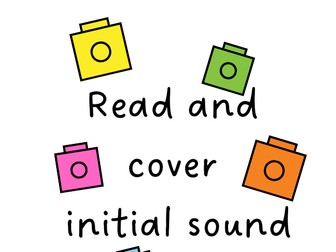
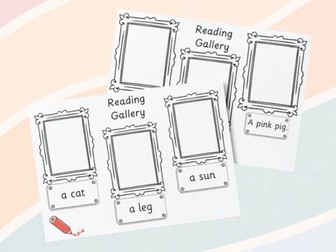
Contains 4 different CVC word mats provide with coloured cubes for children to read and match.
Mat 1: pig, hat,pod,hen
Mat 2: sun, map, bug, bed
Mat 3: rat, fan, cab, can
Mat: cat, cup, fox, bag
A pack of 10 read and draw sheets.
Coving phase 2 and phase 3 phonics level with 3 pictures to draw per page.
2 sheets include number for number recognition.
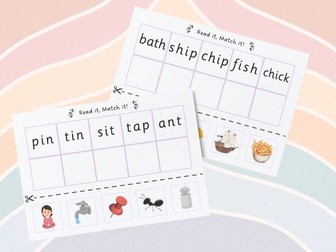
8 CVC read it, match it sheets.
Match the CVC pictures to the words.
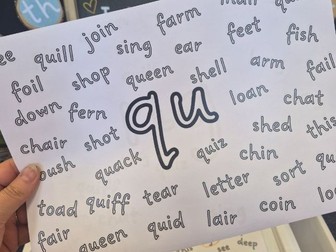
5 words per sheet, covering phase 2 plus digraphs qu, sh, th & ch
Can be used as a cut & stick activity or chop and laminate to make a reusable activity.
The importance of reading Assembly - Assembly Topic: Books, literacy and Reading. All about the benefits of reading.
Each Assembly Contains:
1 Fully Editable PowerPoint (Clear structure, Assessment of Learning, Beautiful presentation, Video Embedded URL Clips, Engaging Premium Quality Slides & Thoughtful Questioning)
Designed by Specialists
Mapped against Latest DfE Guidance, PSHE Association Core themes and Requirements
Why not check out our other popular PRIMARY resources here:
Assembly - Back to School After Lock down Assembly - Importance of Expressing yourself
Assembly - Powerful Women + Role Models
Assembly - Recycling
Assembly - Coping with Change
Assembly - International Literacy Day
Assembly - Importance of Helping Others
Assembly - Healthy Eating Habits
Assembly - Bullying Prevention Week
Assembly - Being Thankful and Grateful
An assembly for KS3, KS4 and KS5 which links to whole school Literacy and the importance of reading, both academically and for pleasure.
With reading high on the Ofsted agenda, this assembly is a good way of evidencing a whole school drive towards improving standards.
I have recorded a voice over on each slide however this can be removed/scripted with your own members of staff.
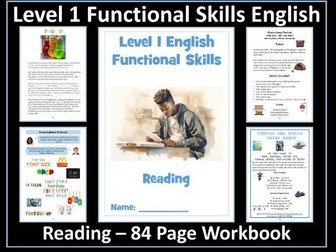
This resource has been designed for Entry Level 3 students working towards Functional Skills English qualifications at Level 1 (Edexcel-Pearson, NCFE, City and Guilds, AQA, Highfield Qualifications, NOCN, Open Awards). It contains an 84-page workbook on reading.
This resource will help pupils to achieve these outcomes:
identify and understand the main points, ideas and details in texts
compare information, ideas and opinions in texts
identify meanings in texts and distinguish between fact and opinion
recognise that language and other textual features can be varied to suit different audiences and purposes
use reference materials and appropriate strategies for a range of purposes, including to find the meaning of words
understand organisational and structural features and use them to locate relevant information in a range of texts
infer from images meanings not explicit in the text
recognise vocabulary associated with specific types and purposes of texts - formal, informal, instructional, descriptive, explanatory and persuasive
read
understand a range of specialist words in context
The workbook includes 37 information pages, 31 reading tasks (44 worksheets) and two progress checks. The workbook is provided in PDF and an editable PowerPoint version. It can be used for classwork, homework, revision or as an independent learning pack.
Please note, the watermark on the preview images is not present on the resource itself.
If you buy this resource and are pleased with your purchase, I would be grateful if you could leave a review. In return , you can have a free resource up to the value of your purchased resource. Just email inspireandeducate@aol.co.uk with your user name, the resource you have reviewed and the resource you would like.
You may also be interested in:
Level 1 Reading - 175 Slide PowerPoint Lesson
Save money and buy both resources at a discounted rate:
Level 1 Reading -PowerPoint Lesson and Workbook
Entry Level 1 English Resources
Entry 2 English Resources
Entry 3 English Resources
Level 1 Functional Skills English Resources
Entry Level Maths Resources
Reading Display, Book Corner Display, Printable Display Pack
Make your Reading Area gorgeous with this reading display!
Beautifully designed with over 80 different patterned butterflies, a book image, lettering and handy tips sheet, this display pack contains everything you need for a quick, effortless display.
Simply download, print, cut out and display!
Pack contains
21 butterfly PDF printable sheets - each butterfly is approx. 12 cm
4 lettering PDF printable sheets - letters approx 9 cm tall
1 book image PDF printable sheet - approx 54 cm wide, designed to print on 2xA4
1 printing and assembling tips sheet
Reading Display, Instant Reading Corner Display, Reading Area Signs
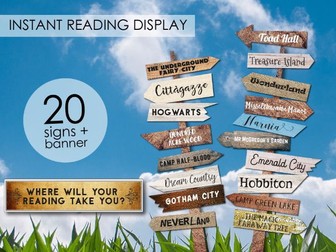
Instantly make your Reading Area a place children want to be with this gorgeous "Where will your reading take you? " display.
Print out, stick onto card and fasten to a stick for a sign-post effect. Scroll down to the bottom of the PDF to find two editable signs allow you to add additional text.
Pack includes 2 pdf files with:
18 destination signs - 2 per sheet of A4
2 signs for you to add your own text
1 “Where will your reading take you?” banner - 60cm long
Designed to open with the free version of Adobe Reader. Scroll to the last page to enter your own text. Simply click on the text and type.
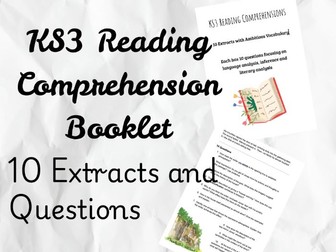
This resource is perfect for Years 7–9 and provides ten original fiction extracts (approximately 500 words each) across a variety of genres and settings, including gothic, sci-fi, magical realism, historical, and adventure. Each extract is accompanied by ten carefully designed questions focusing on key KS3 literacy skills:
Language analysis (e.g., similes, metaphors, personification, imagery)
Inference (reading between the lines to understand character, mood, or theme)
Analysis of structure, setting, and characterisation
Evaluation of effect on the reader
A full-sentence mark scheme is included for all extracts and questions, providing model answers to support teaching, marking, or self-assessment. This makes the resource particularly suitable for cover lessons, independent study, or guided reading sessions.
Key Features:
Ten engaging, original extracts covering a wide range of genres
100 questions total, designed to develop comprehension, analytical writing, and critical thinking
Full-sentence mark scheme included for easy assessment
Explicit focus on KS3 literacy and reading skills, including ambitious vocabulary
Ready-to-use for cover work, extension tasks, or literacy lessons
This resource saves teachers time while providing stimulating material to challenge students, improve their reading for meaning, and develop their ability to analyse and evaluate fiction at KS3.
(L2.11) Identify the different situations when the main points are sufficient and when it is important to have specific details
(L2.12) Compare information, ideas, and opinions in different texts, including how they are conveyed
(L2.13) Identify implicit and inferred meaning in texts
(L2.15) Use a range of reference materials and appropriate resources (e.g., glossaries, legends/keys) for different purposes, including to find the meanings of words in straightforward and complex sources
(L2.16) Understand organisational features and use them to locate relevant information in a range of straightforward and complex sources
L2.17) Analyse texts, of different levels of complexity, recognising their use of vocabulary and identifying levels of formality and bias
(L2.18) Follow an argument, identifying different points of view and distinguishing fact from opinion
(L2.19) Identify different styles of writing and writer’s voice
Prince William recently spoke out about the plight of elephants in China.
This reading comprehension resource supports a BBC News article which investigates the real threat to China's elephants - habitat destruction.
3 differentiated worksheets of questions are included.
A reading comprehension which supports a BBC news report about the solar eclipse which occurs on Friday 20th March.
Use this resource to help prepare your class for this exciting and rare event.
This comprehension, for all abilities in KS2, can be used as an informal assessment or as a class discussion to elicit understanding. Over 80 questions ensure that the whole book is covered. Answers are also included and the comprehension is uploaded as four pdf documents, or as four Word documents, in case you wish to make changes.
Noughts and Crosses by Malorie Blackman reading comprehension. Five weeks worth of worksheet activities, including a before reading activity. The worksheets are all labelled with what chapters they cover, and the whole resource covers the prologue to chapter 31 (first half of book).
All pages are easily edited, and include a variety of different tasks to help generate discussions around the pages.
Can be used as homework, one off lessons or as a whole block of teaching.