Writing frames for comparing Power and Conflict poemsQuick View
HMBenglishresources1984

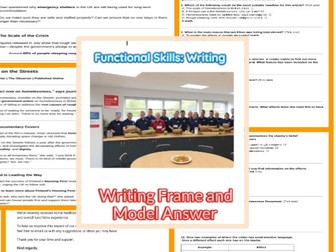
Writing frames for comparing Power and Conflict poems

(5)
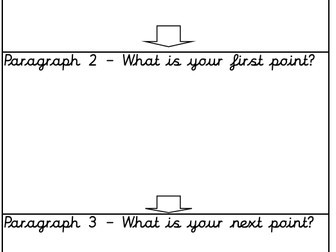
Updated for 2023, 4 differentiated writing frames to 4 actual AQA power and conflict past exam questions. Each writing frame has 3 tiers of difficulty to allow for the fact different students in the class require different levels of support and guidance in the run up to the examinations. Tier 1: Students add the analysis of the quotations. The topic sentences and recommended quotations are already filled in for them. Tier 2: Students must pick their own 3 quotations from each poem and analyse the quotations. Tier 3: Students must pick their own topic sentences, quotations and then analsyse the quotations. The questions covered are as follows: 2021 question: Compare how poets present ideas about power and control in ‘London’ and in one other poem from ‘Power and conflict’. (30) Nov 2020 question: Compare how poets present the ways people are affected by difficult experiences in ‘Remains’ and in one other poem from ‘Power and conflict’. (30) May 2019 question: Compare how poets present the ways that people are affected by war in ‘War Photographer’ and in one other poem from ‘Power and conflict’. (30) May 2018 question: Compare how poets present ideas about power in ‘Ozymandias’ and in one other poem from ‘Power and conflict’. (30) Also includes more writing frames to help structure comparisons that I made a few years ago. The poems that feature in the writing frames include: Storm on the Island and Exposure (conflict with nature) Prelude and Ozymandias (power) Tissue and Ozymandias (conflict) Bayonet Charge and Charge of the light brigade (conflict) Storm on the Island and The Prelude (conflict) London and The Emigree (power of a place) Remains and Poppies (conflict) War Photographer and Remains (conflict) My Last Duchess and Ozymandias (power of pride) My Last Duchess and Checking out me History (frustration)
CVC Word Writing FramesQuick View
Senresourcesource

CVC Word Writing Frames

(0)
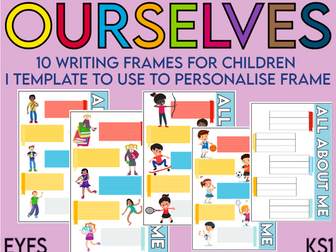
CVC words are a key tool in teaching and learning phonics. CVC words help introduce children to reading by using phonics to learn the sounds of the individual letters, and then blending those sounds into one three-letter word. This particular activity shows a picture and children need to write the corresponding word underneath. 5 worksheets with one for each of the middle vowel sounds in CVC words. Clipart images courtesy of Kari Bolt Children’s Illustrator.
Colourful Semantics: Conjunctions Writing FrameQuick View
Oracyplayroom

Colourful Semantics: Conjunctions Writing Frame

(3)
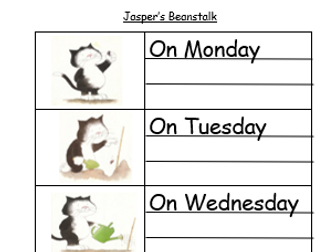
A set of 11 editable writing frame worksheets to practise using conjunctions to join two clauses. The worksheets help children to structure the sentence with space to draw a picture to show comprehension. I use these as an independent English workstation activity for one of my pupils with SEN. Colourful Semantics cards avaiable here: https://www.tes.com/teaching-resource/colourful-semantics-starter-pack-12121851
A Level AQA Business Exam Structure Guidance & writing frames & feedback sheetsQuick View
mikepaulus1991

A Level AQA Business Exam Structure Guidance & writing frames & feedback sheets

(1)
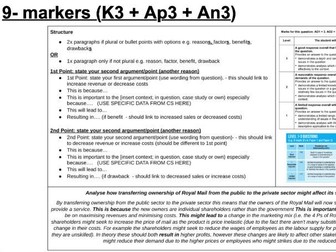
Hello fellow teachers! Rather than give vague instructions and teaching the complicated AO language, giving students these simple sentence starters and model examples help even your weakest A level learners access all question types. This has made teaching exam technique a breeze for me and my staff. This resource comprises: One key instructions document covering all exam question types but primarily breaking down the extended writing questions (9, 16 and 20-25 markers especially) - printed for all my students and kept by them through the year) Example model answers for 9, 16, 20, 24 and 25 mark questions included that show students how to apply the exam structure guidance (using past paper questions) Printable templates for students to practice exam questions applying the required exam structure for all the bigger writing questions . Each template provides a self-checklist to make sure they are going to get great marks. Also included is a template for feedback which can be amended to suit your school’s marking expectations A ‘board show’ which I use to copy the relevant slide before they attempt a practice question, this is also used at the beginning of the year or before mocks to remind them what they should do for each question. These templates are based on AQA A Level Business and have been adapted from recent 2022 exam feedback sessions from AQA. These resources have made proven impact to my students and their results! Feedback sheets (which you can use to mark accurately against the 3-4 Assessment objectives and give them a clear action to improve their answers to 9±25 mark questions Any feedback is much appreciated!
AQA English Language Paper 2 GCSE Writing Frame, Word-mats, Sentence startersQuick View
MrMeaden

AQA English Language Paper 2 GCSE Writing Frame, Word-mats, Sentence starters

(2)
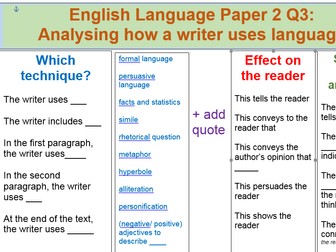
A series of scaffolded writing frames to help students develop a structured approach to answering questions in the AQA GCSE English Language Paper 2. This includes sentence starters for questions 2-5. These are aimed at EAL/ SEN/ reluctant writers to help build confidence through a highly scaffolded approach to writing. They may also be useful for KS3 students in preparation for GCSE content. Files: Q2 Comparing similarities and differences Q3 Analysing the writer’s use of Language Q4 Comparing writers’ attitudes and methods Q5 Presenting your views / persuasive language
AQA English Language Paper 1 GCSE Writing Frame, Word-mats, Sentence startersQuick View
MrMeaden

AQA English Language Paper 1 GCSE Writing Frame, Word-mats, Sentence starters

(3)
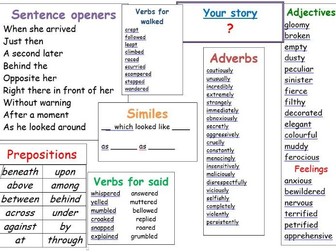
A series of scaffolded writing frames to help students develop a structured approach to answering questions in the AQA GCSE English Language Paper 1. This includes sentence starters for questions 2-4, along with two separate story-writing word-mats to help develop students’ vocabulary in Q5 (descriptive writing/ story). These are aimed at EAL/ SEN/ reluctant writers to help build confidence through a highly scaffolded approach to writing. They may also be useful for KS3 students in preparation for GCSE content. Files: Q2 Analysing Language (word-mat) Q3 Analysing Structure (word-mat) Q4 Agreeing/ disagreeing with a statement Q5 Writing your own story Q5 Describing a character’s appearance
New Bubble Words Writing Frames of All Different Sizes and Colours to Scaffold Handwriting Editable!Quick View
BubbleWords

New Bubble Words Writing Frames of All Different Sizes and Colours to Scaffold Handwriting Editable!

(0)
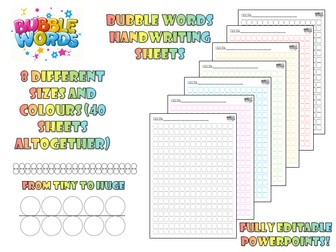
New Bubble Words Writing Frames of All Different Sizes and Colours to Scaffold Handwriting Editable! Attached are 5 different PowerPoint templates, each with 8 different colours (a total of 40 different sizes and colours for your classes). The sizes are: Tiny bubbles (for your best writers) Small bubbles Medium Large Huge (for your SEN pupils / pupil without fine gross motor skills) The colours are: Black, light red, light orange, light green, light blue, light purple, grey and white bubbles with a black background. All of the above are editable so you can print them exactly how you’d like! I have attached the Powerpoints and PDFs for this reason. We value your feedback so please leave a review and we can make changes. Bubble Words
Dream Jar- Writing frame for displayQuick View
pink_lady23

Dream Jar- Writing frame for display

(0)
Here is a dream jar proforma that I made for a BFG inspired display. The children wrote their own dreams onto the jar and then decorated around the outside. It looked really effective. Could be used in any year group.
Biography writing frameQuick View
hayley_lynn

Biography writing frame

(4)
A short power point going through a biography, highlighting key features. My Y5/6 class found it useful to see what they needed to include in their writing as they went through the text.
AQA A-level Psychology: Evaluation Writing FrameQuick View
ClaireHopeResources

AQA A-level Psychology: Evaluation Writing Frame

(1)
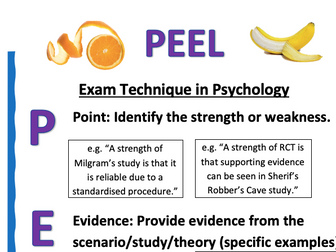
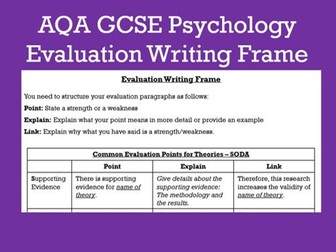
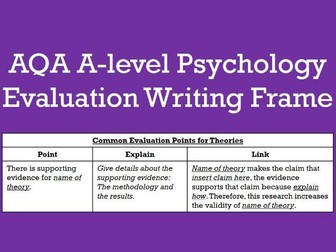
This Evaluation Writing Frame (or Cheat Sheet as we like to refer to it in my class) is perfect for lower ability students or when just starting the course in Year 12. It outlines exactly what they should write for common evaluation points, such as supportive evidence, using the “Point, Explain, Link” structure. This support with essay writing provides students with confidence and works as a briliant scaffold both in the classroom or at home. There are two ways of using this resource: Version 1: Page 1 printed, this works well glued into their notes or book which they can refer to when completing evaluation paragraphs in class or at home. Version 2: Printed on both sides and laminated, this works well as a loose reference sheet they can refer to when completing evaluation paragraphs in class or at home. On the back, they can practice writing evaluation paragraphs using a whiteboard pen to perfect their writing style with the flexibility to change their wording throughout. They can then take a photo of this to write into their notes when they are ready or for homework.
Talk for Writing planning frameQuick View
extra golden-time

Talk for Writing planning frame

(74)
Many teachers love the Talk for Writing approach but do not find it easy to organise all of Pie’s brilliant ideas into a unit of work. It is a challenge! I have been following the TfW approach for many years, and I have spoken at a few of Pie’s national conferences. Over the years, I have organised Pie’s ideas into a three week planning grid. The planning frame attached is not supposed to be prescriptive; it is designed to ‘hold your hand’ while you put a unit together. It is invaluable for teachers new to this approach, but even old-timers like me find the prompts helpful. This planner has been taken on in many schools and you may adapt it for your own use. This work is designed to support teachers using the TfW approach.
Polar Bear Writing Phoneme FrameQuick View
CharlottesClassroom

Polar Bear Writing Phoneme Frame

(1)
Polar Bear Early Writing Phoneme Frame and Answers Ideas for use include: Laminated to enhance tuff spots and writing areas Can be made into writing booklets The product is designed on A4 but can be adapted bigger and smaller through your printing preferences.
GCSE A Christmas Carol Writing FrameQuick View
podmc002

GCSE A Christmas Carol Writing Frame

(0)
This resource contains a detailed writing frame for students to follow whilst practicing a typical GCSE style question. Complete with graded frames from 4-7 to guide students into making progress into higher levels and specific quotes from all the main characters in A Christmas Carol, to further support their answers.
WJEC, GCSE Writing: Unit 3 - Writing FramesQuick View
huwfifield

WJEC, GCSE Writing: Unit 3 - Writing Frames

(0)
This GCSE (WJEC), Writing resource supports students who struggle to generate and structure their ideas. Based on the argumentation and persuasive section, a question about teenagers and reading is provided. Question prompts and writing frames are provided to help with the writing process. The question is as follows: “Young people today are not interested in reading books.” Write an article for an online teenage magazine in which you give your views about young people and reading. One writing frame is included to agree with the statement and one against. The frames are divided into an introduction - main body - counter argument - conclusion. An additional punctuation activity booklet is included. Students have to choose whether a comma, full stop or semi-colon is missing. The sentences are based on teenagers and reading. The resource has proved successful in supporting students with additional needs.
Narrative writing word mats writing frames sentence starters (8 files)Quick View
MrMeaden

Narrative writing word mats writing frames sentence starters (8 files)

(0)
A set of word mats and writing frames to provide a scaffolded approach to creative story writing. Includes files: describing a character’s appearance writing your own story describe feelings wordmat describing feelings of fear describing a character’s clothing adverbial phrases (where, when, how, why) character becomes kind describe a character’s actions