

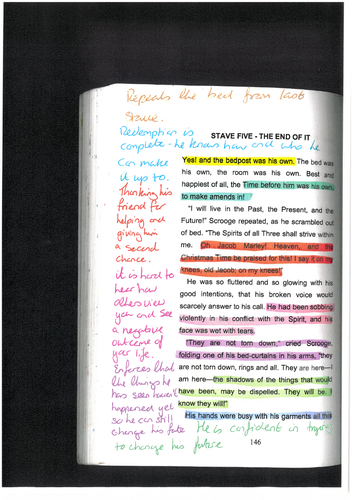

A teacher-created annotation pack for Stave 5 of A Christmas Carol by Charles Dickens, exploring redemption, joy, narrative resolution, tonal transformation, and moral messaging. This resource provides in-text analytical commentary and teaching callouts that model expert annotation and support students in interpreting methods, effects, and theme connections for both Literature essays and Language transactional writing transfer.
Annotation & Teaching Focus:
Character transformation annotations tracking:
Ebenezer Scrooge reborn through generosity and self-awareness
Bob Cratchit and the restored hope surrounding his family
Scrooge’s new relationships with Fred and Tim
Tone and mood annotations highlighting the shift from fear to celebratory optimism, marking the stave as the new equilibrium
Themes annotated and linked for essay use, including:
Redemption and second chances
Generosity and charity
Community and celebration
Personal responsibility and moral rebirth
Social critique resolution
Writer’s methods flagged in annotations (AO2 transferable), such as:
symbolic contrast between earlier staves and Stave 5’s lightness
dialogue tone change and character interactions for audience effect
semantic fields of happiness, laughter, sharing, and rebirth
Structural annotations indicating closure of Scrooge’s cyclical journey
Repetition and list structures noted for persuasive writing transfer
Contextual teaching callouts, referencing:
Victorian Christmas traditions
Charity movements
Moral reform ideals following industrial hardship
Vocabulary glosses embedded next to key phrases to support Dickensian lexis comprehension
Skills Supported:
Understanding language change as a signal of character development
Inferring motives from altered behaviour and dialogue
Explaining the effect on the reader/audience
Selecting quotations and linking them to themes for essays
Structuring analytical paragraphs for Literature (TEE/PEEL/PEA)
Transferring methods into Language transactional writing (direct address, facts, emotive language, repetition for emphasis)
Tracking narrative structure (equilibrium broken → equilibrium restored)
Building comprehension of 19th-century vocabulary through in-situ annotation modelling
Classroom & Exam Applications:
Guided reading and teacher annotation modelling
Stave-by-stave analysis lessons, focusing on resolution
GCSE English Literature essay preparation
English Language Paper 1 and 2 methods and effects skill transfer
Literacy intervention and reading mentoring groups
Homework or revision evidence/quotation bank creation
Curriculum planning support for secondary English
Something went wrong, please try again later.
This resource hasn't been reviewed yet
To ensure quality for our reviews, only customers who have purchased this resource can review it
Report this resourceto let us know if it violates our terms and conditions.
Our customer service team will review your report and will be in touch.
£3.00