


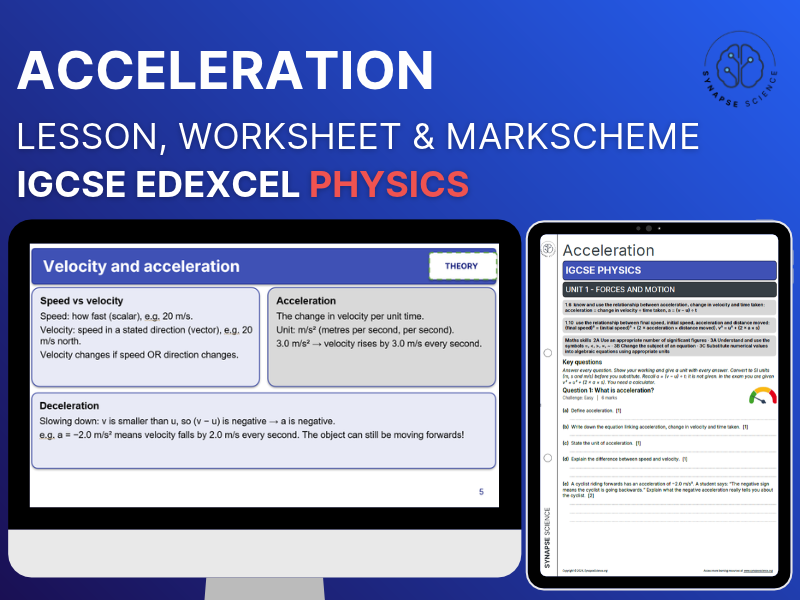
Acceleration – Lesson, Worksheet & Mark Scheme – Unit 1 – IGCSE Physics
Velocity, Acceleration, Deceleration and v² = u² + 2as
This Synapse Science resource teaches the difference between speed and velocity and how to calculate acceleration using a = (v − u) ÷ t, including deceleration as a negative value. It is part of the Synapse Science Unit 1: Forces and Motion pack.
Students also use and rearrange v² = u² + (2 × a × s) and choose the right equation by asking whether time is given or needed.
TOPICS COVERED – SPECIFICATION POINTS
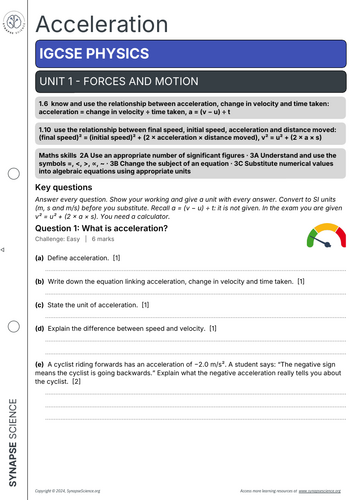
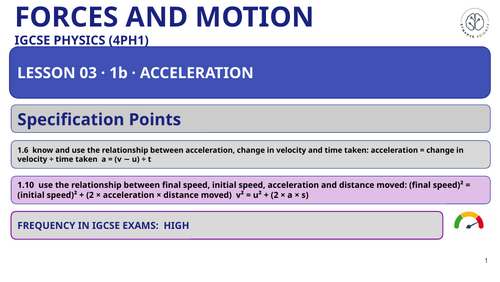
- 1.6: Know and use the relationship between acceleration, change in velocity and time taken: acceleration = change in velocity ÷ time taken, a = (v − u) ÷ t
- 1.10: Use the relationship between final speed, initial speed, acceleration and distance moved: (final speed)² = (initial speed)² + (2 × acceleration × distance moved), v² = u² + (2 × a × s)
WHAT’S INCLUDED
- Editable PowerPoint lesson with worked examples, graded practice, video review and exit ticket
- Printable differentiated worksheet (Easy, Medium and Hard questions, 52 marks)
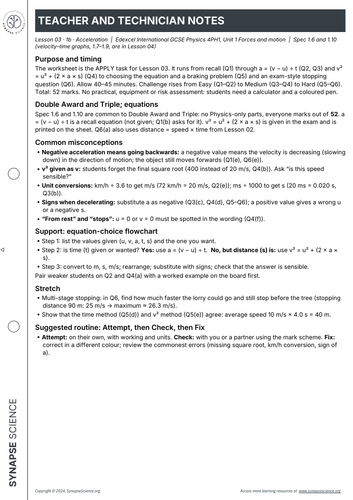
- Teacher notes and a full mark scheme in Edexcel exam style
KEY FEATURES
- Common misconceptions tackled head-on, such as “negative acceleration means moving backwards”
- “Which equation?” flowchart for multi-step problems
- Exam-style stopping distance question with reaction and braking distances
- Consistent Synapse Science format for seamless delivery
PAIRS WELL WITH
Something went wrong, please try again later.
This resource hasn't been reviewed yet
To ensure quality for our reviews, only customers who have purchased this resource can review it
Report this resourceto let us know if it violates our terms and conditions.
Our customer service team will review your report and will be in touch.
£3.00