





Overview:
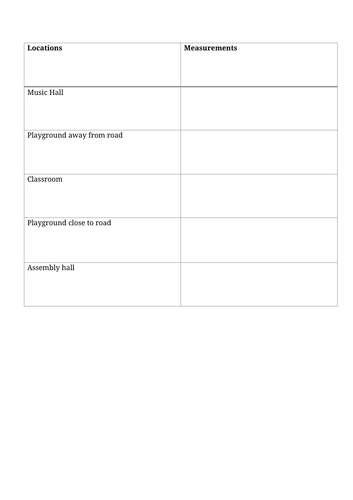
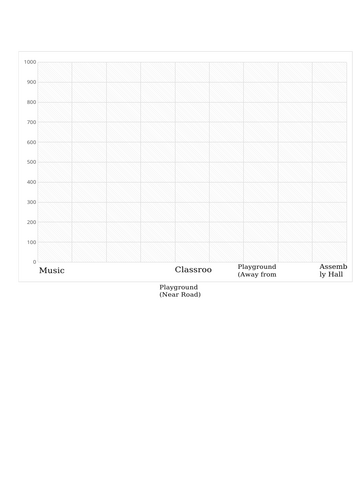
This resource is a set of three lesson plans to teach Primary 7 (Level 2) pupils the structure of a scientific experiment: hypothesis, data collection, data analysis and conclusions. In this experiment, it will be to use air pollution monitors which measure carbon dioxide (CO2) levels across different areas of a school and analyse these results in bar charts so they can be visualised. It involves using skills of producing a hypothesis from context taught, teamwork in taking measurements across the school, taking averages, accounting for anomalous results as well as coming to conclusions of whether the results matched the initial hypothesis with discussions on why these results occur.
Background:
This lesson can be incorporated into the school’s curriculum for a science class of Level 2 learners in the Scottish Curriculum for Excellence. The resource was created as a part of the University of Edinburgh’s Geoscience Outreach and Engagement course. This resource has been created for use as an Open Educational Resource (OER) by the OER Service, at the Information Services Group at the University of Edinburgh. As an OER, teachers are welcome to make any changes to their resources according to their needs.
Experiences and Outcomes:
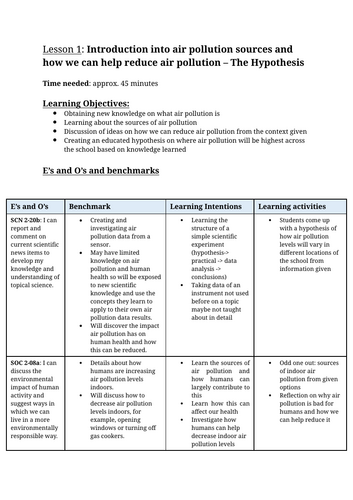
SCN 2-20b: I can report and comment on current scientific news items to develop my knowledge and understanding of topical science.
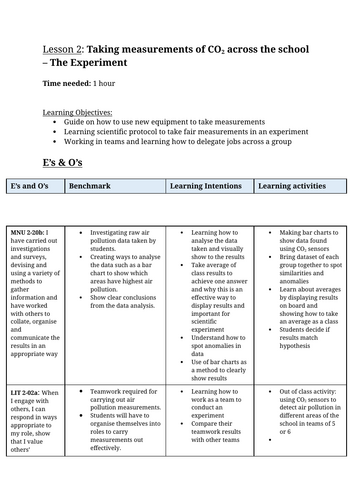
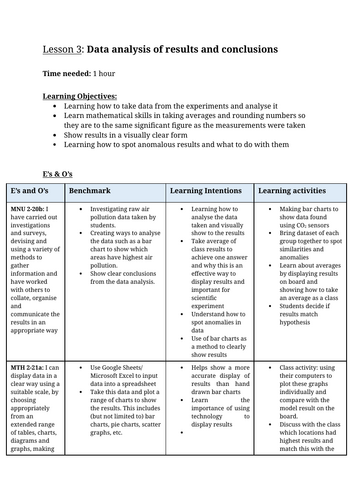
MNU 2-20b: I have carried out investigations and surveys, devising and using a variety of methods to gather information and have worked with others to collate, organise and communicate the results in an appropriate way.
LIT 2-02a: When I engage with others, I can respond in ways appropriate to my role, show that I value others’ contributions and use these to build on thinking.
SOC 2-08a: I can discuss the environmental impact of human activity and suggest ways in which we can live in a more environmentally responsible way.
MNU 2-01a: I can use my knowledge of rounding to routinely estimate the answer to a problem, then after calculating, decide if my answer is reasonable, sharing my solution with others.
MTH 2-21a: I can display data in a clear way using a suitable scale, by choosing appropriately from an extended range of tables, charts, diagrams and graphs, making effective use of technology.
HWB 2-16a: I am learning to assess and manage risk, to protect myself and others, and to reduce the potential for harm when possible.
‘Conducting Science Experiments: Air Pollution’ was developed by Caitilin Maguire, and all content in this package is available under a CC BY-SA 4.0 license unless otherwise stated.
Something went wrong, please try again later.
This resource hasn't been reviewed yet
To ensure quality for our reviews, only customers who have downloaded this resource can review it
Report this resourceto let us know if it violates our terms and conditions.
Our customer service team will review your report and will be in touch.
£0.00