


The PPT is useful for teaching KS3 and KS4 where students struggle to identify and explain the effects of alliteration. Students too often identify alliteration but fail to analyse it successfully - they either neglect the effect of the sound by switching to an analysis of the alliterated words, or produce comments which show limited understanding of the writer's craft, such as 'the alliteration draws the reader's attention to the words' or 'the alliteration makes the image more vivid'. This PPT attempts to move students on from making those kinds of statements to interpreting the impact of the sound of alliterative language.
The 16 slide PPT includes the following:
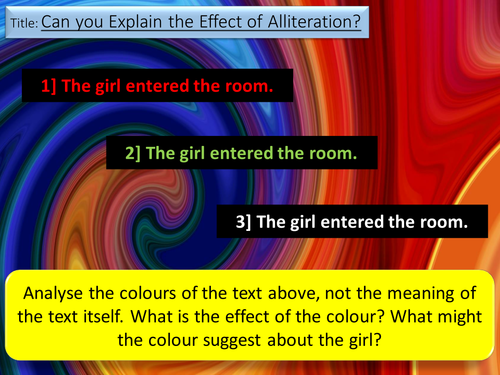
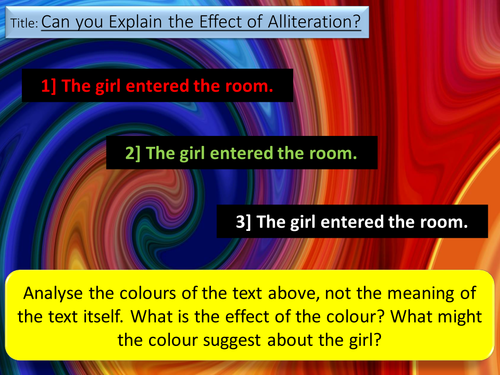
1] A starter that intends to draw a comparison between the way colours can indicate meaning, in the same way that alliterative language might.
2] A recap on the definition of alliteration with examples.
3] A task that requires students to consider the kinds of sounds different letters produce.
4] A link to a Youtube video that explains plosive sounds as well as voiced and voiceless sounds.
5] Guidance on how to structure an analysis of alliteration.
6] A model of how to analyse alliteration, maintaining focus on a structured response.
7] A task that requires students to consider possible effects of different examples of alliteration.
8] A final written task requiring students to write their own analysis of alliteration found in a provided extract.
9] An extension task for further analysis that is slightly more challenging.
All extracts that are used to exemplify the alliteration are embedded into the PPT.
The PPT provided could be stretched over two 1 hour lessons. Tasks could be set for homework.
I am a qualified English teacher working within the British state school education system.
The 16 slide PPT includes the following:
1] A starter that intends to draw a comparison between the way colours can indicate meaning, in the same way that alliterative language might.
2] A recap on the definition of alliteration with examples.
3] A task that requires students to consider the kinds of sounds different letters produce.
4] A link to a Youtube video that explains plosive sounds as well as voiced and voiceless sounds.
5] Guidance on how to structure an analysis of alliteration.
6] A model of how to analyse alliteration, maintaining focus on a structured response.
7] A task that requires students to consider possible effects of different examples of alliteration.
8] A final written task requiring students to write their own analysis of alliteration found in a provided extract.
9] An extension task for further analysis that is slightly more challenging.
All extracts that are used to exemplify the alliteration are embedded into the PPT.
The PPT provided could be stretched over two 1 hour lessons. Tasks could be set for homework.
I am a qualified English teacher working within the British state school education system.
Something went wrong, please try again later.
This resource hasn't been reviewed yet
To ensure quality for our reviews, only customers who have purchased this resource can review it
Report this resourceto let us know if it violates our terms and conditions.
Our customer service team will review your report and will be in touch.
£5.00