


Lesson Snapshot
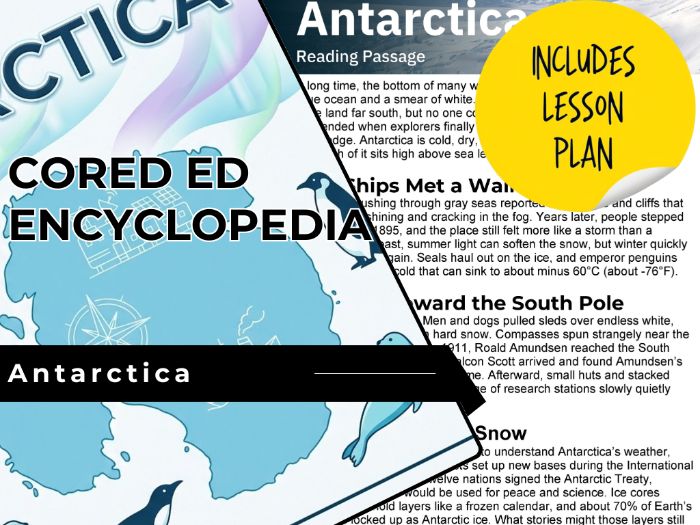
• Title: Antarctica
• Genre: Nonfiction (informational passage)
• Subject: Science / Geography (Polar environments; exploration & research)
• Primary Topic: Exploration, South Pole, treaty, and ice core science
• Estimated Guided Reading Level (A–Z): S
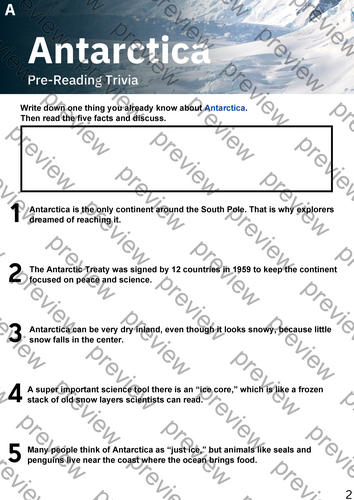
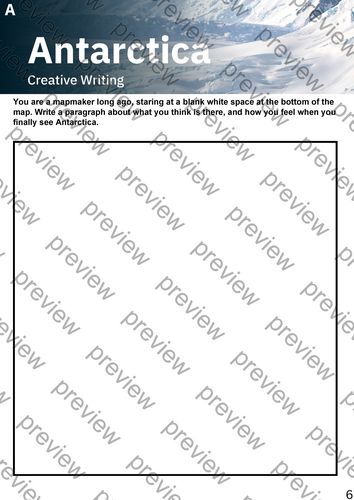
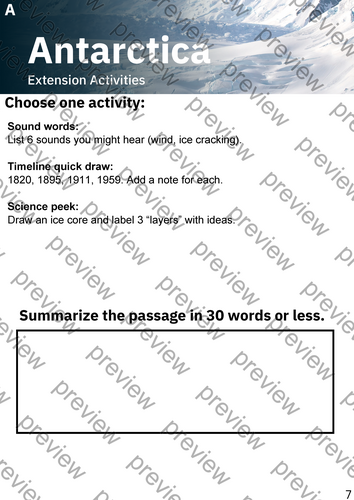
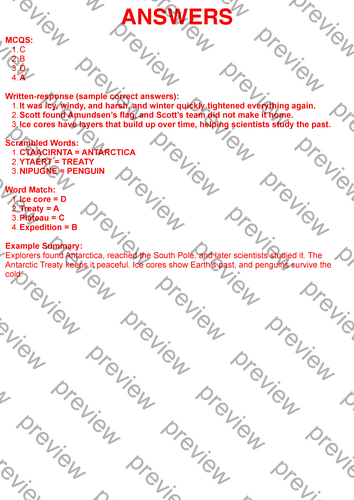
• Support pages noted in the PDF: visualization and pre-reading trivia (pp. 1–2), mixed questions (p. 4), vocabulary activities (p. 5), creative writing (p. 6), extension activities + summary box (p. 7), answer key (p. 8).
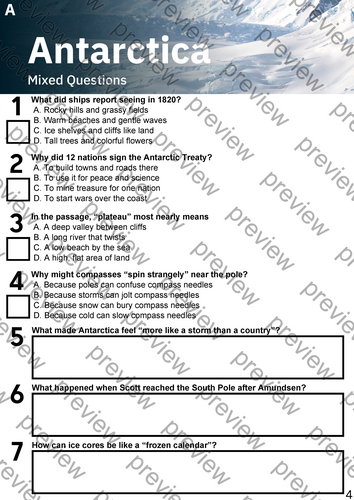
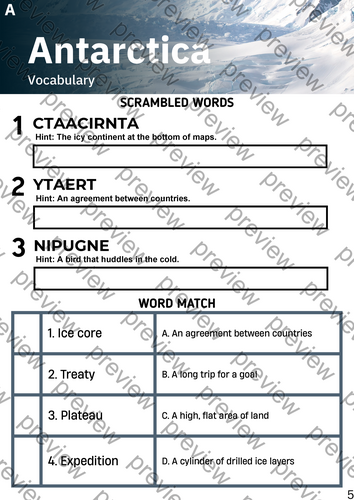
• Support-page QA notes: The vocabulary activity includes “Expedition,” which does not appear in the passage; one mixed question asks why compasses “spin strangely,” which the passage does not explain.
What This Lesson Teaches Best
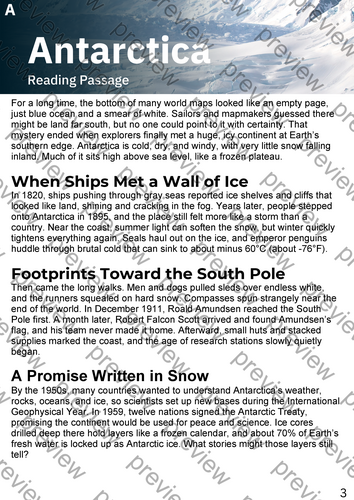
• How Antarctica went from a blank spot on maps to a confirmed icy continent described by explorers.
• Key physical features of the continent: cold, dry, windy conditions; little inland snow; land “high above sea level” like a “frozen plateau.”
• A short exploration timeline using dates and evidence (1820 reports of ice shelves; 1895 people stepped onto the continent).
• How journeys toward the South Pole were described (sleds, dogs, strange compasses) and what happened in December 1911 and afterward.
• Why international science cooperation matters there, including the International Geophysical Year, the Antarctic Treaty, and what ice cores can reveal through layers.
Learning Goals
• Students will describe why early mapmakers could not point to land far south “with certainty.”
• Students will identify details that describe Antarctica’s inland climate and land shape (dry, windy, little snow; “frozen plateau”).
• Students will retell key events from the passage’s timeline using dates (1820, 1895, 1911, 1959).
• Students will explain what ships reported seeing in 1820 and how the author describes the coastal environment.
• Students will describe what happened when Roald Amundsen reached the South Pole and what Robert Falcon Scott found later.
• Students will explain what the passage says nations promised in 1959 and why ice cores are compared to a “frozen calendar.”
Key Vocabulary From the Text
• certainty — being sure something is true.
• plateau — a high, flat area of land.
• shelves — wide, flat sheets of ice.
• treaty — an agreement between countries.
• supplies — needed materials stored for later use.
Something went wrong, please try again later.
This resource hasn't been reviewed yet
To ensure quality for our reviews, only customers who have purchased this resource can review it
Report this resourceto let us know if it violates our terms and conditions.
Our customer service team will review your report and will be in touch.
£1.25