

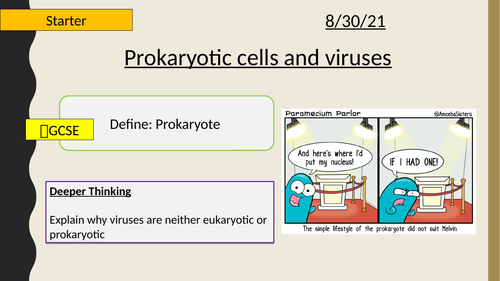

3.2.1.2 Structure of prokaryotic cells and of viruses
Prokaryotic cells are much smaller than eukaryotic cells. They also
differ from eukaryotic cells in having:
• cytoplasm that lacks membrane-bound organelles
• smaller ribosomes
• no nucleus; instead they have a single circular DNA molecule
that is free in the cytoplasm and is not associated with
proteins
• a cell wall that contains murein, a glycoprotein.
In addition, many prokaryotic cells have:
• one or more plasmids
• a capsule surrounding the cell
• one or more flagella.
Details of these structural differences are not required.
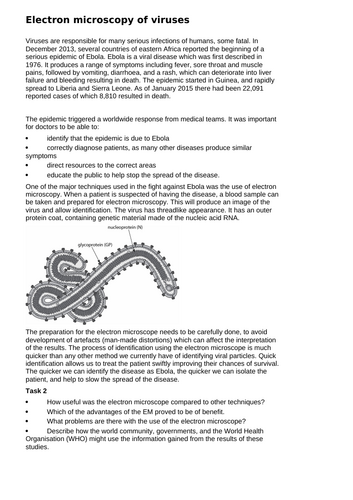
Viruses are acellular and non-living. The structure of virus particles
to include genetic material, capsid and attachment protein.
Get this resource as part of a bundle and save up to 25%
A bundle is a package of resources grouped together to teach a particular topic, or a series of lessons, in one place.
Something went wrong, please try again later.
This resource hasn't been reviewed yet
To ensure quality for our reviews, only customers who have downloaded this resource can review it
Report this resourceto let us know if it violates our terms and conditions.
Our customer service team will review your report and will be in touch.
£0.00