


GCSE Biology AQA 4.1.3.1 Cell Transport and Exchange Surfaces | Complete Two-Lesson Bundle
This comprehensive two-lesson bundle covers key content from Section 4.1.3.1 of the AQA GCSE Biology specification, developing students’ understanding of diffusion, factors affecting diffusion, surface area to volume ratio, and the adaptations that enable efficient exchange in multicellular organisms. The lessons combine retrieval practice, explicit teaching, practical work, application activities and exam-style questions to build both subject knowledge and examination confidence.
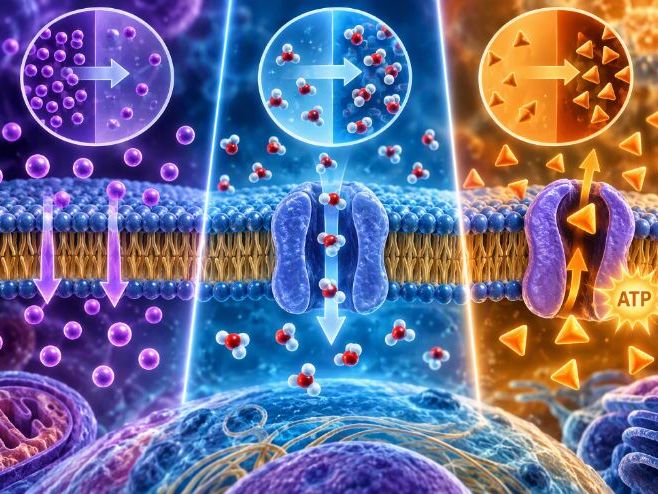
The first lesson focuses on diffusion. Students begin with a recall starter designed to revisit prior learning from the cell biology unit before being introduced to diffusion through a range of engaging real-world examples. Explicit instruction is used to develop a secure understanding of diffusion as the net movement of particles from an area of high concentration to an area of low concentration. Students complete a variety of activities to check understanding, including diffusion diagrams, quick-check questions and application tasks based on biological and everyday contexts. The lesson also explores factors affecting the rate of diffusion, including concentration gradient, temperature and surface area. Students apply their knowledge to a range of scenarios before completing GCSE-style exam questions and extended response activities.
The second lesson focuses on exchange surfaces and surface area to volume ratio. Students begin with a retrieval starter before learning how the size of an organism affects its ability to exchange substances by diffusion. Through clear teacher instruction and worked examples, students calculate surface area, volume and surface area-to-volume ratios before considering why multicellular organisms require specialised exchange surfaces. Students then complete the required practical investigating the effect of surface area on the rate of diffusion using agar jelly cubes. The lesson includes opportunities to identify variables, analyse results, draw conclusions and evaluate the practical method. Students also explore how adaptations such as large surface area, thin membranes, ventilation and a good blood supply improve the efficiency of exchange surfaces, with a particular focus on the lungs and alveoli. The lesson concludes with application activities and GCSE exam-style questions.
Throughout both lessons, students are provided with regular opportunities to demonstrate understanding through quick-check questions, discussion tasks, application activities and examination practice.
This resource is ideal for AQA GCSE Biology, Combined Science Trilogy and Separate Biology courses and is suitable for classroom teaching, revision lessons, intervention sessions and cover work.
All answers provided
Something went wrong, please try again later.
This resource hasn't been reviewed yet
To ensure quality for our reviews, only customers who have purchased this resource can review it
Report this resourceto let us know if it violates our terms and conditions.
Our customer service team will review your report and will be in touch.
£3.00