


A complete lesson covering section 4.3.1.6: Human Defence Systems from the AQA Combined Science Trilogy specification.
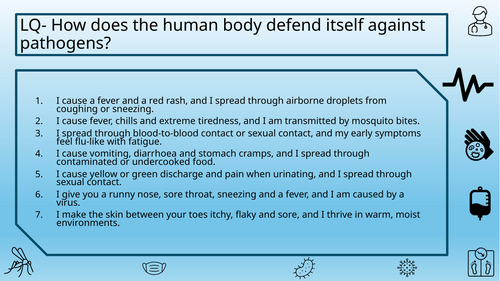
The lesson opens with a recall starter revisiting key knowledge about human pathogens and how infectious diseases spread. This activates prior learning from earlier lessons on pathogens and transmission, ensuring students have the foundational context needed for understanding defence mechanisms.
Students then explore the body’s non‑specific defence systems, focusing on how the skin, nose, trachea, bronchi, and stomach help prevent pathogens from entering the body. This content is reinforced through guided examples and short review tasks that help students apply the information to real‑world scenarios.
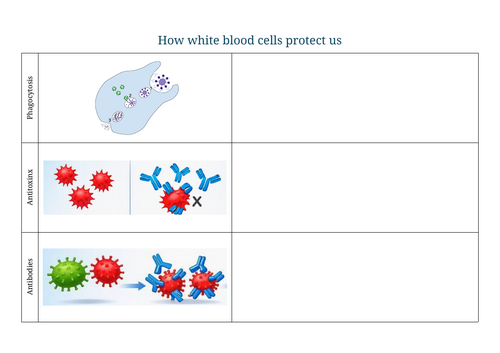
The lesson then progresses to the specific immune response, examining the roles played by white blood cells, including:
Phagocytosis (engulfing and digesting pathogens)
Antibody production (targeting specific antigens)
Antitoxin production (neutralising toxins released by bacteria)
A multiple‑choice quiz checks understanding and addresses misconceptions before students complete a summary activity consolidating the key ideas.
Students then work through a set of structured summary questions, applying their knowledge to demonstrate secure understanding of specific defence systems.
The lesson concludes with a plenary, where students revisit and answer the original Learning Question, showing how their understanding has developed across the lesson.
All answers and resources are included.
Something went wrong, please try again later.
This resource hasn't been reviewed yet
To ensure quality for our reviews, only customers who have purchased this resource can review it
Report this resourceto let us know if it violates our terms and conditions.
Our customer service team will review your report and will be in touch.
£3.00