


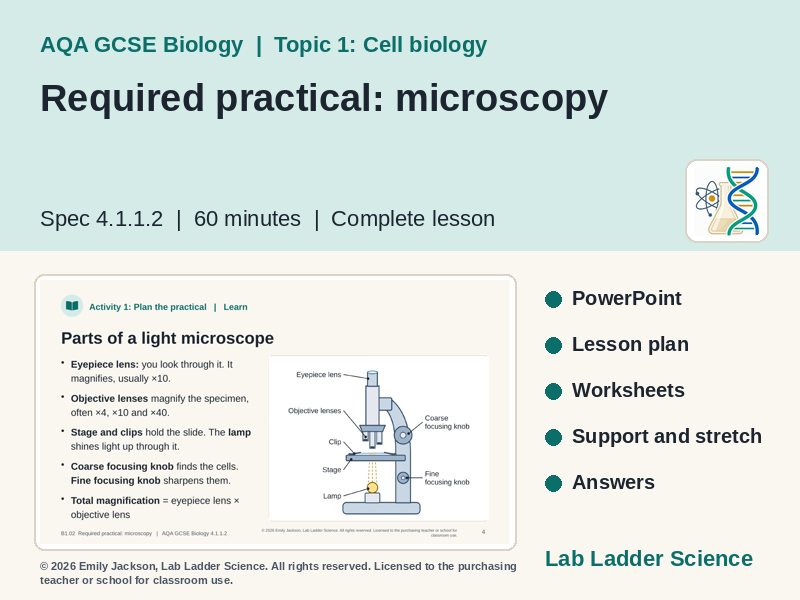
Microscopy required practical lesson for AQA GCSE Biology 4.1.1.2. Prepare slides, observe, draw and estimate cell size. PowerPoint, worksheets, answers.
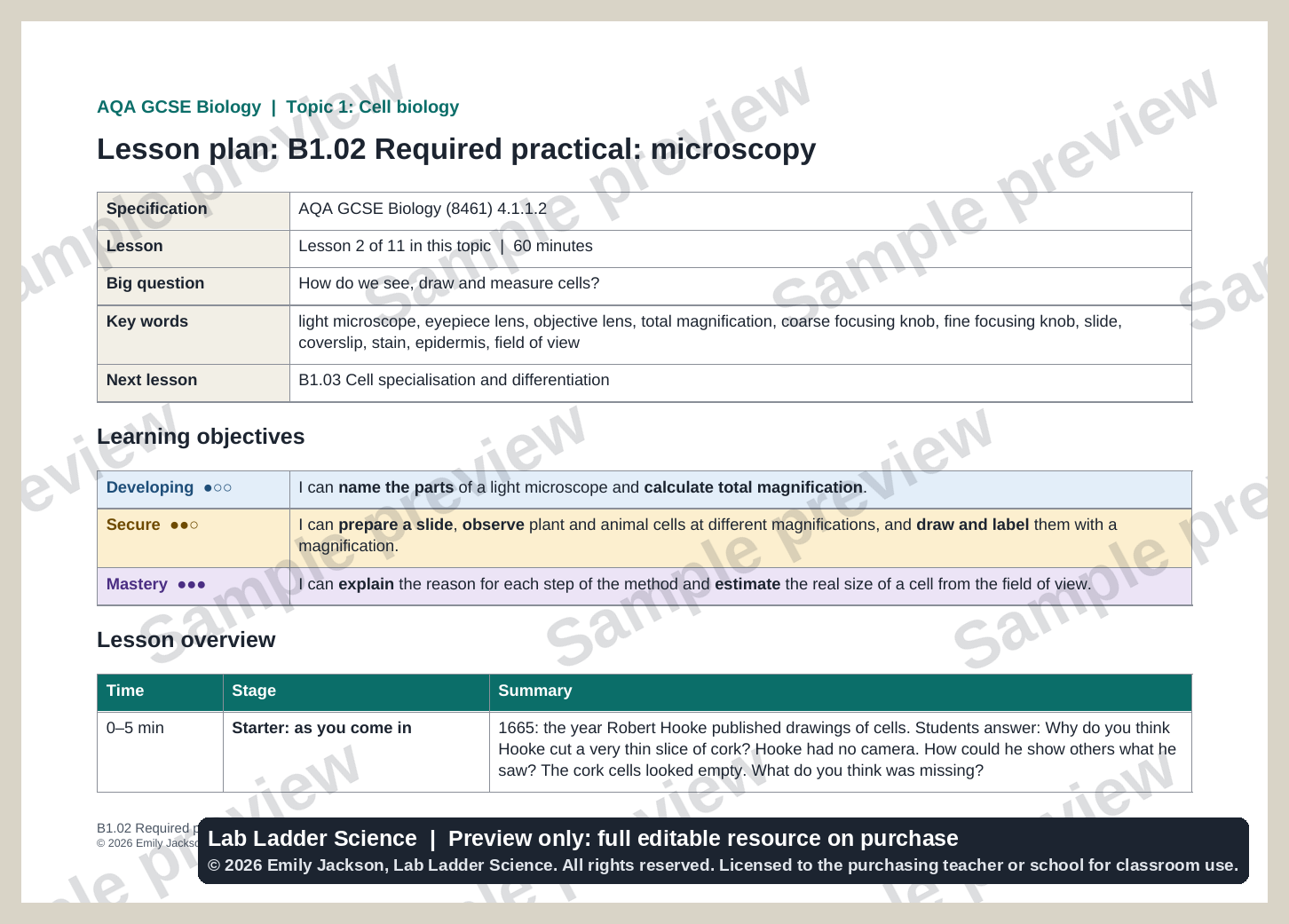
This is a complete lesson on the microscopy required practical for AQA GCSE Biology (8461), specification point 4.1.1.2 (Required practical activity 1). It is the second lesson in Topic 1: Cell biology and is designed to last 60 minutes.
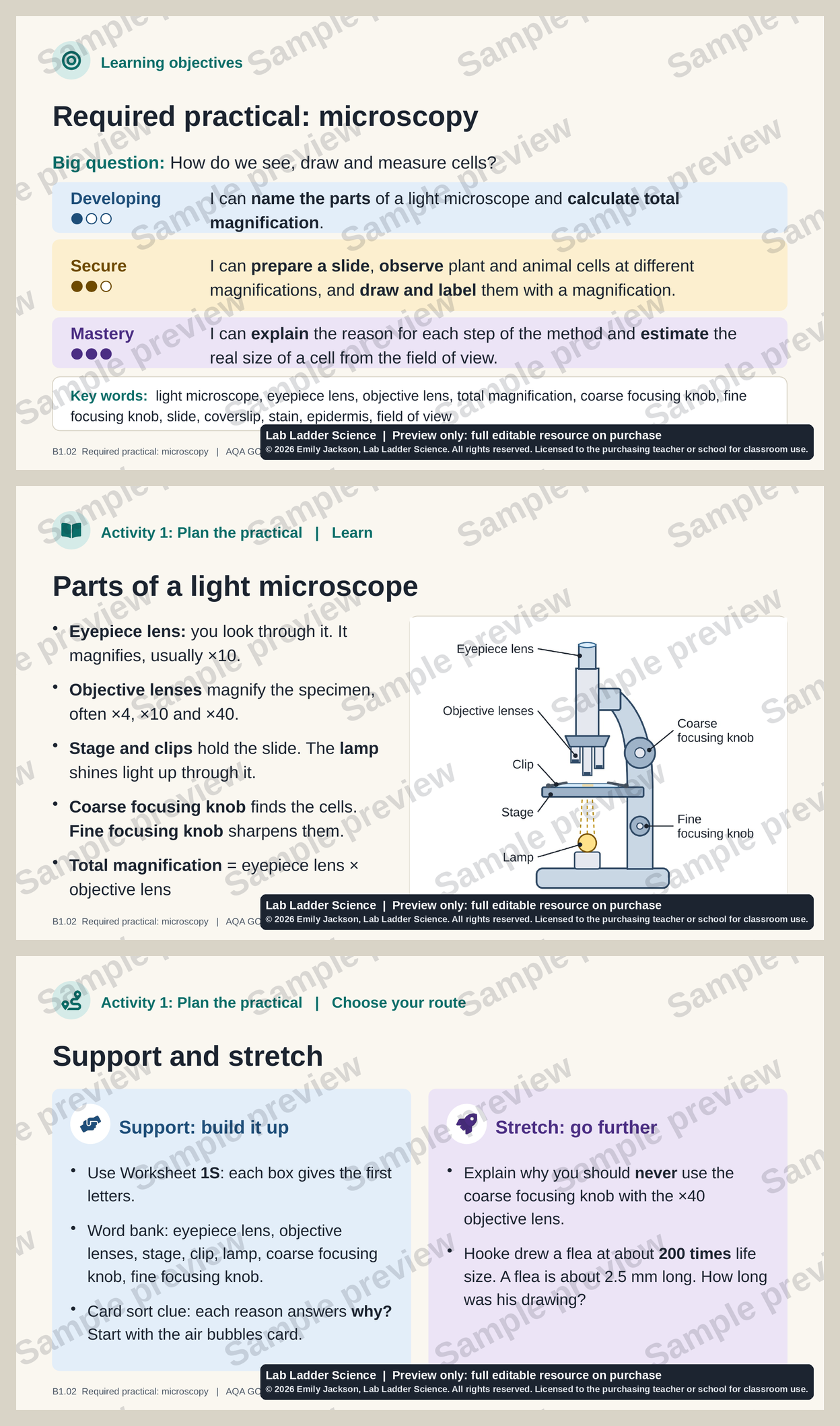
Students learn the parts of a light microscope, calculate total magnification, prepare a slide of onion epidermis cells, observe plant and animal cells at different magnifications, and make labelled scientific drawings with a magnification. They then use the field of view to estimate the real size of a cell and answer exam-style analysis questions.
The previous lesson covers animal and plant cell structure, and the next lesson covers cell specialisation and differentiation.
Includes:
- PowerPoint lesson (31 slides) with full teacher notes on every slide: timings, the full method, technician list, safety, answers, misconceptions and questioning prompts.
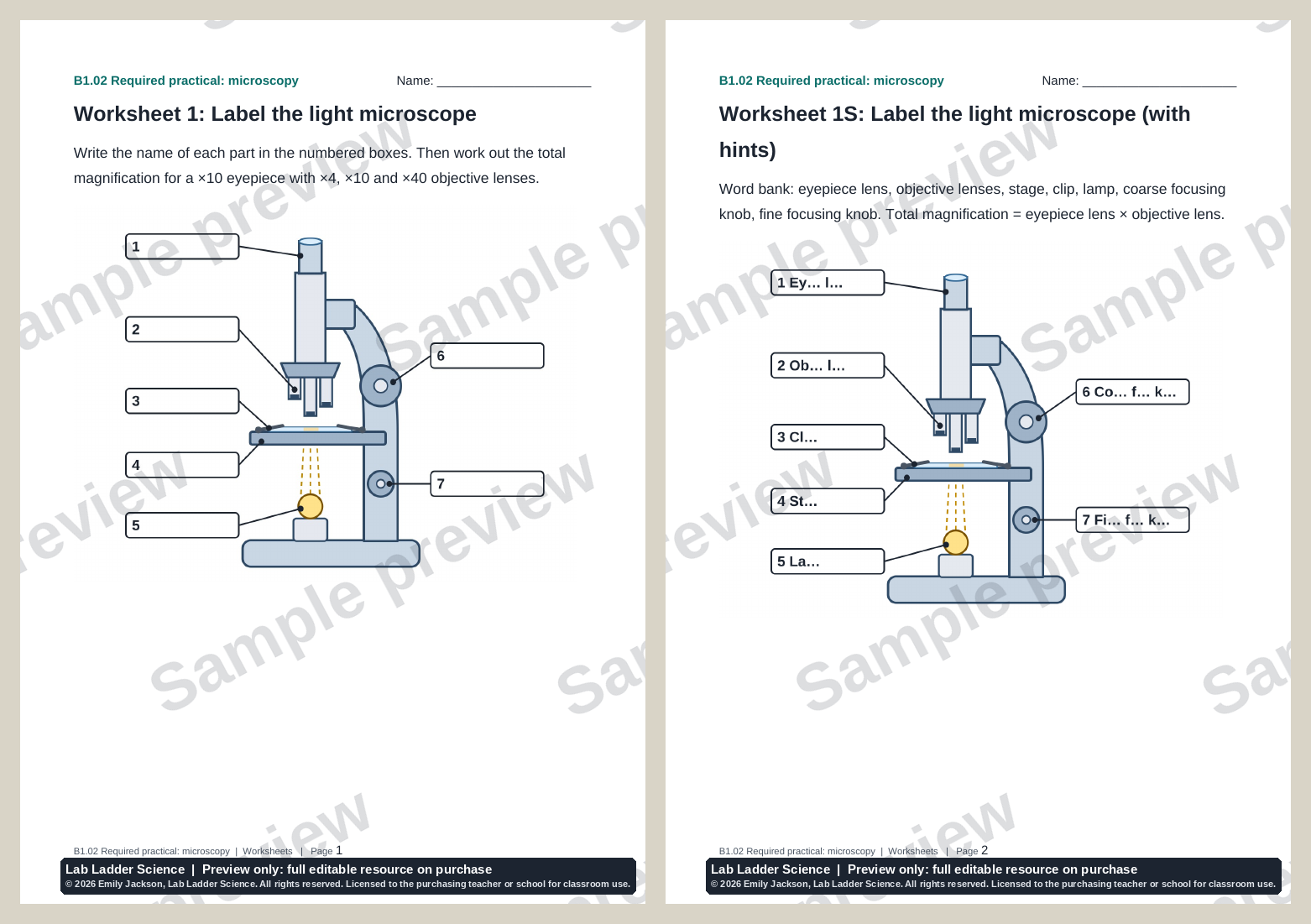
- Editable Word worksheets: label the microscope (core and support versions), a method steps and reasons card sort, a results table, and exam-style analysis questions (core and support versions).
- Word lesson plan with objectives, lesson sequence, differentiation, answers and common misconceptions.
Every activity offers support and stretch that all students can choose, so no one is singled out. Support includes first-letter hints, a word bank, a drawing checklist and a step-by-step version of the analysis questions. Stretch tasks ask students to add a scale bar, explain why the coarse focusing knob is never used at high power, tell cells from air bubbles and evaluate the accuracy of their estimate.
Taking a cheek cell sample is always optional, with prepared slides as an equal alternative.
The slides follow the British Dyslexia Association Style Guide: a clear sans serif font at a large size, a soft cream background, bold (not italics) for emphasis, left-aligned text and plain English. Levels of challenge never rely on colour alone, every slide has a proper title for screen readers, and diagrams include alt text.
How you could use it:
- Teach it as the required practical lesson straight after a lesson on animal and plant cells.
- Use the card sort and analysis questions to revise the practical before mocks, even without microscopes.
- Plan the practical with your technician: the notes include the full method, equipment list and safety points.
- Set the exam-style questions on Worksheet 4 as homework.
Something went wrong, please try again later.
This resource hasn't been reviewed yet
To ensure quality for our reviews, only customers who have purchased this resource can review it
Report this resourceto let us know if it violates our terms and conditions.
Our customer service team will review your report and will be in touch.
£5.00