


BTEC Level 3 Applied Science AAQ Unit 2 Chemistry | Principles & Applications of Chemistry
TITLE
Pearson BTEC Level 3 Applied Science AAQ Unit 2 Chemistry | Principles & Applications of Chemistry Visual Revision Pack
DESCRIPTION
Pearson BTEC Level 3 Alternative Academic Qualification in Applied Science – Unit 2: Principles and Applications of Chemistry
A comprehensive, visually engaging teaching and revision resource designed for the Pearson BTEC Level 3 AAQ Applied Science qualification, covering the key Chemistry knowledge required for Unit 2: Principles and Applications of Chemistry.
This visual resource breaks challenging Chemistry content into clear, student-friendly summaries using diagrams, worked examples, calculations, key terminology and assessment-focused explanations.
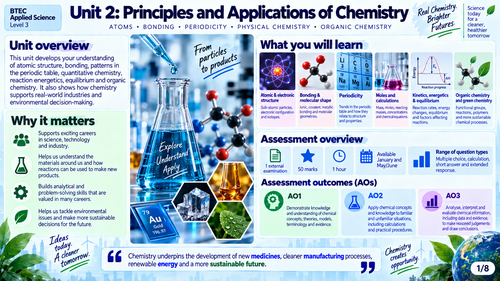
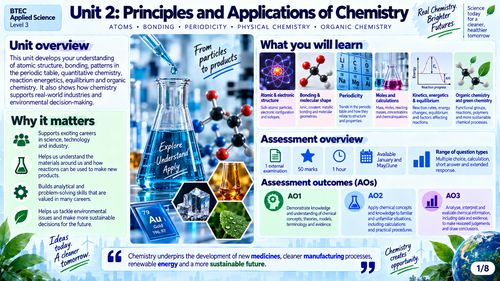
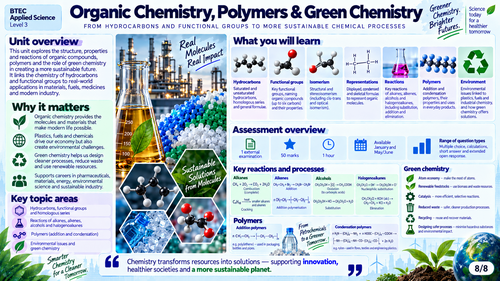
The resource begins with a clear Unit 2 overview, introducing atomic structure, bonding, periodicity, physical chemistry and organic chemistry. Pearson confirms that Unit 2 is externally assessed and covers five main content areas: Atomic and electronic structure, Bonding and structure, Periodicity, Physical chemistry and Organic chemistry.
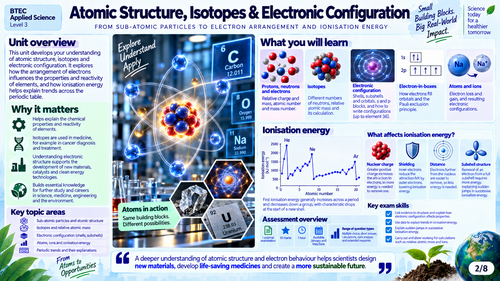
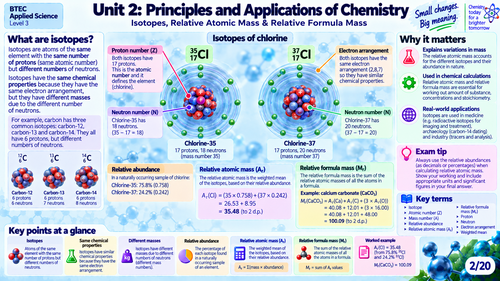
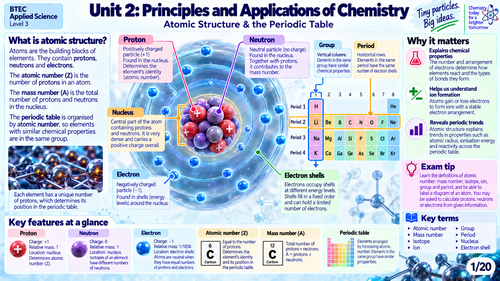
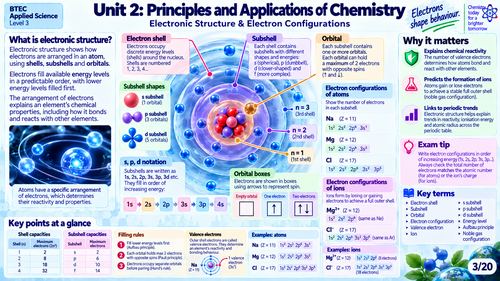
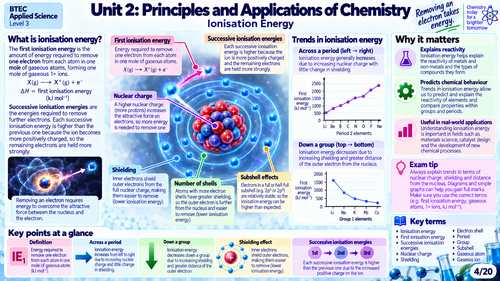
The Atomic Structure, Isotopes & Electronic Configuration section supports learners with sub-atomic particles, isotopes, electronic structure, ion formation and ionisation energy, including periodic trends and the factors affecting ionisation energy.
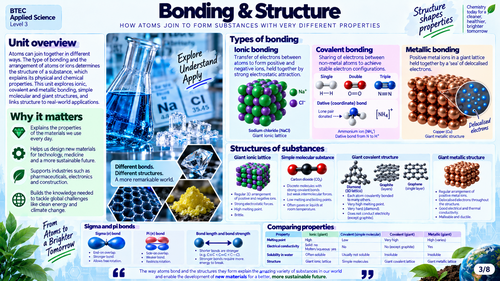
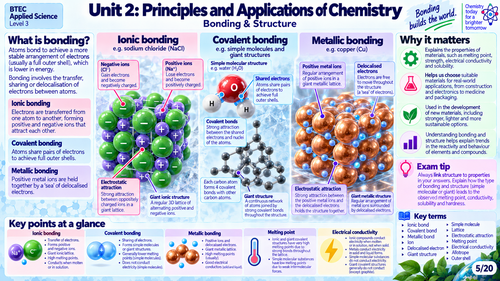
The Bonding & Structure section explains ionic, covalent and metallic bonding alongside the structures and physical properties of different substances, including giant ionic lattices, simple molecular substances, giant covalent structures and metals.
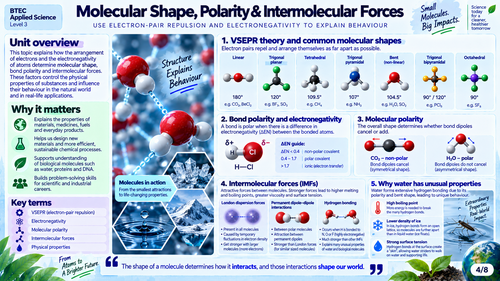
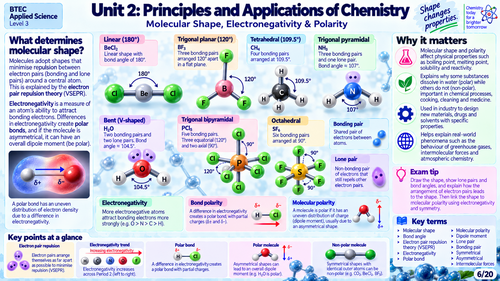
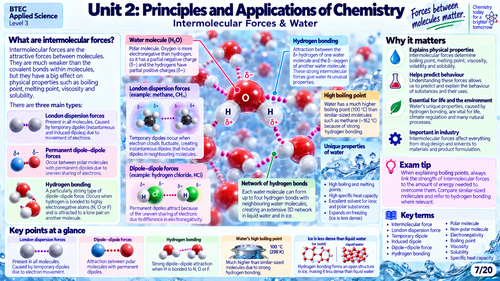
The Molecular Shape, Polarity & Intermolecular Forces section develops understanding of VSEPR theory, electronegativity, bond polarity, molecular polarity, London dispersion forces, permanent dipole interactions and hydrogen bonding.
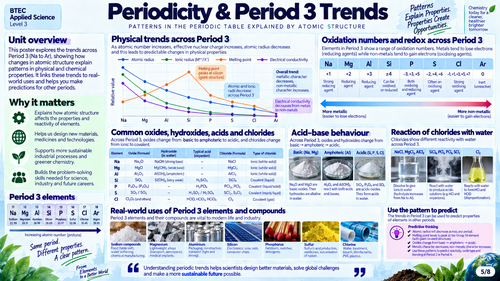
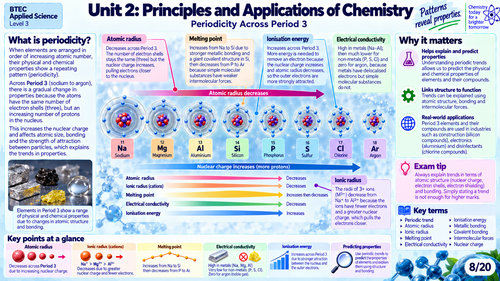
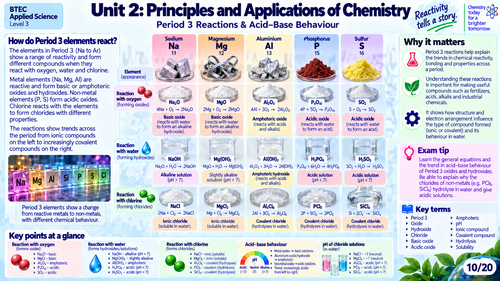
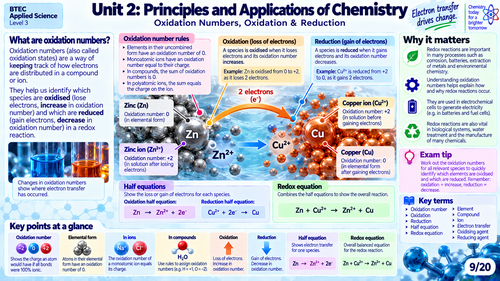
The Periodicity & Period 3 Trends section supports learners with trends in atomic radius, ionisation energy, electronegativity and melting point, alongside oxidation numbers, redox chemistry and the behaviour of Period 3 oxides, hydroxides and chlorides.
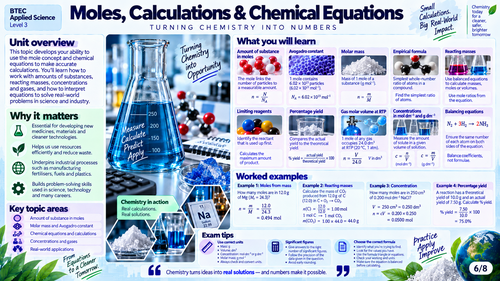
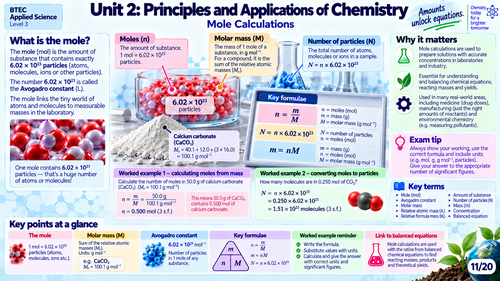
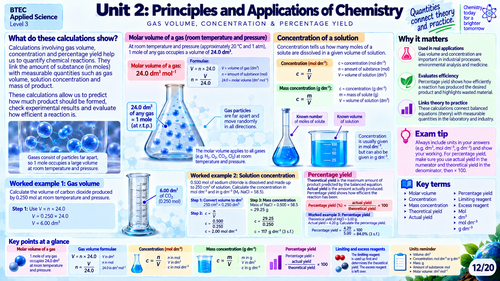
The Moles, Calculations & Chemical Equations section provides accessible support for quantitative Chemistry, including amount of substance, the Avogadro constant, molar mass, empirical formulae, percentage yield, atom economy, concentration calculations and limiting reagents.
Something went wrong, please try again later.
This resource hasn't been reviewed yet
To ensure quality for our reviews, only customers who have purchased this resource can review it
Report this resourceto let us know if it violates our terms and conditions.
Our customer service team will review your report and will be in touch.
£7.99